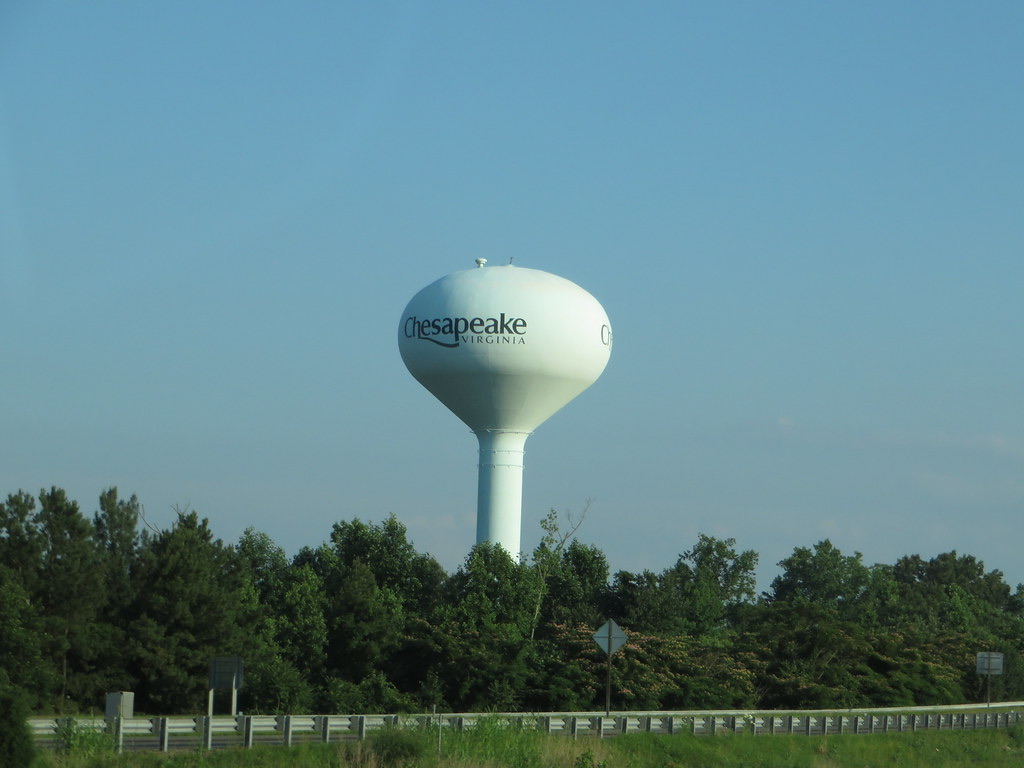
Every glass of water in Virginia has a long history. The molecules in it have circled through clouds, rivers, soil, plants and animals countless times, and most of them have passed through someone else’s town on the way. Turning that well-traveled water into something safe to drink is the job of thousands of public water systems, a state health office, federal standards, and, for more than a fifth of Virginians, the owner of a private well.
Quick answer: Most Virginians get drinking water from public systems that draw on rivers and reservoirs, or on wells, and treat it to meet federal Safe Drinking Water Act standards; the Virginia Department of Health’s Office of Drinking Water oversees those systems in the state. About 22 percent of Virginians, roughly 1.6 million people, rely only on private wells, which no agency requires them to test.[5][4]
Contents
- Old water, recycled
- Everyone lives downstream
- From springs and wells to waterworks
- Private wells
- Public water systems and the law
- How raw water becomes tap water
- Protecting the source
- Drinking water downstream of a sewage plant: the Occoquan
- Lead, disinfection byproducts and PFAS
- Pipes, towers and who pays
- Timeline
- Frequently asked questions
Old water, recycled
The hydrogen in a water molecule dates back almost to the beginning of the universe, and the oxygen was forged inside stars long before the Earth formed. Since the planet cooled, the same supply of water has been moving through the water cycle: evaporating from oceans and lakes, condensing into clouds, falling as rain and snow, running off or soaking into the ground, and flowing back to the sea.[1] Plants add another loop, pulling water from the soil through their roots and releasing it as vapor through pores in their leaves.
So a cup of Virginia tap water may contain molecules that once helped carve the Appalachians, or sat in an ice sheet during the last glacial period, or passed through a dinosaur. Some water is trapped deep in bedrock for very long periods, but most keeps moving, and individual molecules break apart and reform all the time. What matters for drinking is not the ancient past but the last few days and weeks of the water’s trip.
Everyone lives downstream
Except for a few people living right on a ridgetop divide, every community in Virginia takes its water from somewhere that is downstream of someone else. The New River arrives in Virginia after passing through North Carolina towns; the James at Richmond has already flowed past Lynchburg and other cities; Roanoke River water piped to Virginia Beach through the Lake Gaston pipeline has passed Roanoke, Danville and other places upstream (see water rights and water supply planning).
Rivers do clean themselves to a degree. Sediment drops out where currents slow, behind boulders, in lakes, and on the flat Coastal Plain. Sunlight’s ultraviolet rays and the oxygen stirred in by rapids and waterfalls damage the genetic material of bacteria and viruses. Before European settlement, when people and animals were spread thinly across the land, that natural treatment was usually enough, and water dipped from a stream was rarely dangerous except right next to a village.
Today the density of people, farm animals and pavement is far too high for that. Streams are lined with septic fields, sewer outfalls, pastures and parking lots. Clearing forests for subdivisions has also crowded wildlife into the narrow strips left along creeks, and in some suburban watersheds geese and deer can supply a large share of the bacteria that make streams fail water quality standards (see impaired waters in Virginia). No surface water in Virginia should be drunk without treatment; drinking untreated “raw water” exposes people to bacteria, viruses and parasites that municipal treatment removes.[12]
From springs and wells to waterworks
People have treated water for thousands of years. As early as 1500 BCE, Egyptians added a binding agent to make particles clump together so they could be removed.[12] In the mid-1800s, John Snow’s tracing of a London cholera outbreak to a contaminated pump and Louis Pasteur’s germ theory showed why treatment matters.[12]
The first English settlers in Virginia drank from springs, streams and wells. Archaeologists working off Roanoke Island have recovered a hollowed tree trunk and barrel staves dated to the late 16th century that they interpret as linings of early wells, and they named the spot “Barrel Beach.”[11] At Jamestown, excavators found a freshwater well inside the footprint of James Fort, and oyster shells from its bottom later revealed how salty the James became during the drought of 1609–1612.[13]
Town water systems came later. In Pennsylvania, Schaefferstown’s spring-fed system, built sometime before 1750, is often called the oldest waterworks in the United States.[10] In Virginia, Lynchburg opened its waterworks on August 18, 1829: a water wheel pumped James River water to a reservoir 245 feet above the river, and cast-iron and wooden pipes carried it through town.[7] Part of an original 1829 cast-iron line on Seventh Street is still in service, making Lynchburg’s one of the oldest publicly owned water systems in the country.[8] Richmond’s works, designed by the same engineer, Albert Stein, were completed in 1832 and included a filtering bed, the first attempt in the United States to filter a public water supply.[9]
Private wells
Nationally, about 87 percent of Americans get their water from a public supply; the rest are “self-supplied,” almost always from their own wells.[6] Virginia relies on wells more than most states. About 22 percent of residents, some 1.6 million people, depend only on private wells, and in some counties more than 80 percent of the water supply comes from them.[5]
Private wells are not subject to required ongoing testing; maintenance and testing are left to the owner.[5] Most rural households pump groundwater straight to the tap without disinfection. Many use a water softener, which swaps calcium and magnesium in “hard” water for sodium supplied by salt, so soap lathers and scale does not clog pipes and water heaters. Wells can be contaminated by nearby septic systems, livestock, fertilizer, or spills; Virginia Tech’s Well Informed Virginia tool helps owners interpret test results.[5] For aquifers and well water, see groundwater in Virginia.
Public water systems and the law
The Safe Drinking Water Act of 1974 gives the Environmental Protection Agency the job of setting national standards for drinking water.[3] Under the EPA definition, a system counts as a public water system if it pipes drinking water to 15 or more service connections, or regularly serves 25 or more people for 60 or more days each year; it can be publicly or privately owned, and there are more than 148,000 of them in the United States.[2] They come in three types:[2]
- Community water systems serve the same people year-round, such as towns, cities and subdivisions.
- Non-transient non-community systems serve at least 25 of the same people for at least six months a year, such as schools, factories and hospitals with their own wells.
- Transient non-community systems serve passersby, such as gas stations, rest areas and campgrounds.
In Virginia, the state has primary enforcement responsibility. The Virginia Department of Health’s Office of Drinking Water licenses waterworks operators, reviews treatment plants and monitoring reports, and posts each utility’s annual Consumer Confidence Report, the yearly water quality report that community systems must send their customers.[4][16]
How raw water becomes tap water
A conventional treatment plant copies, in hours, what a river does over many miles:
- Intake and screening remove sticks, leaves and fish.
- Coagulation and flocculation: a chemical such as alum makes tiny suspended particles stick together into heavier clumps called floc.
- Sedimentation: in quiet basins the floc settles to the bottom.
- Filtration through sand, gravel, activated carbon or membranes removes the remaining particles.
- Disinfection with chlorine, chloramine, ozone or ultraviolet light kills or inactivates bacteria, viruses and protozoa.
Some Virginia utilities use advanced processes such as membrane filtration, ozone or reverse osmosis. Plants that pump groundwater also treat it: wells may need iron or manganese removed, nitrate diluted by blending with cleaner wells, or softening.
Protecting the source
The cleaner the raw water, the less treatment it needs. The EPA’s source water protection program encourages communities to keep contaminants out of rivers, lakes and aquifers in the first place, through land conservation, zoning and spill planning.[14] A town near the headwaters of a river generally starts with cleaner water, and lower treatment costs, than a city far downstream.
Small streams matter more than they seem. A 2009 EPA analysis found that 58 percent of the stream miles feeding public drinking water intakes in the continental United States are intermittent, ephemeral or headwater streams, and that over 117 million people get some of their water from systems relying on them.[15] Bay Act rules in eastern Virginia protect buffers along perennial streams, but smaller channels are often piped or filled during development, even though whatever washes into them still reaches the intake downstream (see perennial, intermittent and ephemeral streams).
Drinking water downstream of a sewage plant: the Occoquan
The Occoquan Reservoir, holding about eleven billion gallons, is a principal drinking water supply for Northern Virginia. As its watershed suburbanized in the 1960s, eleven small sewage plants upstream degraded the reservoir. In 1971 the state Water Control Board, in agreement with the Health Department, adopted the Occoquan Policy, which created the Upper Occoquan Service Authority (UOSA) to give the whole watershed advanced wastewater treatment and set up an independent monitoring laboratory.[17]
UOSA’s regional plant in western Fairfax County began operating in 1978, replacing the eleven older plants and serving Fairfax and Prince William counties and the cities of Manassas and Manassas Park.[17] Its highly treated water flows into a stream above the reservoir, so residents downstream drink, after a second round of treatment, water that has already been used upstream. The EPA has highlighted the project as an example of planned water reuse that benefits the drinking water supply.[18]
Lead, disinfection byproducts and PFAS
Water that leaves a treatment plant clean can pick up lead from old service lines and plumbing in older homes. Utilities adjust water chemistry to reduce corrosion, and many are replacing lead lines.
Chlorine reacts with natural organic matter to form disinfection byproducts such as trihalomethanes. To meet limits on these byproducts, some utilities switched their secondary disinfectant to chloramines, made by adding ammonia to chlorine, which last longer in the pipes; more than one in five Americans now drinks chloraminated water.[19]
The newest concern is PFAS, the “forever chemicals” whose carbon-fluorine bonds resist breaking down. On April 10, 2024, the EPA set the first national drinking water limits for six PFAS, including 4.0 parts per trillion for PFOA and for PFOS. Public water systems have until 2027 to finish initial monitoring and until 2029 to fix exceedances; the agency has since proposed keeping the PFOA and PFOS limits while allowing extra time to 2031, and rescinding the limits for the other four compounds.[20] Conventional wastewater treatment does not remove PFAS, so communities downstream of sewage outfalls face extra treatment costs.
Pipes, towers and who pays
Treated water travels through pressurized mains. Water towers store supply for peak demand and, more importantly, keep the system under pressure: pumps fill the tank, and gravity then pushes water to customers, even during a power failure. Because the pipes are under pressure, a crack lets water leak out rather than letting dirty groundwater seep in. Sewers work the other way, flowing by gravity in unpressurized pipes, so groundwater leaking into them adds volume that treatment plants must handle. In a state where the ground freezes, both networks are buried.
Keeping those pipes working is expensive. Lynchburg maintains about 1,100 miles of pipe, and in 2026 the city weighed higher water and stormwater rates to keep replacing mains, some of them more than a century old.[8] Small towns, with fewer customers to share costs, struggle most with leaks and aging meters, and some have sold their systems to private companies.
Virginia’s water utilities include city and county departments, regional authorities such as Fairfax Water and the Western Virginia Water Authority, and investor-owned companies such as Aqua Virginia and Virginia American Water. Rates charged by private utilities must be approved by the State Corporation Commission. In one Aqua Virginia case, for example, the commission granted a smaller increase than the company had asked for, set a return on equity of 9.25 percent instead of the 10.3 percent requested, and ordered refunds with interest of the extra amounts collected under interim rates.[21]
Timeline
| Year | Event |
|---|---|
| c. 1500 BCE | Egyptians use a binding agent to clear water |
| Late 1500s | Barrel-lined wells on Roanoke Island |
| 1609–1612 | Drought recorded in oyster shells from a well at James Fort |
| Before 1750 | Schaefferstown, Pennsylvania, waterworks built |
| 1829 | Lynchburg waterworks open |
| 1832 | Richmond waterworks with first U.S. filter bed |
| 1971 | Occoquan Policy creates UOSA |
| 1974 | Safe Drinking Water Act |
| 1978 | UOSA regional plant opens |
| 2024 | EPA sets first national PFAS drinking water limits |
Frequently asked questions
Who regulates drinking water in Virginia? The Virginia Department of Health’s Office of Drinking Water, which enforces federal Safe Drinking Water Act standards set by the EPA.[4]
How many Virginians use private wells? About 22 percent of residents, roughly 1.6 million people.[5]
Is Virginia tap water safe to drink? Water from public systems must meet federal standards, and each community system publishes an annual water quality report. Private wells are the owner’s responsibility to test.
What are the oldest waterworks in Virginia? Lynchburg’s system opened in 1829, and Richmond’s, with the first filter bed in the country, in 1832.[7][9]
Does Northern Virginia drink recycled wastewater? Partly. Highly treated water from the UOSA plant flows into the Occoquan Reservoir, a major supply for Fairfax Water customers.[17]
See also: rivers and watersheds of Virginia, lakes, dams and reservoirs of Virginia, springs and thermal springs of Virginia.
References
- U.S. Geological Survey, Water Science School, “The Water Cycle.” https://www.usgs.gov/special-topics/water-science-school/science/water-cycle
- U.S. Environmental Protection Agency, “Information about Public Water Systems.” https://www.epa.gov/dwreginfo/information-about-public-water-systems
- U.S. Environmental Protection Agency, “Overview of the Safe Drinking Water Act.” https://www.epa.gov/sdwa/overview-safe-drinking-water-act
- Virginia Department of Health, Office of Drinking Water. https://www.vdh.virginia.gov/drinking-water/
- Virginia Tech, “Well Informed Virginia.” https://www.wellwater.bse.vt.edu/well-informed-virginia.php
- U.S. Geological Survey, Water Science School, “Domestic Water Use.” https://www.usgs.gov/water-science-school/science/domestic-water-use
- Documentary History of American Water-works, “Lynchburg, Virginia.” http://www.waterworkshistory.us/VA/Lynchburg/
- Emma Malinak, “With one of the oldest water systems in the country, Lynchburg digs deep to upgrade infrastructure,” Cardinal News, June 8, 2026. https://cardinalnews.org/2026/06/08/with-one-of-the-oldest-water-systems-in-the-country-lynchburg-digs-deep-to-upgrade-infrastructure/
- Documentary History of American Water-works, “Richmond, Virginia.” http://www.waterworkshistory.us/VA/Richmond/
- Historic Towns of America, “Schaefferstown Water Company: Oldest Water System in America.” https://historictownsofamerica.com/oldest-water-system
- First Colony Foundation, “Archaeologists Work in Water and on Land at Roanoke Island” (2010). https://www.firstcolonyfoundation.org/news/archaeologists-work-water-land-roanoke-island/
- “How does raw water compare to tap water? A microbiologist explains why the risks outweigh the benefits,” The Conversation, January 27, 2025. https://theconversation.com/how-does-raw-water-compare-to-tap-water-a-microbiologist-explains-why-the-risks-outweigh-the-benefits-246866
- William & Mary News, “VIMS oyster study confirms early Jamestown drought,” June 4, 2010. https://www.wm.edu/news/stories/2010/vims-oyster-study-confirms-early-jamestown-drought.php
- U.S. Environmental Protection Agency, “Source Water Protection.” https://www.epa.gov/sourcewaterprotection
- U.S. Environmental Protection Agency, “Geographic Information Systems Analysis of the Surface Drinking Water Provided by Intermittent, Ephemeral, and Headwater Streams in the U.S.” https://www.epa.gov/cwa-404/geographic-information-systems-analysis-surface-drinking-water-provided-intermittent
- U.S. Environmental Protection Agency, “Consumer Confidence Reports (CCR).” https://www.epa.gov/ccr
- Upper Occoquan Service Authority, “About UOSA.” https://uosa.org/about-uosa/
- U.S. Environmental Protection Agency, “Virginia Progress: Recycled Water Providing Multiple Benefits” (2015). https://www.epa.gov/sites/default/files/2016-10/documents/va_progress_-_recycled_water_providing_multiple_benefits_-_20150917_0.pdf
- U.S. Environmental Protection Agency, “Chloramines in Drinking Water.” https://www.epa.gov/dwreginfo/chloramines-drinking-water
- U.S. Environmental Protection Agency, “Per- and Polyfluoroalkyl Substances (PFAS): Final PFAS National Primary Drinking Water Regulation.” https://www.epa.gov/sdwa/and-polyfluoroalkyl-substances-pfas
- “SCC approves reduced Aqua Virginia rate increase,” Augusta Free Press, January 10, 2016. https://augustafreepress.com/news/scc-approves-reduced-aqua-virginia-rate-increase/