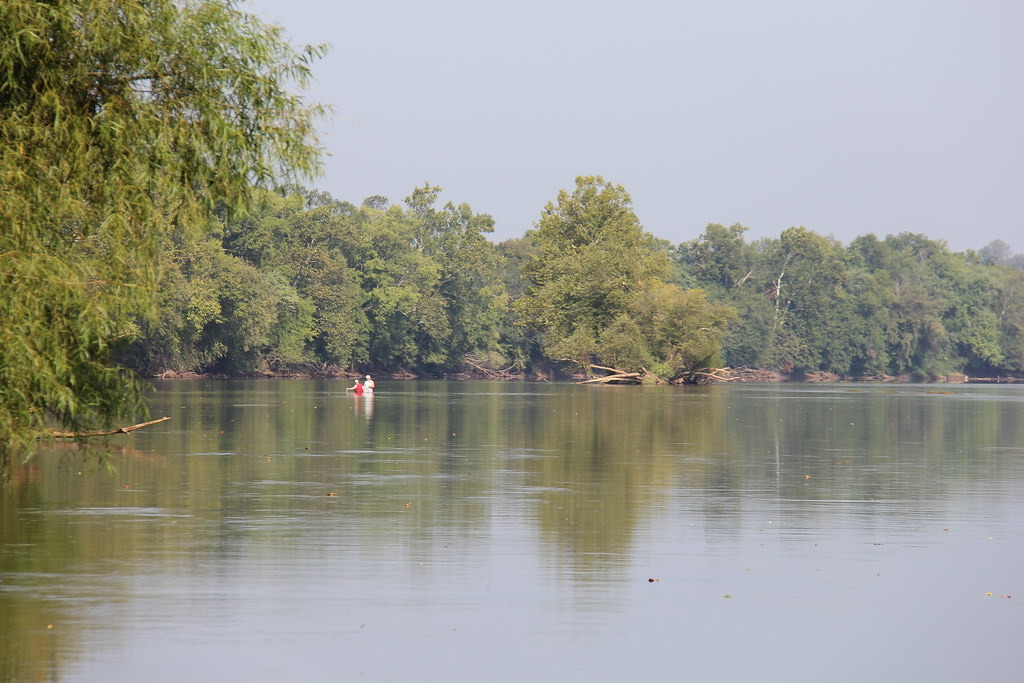
Every two years Virginia publishes a long, technical report that answers a simple question for thousands of stream segments, lakes and stretches of tidal water: is this water good enough for the uses the state has promised it will support? The waters that fail make up what reporters and environmental groups call the “dirty water list.” Getting onto the list starts a legal process that is supposed to end, sometimes decades later, with the water cleaned up.
Quick answer: Under Section 303(d) of the federal Clean Water Act, each state must list waters that do not meet its water quality standards (“impaired”) or are likely to fail soon (“threatened”), update the list every two years, and write a Total Maximum Daily Load (TMDL) for each pollutant causing the problem. Virginia combines that list with its Section 305(b) water quality inventory in a single Water Quality Assessment Integrated Report, which state law requires to use at least the preceding five years of monitoring data.[1][2]
Contents
- What “impaired” means
- Designated uses in Virginia
- The integrated report
- The five assessment categories
- TMDLs: pollution budgets
- The Chesapeake Bay TMDL
- Common causes of impairment
- Examples from around the state
- How to look up a stream
- Timeline
- Frequently asked questions
What “impaired” means
A water body is not impaired simply because it looks muddy or smells. “Impaired” is a legal finding that the water fails to meet the water quality standards adopted for it. Each standard has two parts: the uses the water is supposed to support, and the numeric or narrative criteria, such as limits on bacteria, dissolved oxygen or toxic chemicals, that show whether those uses are protected. A “threatened” water still meets standards but is expected to fail by the next reporting cycle.[1]
The finding is made use by use. A river can be fine for boating and wildlife but impaired for swimming because of bacteria, or safe for swimming but impaired for fish consumption because mercury builds up in the fish.
Designated uses in Virginia
Virginia’s water quality standards designate all state waters, including wetlands, for four broad uses: recreation such as swimming and boating; the propagation and growth of a balanced, native community of aquatic life, including game fish; wildlife; and the production of edible and marketable natural resources such as fish and shellfish.[3] For assessment, those are applied as six uses:
| Use | What is protected |
|---|---|
| Aquatic life | A healthy, balanced community of fish, insects and other organisms; divided in the Chesapeake Bay into sub-uses such as migratory fish spawning, shallow water grasses, open water, deep water and deep channel |
| Recreation | Swimming, wading, boating and other contact with the water |
| Fish consumption | Fish that are safe to eat |
| Shellfishing | Clams, oysters and mussels that can be harvested and sold |
| Public water supply | Raw water suitable for treatment as drinking water, where a water body is used as a supply |
| Wildlife | Animals that depend on the water and its shoreline |
The Bay sub-uses reflect the fact that oxygen needs differ with depth and season: deep water and deep channel areas, for example, are judged against criteria that apply only in summer, when the Bay’s layers stop mixing.[3]
The integrated report
The Clean Water Act calls for two reports. Section 305(b) asks each state to describe the overall condition of its waters; Section 303(d) asks for the list of impaired and threatened waters needing TMDLs. Virginia’s State Water Control Law directs the state to produce both in a way that gives an accurate, comprehensive and comparable picture of surface water quality, identifies trends for specific, clearly defined segments, and uses at least five years of data. It also calls for monitoring to expand until it represents all of the state’s river and stream miles.[2]
The Department of Environmental Quality does not sample every stream every year. It rotates its monitoring through Virginia’s watersheds, so each part of the state is revisited on a regular cycle, and it adds data from other agencies, universities and trained volunteer groups when their methods meet quality standards. Each report covers a six-year window of data and comes out roughly every two years, with a draft open to public comment before the EPA reviews and approves the final 303(d) list.[1]
The five assessment categories
The EPA asks states to sort every assessed segment into one of five categories, an approach known as integrated reporting.[4][5]
| Category | Meaning |
|---|---|
| 1 | All designated uses are met and none is threatened |
| 2 | Some uses are met; there is not enough information to judge the others |
| 3 | Not enough data to say whether any use is met |
| 4A | Impaired or threatened, but a TMDL has already been completed and approved |
| 4B | Impaired, but other required controls, such as permit limits, are expected to fix the problem soon, so no TMDL is needed |
| 4C | Impaired, but not by a pollutant (for example, by altered flow or habitat), so no TMDL applies |
| 5 | Impaired or threatened by a pollutant, and a TMDL is needed: this is the 303(d) list |
States may refine these categories for their own reports, and Virginia’s Integrated Report uses lettered subcategories, for instance to separate shellfish listings or waters with volunteer data still awaiting confirmation; the full list and its definitions appear in each report’s introduction.
Only Category 5 waters are on the 303(d) “dirty water list” in the strict legal sense. A water that improves enough can be delisted, and one that is fixed for one pollutant may remain listed for another.
TMDLs: pollution budgets
A Total Maximum Daily Load is a calculation of the largest amount of a pollutant a water body can receive and still meet its standards. The TMDL divides that capacity among point sources, such as sewage plants and factories with discharge permits, and nonpoint sources, such as farm fields, lawns, septic systems and wildlife, with a margin of safety. Point source shares are then written into the discharge permits issued under the National Pollutant Discharge Elimination System.[1][6]
Writing a TMDL is only the first step. Reductions from nonpoint sources depend largely on voluntary programs and cost-share payments, and Virginia follows its TMDLs with implementation plans that list practices such as fencing cattle out of streams, repairing septic systems, planting streamside buffers and upgrading stormwater controls (see stream restoration and living shorelines in Virginia). Stormwater permits for cities and counties also carry TMDL requirements; see perennial, intermittent and ephemeral streams for how stream buffers fit in.
The Chesapeake Bay TMDL
The largest TMDL in the country covers the Bay itself. On December 29, 2010, the EPA established the Chesapeake Bay TMDL, a “pollution diet” for nitrogen, phosphorus and sediment intended to restore clean water in the Bay and in the streams, creeks and rivers that feed it.[7] Virginia, Maryland, Pennsylvania, Delaware, New York, West Virginia and the District of Columbia each write Watershed Implementation Plans showing how they will meet their shares, and the EPA evaluates their progress through two-year milestones.[7] Many smaller impaired tributaries are placed in Category 4A because the Bay TMDL already addresses them.
Common causes of impairment
Across Virginia, a few problems account for most listings:
- Bacteria. E. coli in fresh water and enterococci in salt water indicate fecal contamination from livestock, failing septic systems, leaking sewers, pets and wildlife. Bacteria are the most common reason streams fail the recreation use.
- Toxins in fish tissue. Mercury, PCBs, Kepone and PFOS have all been found in some Virginia fish. The Virginia Department of Health issues fish consumption advisories for affected waters and species.[8] Mercury occurs naturally in rock, including coal deposits, and much of what reaches Virginia waters arrives from the air before building up in fish.[8][9] PCBs, banned from manufacture in the United States since 1979, persist for decades in river sediments.[10]
- Low dissolved oxygen. Excess nitrogen and phosphorus feed algae blooms; when the algae die and decay, they use up oxygen, especially in deep Bay waters in summer.
- Benthic impairment. A poor community of bottom-dwelling insects, usually caused by sediment, scoured channels and stormwater from developed land.
Examples from around the state
Impairments turn up in every kind of water. In the Chesapeake Bay and its tidal rivers, the oxygen criteria for deep water and deep channel areas apply only in summer, the season when low oxygen is worst, and many segments fail them.[3][7] In the mountains and Piedmont, bacteria listings are common on small streams that drain pastures and older suburbs. Reservoirs can be affected by air pollution: mercury falling with rain or settling as dust can accumulate in fish even where the watershed itself is protected, which is why some lakes carry fish advisories without any local industry.[8][9] PFOS from firefighting foam and industrial processes has been added to the list of contaminants found in Virginia fish.[8]
At the other end of the scale are the few waters that meet every use, such as the Dragon Run on the Middle Peninsula, often described as the most pristine water body in Virginia (see swamps of Virginia and Dragon Run).
How to look up a stream
The EPA’s How’s My Waterway tool lets anyone see Virginia’s latest assessment results by state, watershed or address, including which uses each water meets and which pollutants cause impairments.[11] The same data are stored in the EPA’s national ATTAINS database, where states submit their integrated reports.[12]
Timeline
| Year | Event |
|---|---|
| 1972 | Clean Water Act creates the 305(b) and 303(d) requirements |
| 1979 | U.S. bans manufacture of PCBs |
| 2006 | EPA integrated reporting guidance sets the five-category system |
| December 29, 2010 | EPA establishes the Chesapeake Bay TMDL |
| Every two years | Virginia publishes its 305(b)/303(d) Integrated Report |
Frequently asked questions
What is the “dirty water list”? The popular name for Virginia’s 303(d) list: waters impaired by a pollutant that need a TMDL, published every two years in the state’s Integrated Report.[1]
What does TMDL stand for? Total Maximum Daily Load, the maximum amount of a pollutant a water can receive and still meet standards, divided among the sources of that pollutant.[1]
Why are so many Virginia streams impaired for bacteria? Bacteria come from many diffuse sources, including livestock, septic systems, pets and wildlife, and a few samples above the limit can cause a listing for the recreation use.
Can I eat fish from an impaired river? Check the Virginia Department of Health’s fish consumption advisories, which list waters and species with limits on how much to eat.[8]
How does a water get off the list? When new data show it meets the standards for the pollutant that caused the listing, the state can delist it in a later report.
See also: drinking water in Virginia, rivers and watersheds of Virginia, hydrologic units of Virginia.
References
- U.S. Environmental Protection Agency, “Overview of Identifying and Restoring Impaired Waters under Section 303(d) of the CWA.” https://www.epa.gov/tmdl/overview-identifying-and-restoring-impaired-waters-under-section-303d-cwa
- Code of Virginia § 62.1-44.19:5, Water quality monitoring and reporting. https://law.lis.virginia.gov/vacode/title62.1/chapter3.1/section62.1-44.19:5/
- Virginia Administrative Code, 9VAC25-260-10, Designation of uses. https://law.lis.virginia.gov/admincode/title9/agency25/chapter260/section10/
- U.S. Environmental Protection Agency, “Assessing and Reporting Water Quality (Questions and Answers).” https://www.epa.gov/waterdata/assessing-and-reporting-water-quality-questions-and-answers
- U.S. Environmental Protection Agency, 2006 Integrated Reporting Guidance, Section V. https://archive.epa.gov/water/archive/web/pdf/2005_08_11_tmdl_2006irg_report_2006irg-sec5.pdf
- U.S. Environmental Protection Agency, “Impaired Waters and TMDLs.” https://www.epa.gov/tmdl
- U.S. Environmental Protection Agency, “Chesapeake Bay Total Maximum Daily Load (TMDL).” https://www.epa.gov/chesapeake-bay-tmdl
- Virginia Department of Health, “Fish Consumption Advisory.” https://www.vdh.virginia.gov/environmental-health/public-health-toxicology/fish-consumption-advisory/
- U.S. Environmental Protection Agency, “Basic Information about Mercury.” https://www.epa.gov/mercury/basic-information-about-mercury
- U.S. Environmental Protection Agency, “Learn about Polychlorinated Biphenyls (PCBs).” https://www.epa.gov/pcbs/learn-about-polychlorinated-biphenyls
- U.S. Environmental Protection Agency, “How’s My Waterway: Virginia Water Quality Overview.” https://mywaterway.epa.gov/state/VA/water-quality-overview
- U.S. Environmental Protection Agency, “ATTAINS.” https://www.epa.gov/waterdata/attains