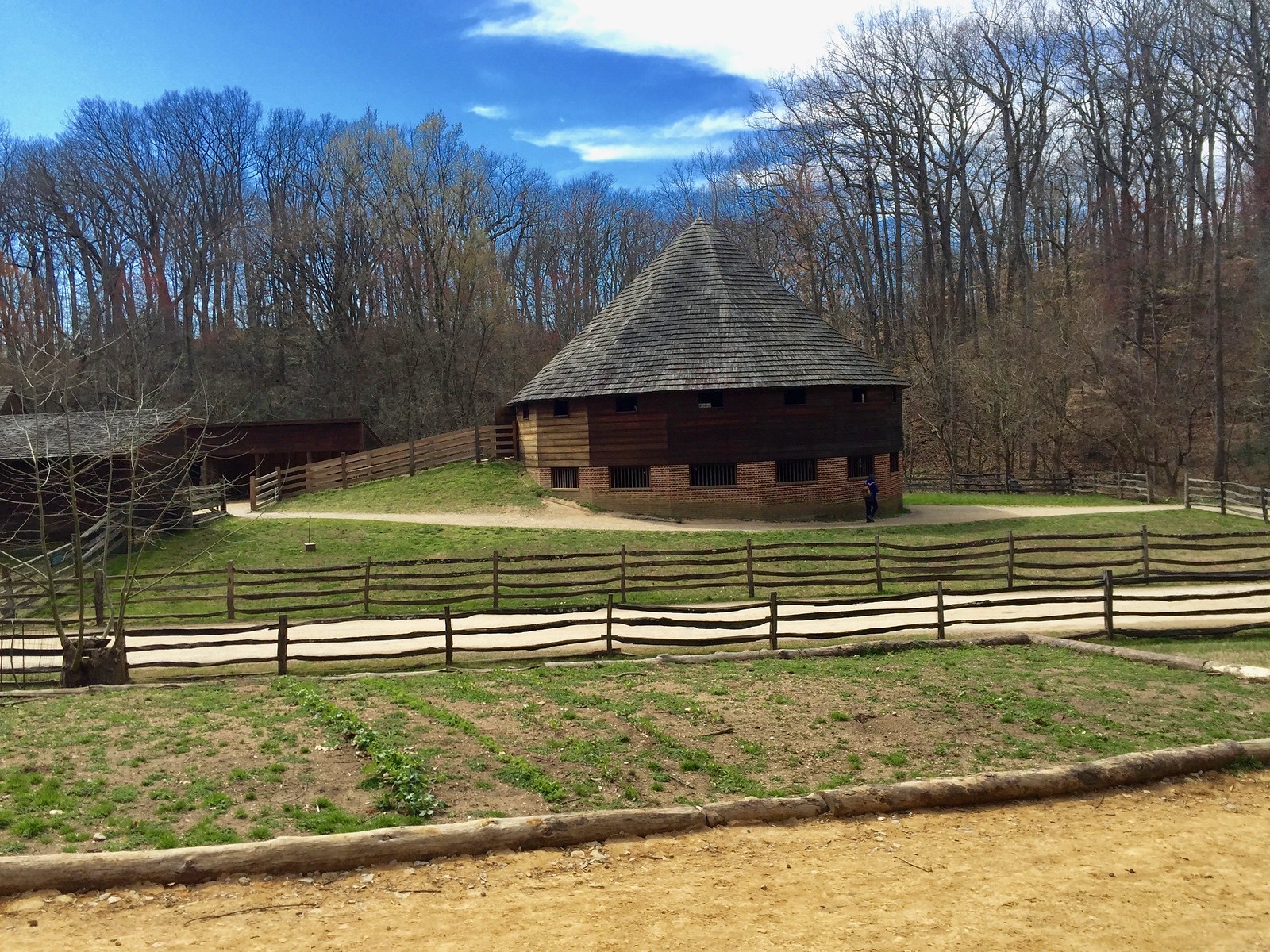
Kentucky is famous for bourbon, but the story of American whiskey begins in Virginia. A colonist on the James River described a drink made from corn in 1620. George Washington ran one of the country’s largest whiskey distilleries at Mount Vernon. The man often called the “father of bourbon” made whiskey in what was then still Virginia territory. After a long break caused by the Civil War and Prohibition, Virginia distilling has come back, with craft producers across the state.
Quick answer: In 1620 George Thorpe, a colonist near Jamestown, wrote that he had found a way to make “good drinke of Indian corne,” often cited as the first recorded American corn spirit. In 1799 George Washington’s Mount Vernon distillery made nearly 11,000 gallons, one of the largest in America; his rye whiskey (60% rye, 35% corn, 5% malted barley) is now Virginia’s official state spirit. After Prohibition, A. Smith Bowman’s farm in Fairfax County became Virginia’s only legal distillery for decades. Today more than 400 Virginia-distilled spirits are sold in state ABC stores.[1][2][3][4]
Contents
- How distilling works
- George Thorpe and the first corn spirit
- Rum, brandy and the shift to whiskey
- George Washington, distiller
- Elijah Craig and the Virginia roots of bourbon
- What makes bourbon bourbon
- White oak and barrels
- A. Smith Bowman and Virginia Gentleman
- The craft distillery boom
- Timeline
- Frequently asked questions
How distilling works
Distilling concentrates alcohol. First, grain or fruit is fermented into a low-alcohol liquid: a “beer” (called wash or mash) made from grain, or a wine made from fruit. Because alcohol boils at a lower temperature than water, heating that liquid in a still drives off alcohol vapor first. The vapor travels through a cooled pipe or coil, condenses and drips out as a much stronger spirit. Whiskey comes from grain, brandy from fruit, rum from sugarcane or molasses, and gin is a spirit flavored with juniper berries and other botanicals.
At Mount Vernon’s restored distillery, as NPR described it, grain is cooked to turn its starches into sugar, fermented, and distilled down to about 140 proof (70 percent alcohol).[2]
George Thorpe and the first corn spirit
In 1620, George Thorpe wrote from a plantation near Jamestown to England, describing a “good drinke of Indian corne” that he and his fellow colonists had made. Historians have suggested that this was unaged corn whiskey, which would make it the first recorded whiskey in America, made on the banks of the James River.[1][5]
Native peoples of the Southeast had their own ritual drink, made not from grain but from the leaves of the yaupon holly, a native evergreen that contains caffeine; early colonists described Native people drinking yaupon tea as part of a purification ritual. Yaupon still grows wild near Virginia Beach.[6]
Rum, brandy and the shift to whiskey
For much of the 18th century, Virginians’ favorite spirit was rum. When war and tariffs made imported rum hard to get, home-grown grain became the obvious alternative.[2]
Settlers who arrived in the late 1700s brought their own whiskey-making knowledge, and backcountry farmers turned grain and fruit into spirits.[12] By the early 1800s, thousands of distilleries were operating in Virginia, most making whiskey from rye and corn. The Civil War destroyed many of them, and Prohibition, which began in Virginia in 1916, pushed distilling underground (see moonshine in Virginia).[5]
George Washington, distiller
After he left the presidency, George Washington turned grain into profit. His distillery at Mount Vernon made nearly 11,000 gallons of whiskey in 1799, the year of his death, making it one of the largest whiskey distilleries in America at the time.[3] A Mount Vernon historian told NPR that the distillery was “the single most profitable part of his plantation.” The hard work of making the whiskey fell to six enslaved men, a fact Mount Vernon’s interpreters say should never be papered over.[2]
The distillery has been rebuilt on its original site with help from the distilled spirits industry. Using the ledgers of 1798 and 1799, its staff recreated the recipe: 60 percent rye, 35 percent corn and 5 percent malted barley. The resulting George Washington’s Rye Whiskey became the official liquor of the Commonwealth of Virginia under SB 1261, a 2017 bill sponsored by Sen. Adam Ebbin and signed by Governor Terry McAuliffe.[2][3]
Elijah Craig and the Virginia roots of bourbon
Bourbon is usually linked with Kentucky, but Kentucky was part of Virginia until 1792 (see the Virginia–Kentucky border). Elijah Craig, a preacher turned entrepreneur, is said to have started aging whiskey in barrels around 1789 in the western region of Virginia that later became Fayette County and then Scott County, Kentucky.[5] Craig is often called the “father of bourbon,” so bourbon’s traditional origin story is set in what was then Virginia.
What makes bourbon bourbon
Federal labeling rules define bourbon: among other things, it must be made from a grain mixture of at least 51 percent corn and aged in new charred oak containers, and “straight” bourbon must be aged at least two years.[13] Washington’s rye whiskey, with more rye than corn, is not bourbon.
Aging gives bourbon most of its color and flavor. A study by University of Kentucky researchers and a distillery found that wood sugars released from oak barrels, from the cellulose and hemicellulose of the wood, change as the spirit ages, and that the barrel is responsible for much of the final flavor.[7]
White oak and barrels
Bourbon barrels are made from American white oak. White oak covers more than 104 million acres of forest in the eastern and central United States, but in many places young oaks are not regenerating well, because shade-tolerant trees such as beech and maple crowd them out. The White Oak Initiative, a coalition of foresters, landowners and industry, works to keep white oak forests healthy for wildlife and for future barrel-makers.[8]
A. Smith Bowman and Virginia Gentleman
Abram Smith Bowman, an Indiana businessman with Virginia roots, bought the 4,000-acre Sunset Hills Farm in western Fairfax County in the 1920s to run a dairy and grain operation. His land had been the site of the would-be town of Wiehle, which faded after its founder died in 1901. With grain to spare, Bowman waited for the end of Prohibition and then opened a distillery, the first and for years the only legal distillery in Virginia after 1916. Production started in a former church building, whose steeple had to come down; the company’s best-known whiskey was Virginia Gentleman.[4]
After Bowman’s death in 1952 his sons ran the business. In 1961 they sold the farm, by then about 7,000 acres, to developer Robert E. Simon, who built the planned community of Reston on it.[4] The distillery later moved to Fredericksburg, where it still operates. In 2017 its John J. Bowman Single Barrel Bourbon was named the world’s best bourbon at the World Whiskies Awards, beating Kentucky competitors.[5] The former distillery building in Reston is listed on the National Register of Historic Places.[9]
The craft distillery boom
For decades Virginia had very few legal distilleries. That changed in the 21st century, as craft spirits caught on nationwide; Old Dominion University economists noted in 2018 that craft distilleries were following the path of craft breweries.[14] Virginia’s craft distilleries now make whiskey, rum, gin, brandy, vodka and liqueurs. Some examples:
- Catoctin Creek Distilling in Purcellville (Loudoun County) makes rye whiskeys, including the 100 percent rye Roundhouse Rye.[5]
- Copper Fox Distillery in Sperryville and Williamsburg smokes its own malted barley over applewood and cherrywood.[5]
- Belmont Farm Distillery in Culpeper and Belle Isle in Richmond make legal corn whiskey with a nod to moonshine history.[10]
Virginia-made spirits sell well in state stores. In fiscal year 2024, Virginia ABC stocked more than 400 Virginia-distilled spirits, which sold over 600,000 bottles worth $21.5 million.[11] For how liquor is sold in Virginia, see Virginia ABC stores and liquor laws.
Timeline
| Year | Event |
|---|---|
| 1620 | George Thorpe describes a drink made from corn near the James River |
| 1700s | Rum, peach and apple brandy popular; backcountry settlers distill whiskey |
| c. 1789 | Elijah Craig said to age whiskey in barrels in Virginia’s Kentucky region |
| 1799 | Washington’s distillery makes nearly 11,000 gallons |
| 1916 | Virginia Prohibition closes legal distilleries |
| 1930s | A. Smith Bowman opens the first legal distillery after Prohibition |
| 2017 | Washington’s rye becomes Virginia’s official spirit (SB 1261) |
| 1961 | Bowman land sold; Reston is built on it |
| 2017 | Bowman bourbon named world’s best at the World Whiskies Awards |
| 2024 | More than 400 Virginia-distilled spirits in ABC stores |
Frequently asked questions
Was the first American whiskey made in Virginia? George Thorpe’s 1620 letter about a drink made from corn is often cited as the first record of whiskey in America.[1][5]
What is Virginia’s state spirit? George Washington’s Rye Whiskey, made at Mount Vernon’s rebuilt distillery.[3]
Is bourbon from Virginia? Elijah Craig, often called the father of bourbon, is said to have aged whiskey in barrels around 1789 in western Virginia, in the region that became part of Kentucky in 1792. Today Virginia distilleries such as A. Smith Bowman make award-winning bourbon.[5]
How many Virginia-made spirits are in ABC stores? More than 400 in fiscal year 2024.[11]
References
- “Moonshine Makes A Comeback in Virginia. And This Time, It’s Legal,” NPR, The Salt, October 19, 2017, https://www.npr.org/sections/thesalt/2017/10/19/558324004/moonshine-makes-a-comeback-in-virginia-and-this-time-its-legal
- “Drinking Whiskey In The Spirit Of George Washington,” NPR, The Salt, October 22, 2011, https://www.npr.org/sections/thesalt/2011/10/22/141589394/drinking-whiskey-in-the-spirit-of-george-washington
- “Virginia now has a state spirit: George Washington’s rye whiskey,” InsideNoVa (VCU Capital News Service), March 26, 2017, https://www.insidenova.com/headlines/virginia-now-has-a-state-spirit-george-washington-s-rye/article_f86ce936-0f32-11e7-b9ca-47b31883a860.html
- “How Virginia’s First Post-Prohibition Distillery Got Its Spirit,” Virginia Living, https://virginialiving.com/virginiana/how-virginias-first-post-prohibition-distillery-got-its-spirit/
- “Kentucky Is Neither the Birthplace Nor Apex of American Whiskey,” VinePair, December 20, 2017, https://vinepair.com/articles/virginia-whiskey/
- “Yaupon Holly: The Forgotten Beverage,” Lewis Ginter Botanical Garden, https://www.lewisginter.org/yaupon-holly/
- Jarrad Gollihue et al., “Liberation of recalcitrant cell wall sugars from oak barrels into bourbon whiskey during aging,” Scientific Reports 8, 15899 (2018), https://doi.org/10.1038/s41598-018-34204-1
- “White Oak Facts,” White Oak Initiative, https://www.whiteoakinitiative.org/white-oak-facts
- “Bowman Distillery,” National Register of Historic Places, NPGallery, National Park Service, https://npgallery.nps.gov/AssetDetail/NRIS/99001503
- “Moonshine Makes A Comeback in Virginia. And This Time, It’s Legal,” NPR (see note 1)
- Virginia Alcoholic Beverage Control Authority, Annual Comprehensive Financial Report for Fiscal Year Ended June 30, 2024 (RD909), https://rga.lis.virginia.gov/Published/2024/RD909
- “Prohibition & Franklin County, the Moonshine Capital of the World,” Virginia Tourism Corporation, https://www.virginia.org/blog/post/franklin-moonshine-history/
- Code of Federal Regulations, 27 CFR 5.143 (whisky standards of identity), https://www.ecfr.gov/current/title-27/chapter-I/subchapter-A/part-5/subpart-I/section-5.143
- “Annual Report: Craft Brewing Provides an ‘Economic Engine’ for Hampton Roads,” Old Dominion University, November 2018, https://ww1.odu.edu/news/2018/11/craft_brewing_growth