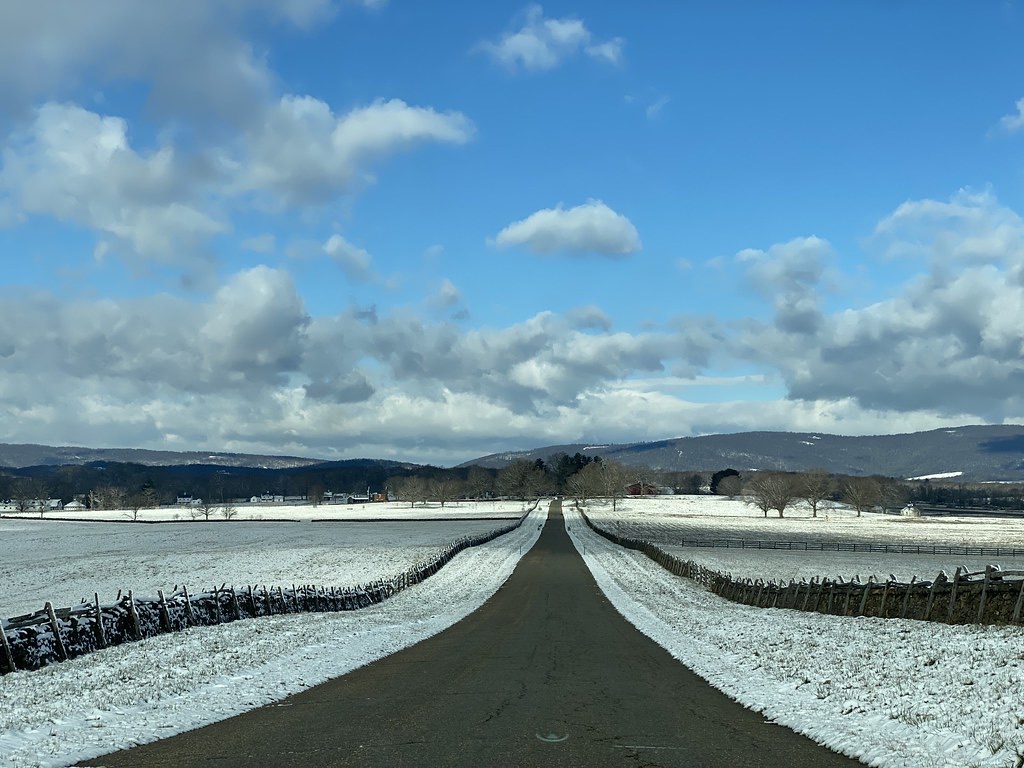
Virginia calls itself the birthplace of American wine, and the claim is fair in one sense: English colonists began trying to make wine here in the first years of Jamestown. For almost three centuries they mostly failed. Native grapes made poor wine, European vines died, and wars and Prohibition wiped out what progress there was. Success came only in the late 20th century, when growers in the Piedmont and the Blue Ridge found the right grapes, methods and customers, and wineries became one of the state’s favorite places to spend a weekend.
Quick answer: Jamestown settlers made wine from wild grapes as early as 1609. In 1619 the first General Assembly passed “Acte 12,” requiring every male householder to plant ten imported vines. European vines kept failing, including Thomas Jefferson’s attempts at Monticello. In 1817 Dr. Daniel Norton of Richmond developed the Norton grape, and a Virginia Norton won a prize at the 1873 Vienna World’s Fair. By 1890 Virginia made 461,000 gallons of wine. Prohibition ended that first industry; today’s wineries date mostly from the 1970s onward.[1]
Contents
- Wild grapes at Jamestown
- Acte 12: ten vines per household
- Estave, Jefferson and Mazzei
- The Norton grape
- Prohibition and the long pause
- The modern revival
- Wineries as destinations
- Terroir and viticultural areas
- Wineries and their neighbors
- Timeline
- Frequently asked questions
Wild grapes at Jamestown
The colonists who landed in 1607 found grapevines everywhere. Captain John Smith wrote that they grew “in great abundance in many parts that climbe the toppes of the highest trees.” Settlers soon made wine from them, starting around 1609, but these native grapes, very different from the European wine grape (Vitis vinifera), gave wine with a taste the English found unpleasant.[1]
England had a clear reason to want Virginia wine. The colony was supposed to produce goods the mother country otherwise bought from rivals such as France and Spain, and wine was high on that list.
Acte 12: ten vines per household
The first legislative assembly in English America met at Jamestown in 1619. Among its laws was Acte 12, which required every male householder to plant ten vines of imported European grapes for wine. Several laws over the next 50 years tried to push settlers into growing grapes.[1]
The laws did not work. Tobacco was far more profitable, and the European vines did badly in Virginia’s hot, humid summers. Pests and disease killed many of them. One settler, John Johnson, did plant 85 acres; a modern winery on that land honors him with an “Acte 12” Chardonnay.[1]
Estave, Jefferson and Mazzei
In 1770 the General Assembly tried again. It hired a Frenchman, Andrew Estave, as the colony’s official winemaker and vine grower. He studied the soil for two years and then planted 100 acres of European vines at Jockey’s Neck near Williamsburg. They failed too; Estave concluded that the vines were too fragile for Virginia’s climate. The land later became the Williamsburg Winery, founded in 1983.[1]
Thomas Jefferson, often called America’s first wine connoisseur, wanted Virginia to become a great wine state. With George Washington, George Mason and about 25 other leaders he backed the Virginia Wine Company, and he gave land near Monticello to the Italian vine grower Filippo Mazzei. Their European vines showed early promise but were lost, whether because of the Revolution or pests; historians disagree. Jefferson never made a successful wine of his own, yet as president he is said to have spent about $10,000 on wine, a fortune at the time.[1]
The Norton grape
The breakthrough came from a cross between American and European grapes. In 1817 Dr. Daniel N. Norton of Richmond began developing a grape that combined a Virginia native vine with European varieties. Its exact origin is still something of a mystery, but the result resisted North American pests, survived Virginia’s climate and made a dry red table wine with intense flavor.[1]
Norton put Virginia on the wine map. A Norton red bottled by the Monticello Wine Company won an international award at the Vienna World’s Fair of 1873. By 1890 Virginia produced 461,000 gallons of wine and ranked as the nation’s fifth-largest wine producer.[1]
Prohibition and the long pause
Then came three blows in a row: the damage of the Civil War, Prohibition, and the Great Depression. Virginia went dry in 1916 (see Prohibition in Virginia); by the end of the 1930s the Norton vines had been destroyed to comply with Prohibition laws, and there was no money during the Depression to start again.[1]
The modern revival
The revival began in the 1970s. Researchers in California had shown that American wine could match French wine, and Virginia farmers saw a chance: hilly pasture in the Piedmont and the Blue Ridge could earn much more as vineyards if growers could manage the climate. Better vineyard methods and grapes chosen for humid summers made the difference, at a time when Americans were drinking more wine.[1]
Most Virginia wineries are small. Rather than compete on price with the giant producers of California, they tend to sell a niche product, much of it directly to visitors.
Wineries as destinations
In Virginia, wine is a tourism product as much as a farm product. Wineries earn most when visitors come to them: they taste, buy bottles, eat, attend concerts and weddings, and come back. Selling at the winery cuts out distributors and stores, so the winery keeps the full price.
The same tasting-room model later helped breweries and distilleries grow (see Virginia beer, breweries and hops and Virginia distilleries, whiskey and bourbon). Wineries are now found in the Piedmont and the foothills of the Blue Ridge, the Shenandoah Valley, Northern Virginia and the Coastal Plain, and the federal grape-growing areas below cover several of these regions.[2]
Terroir and viticultural areas
Terroir is the French idea that a wine tastes of its place: the soil and rock, slope, sun, rain and the people who farm the grapes. In the United States, the federal Alcohol and Tobacco Tax and Trade Bureau (TTB) recognizes American Viticultural Areas (AVAs), grape-growing regions with features that set them apart. A wine can carry an AVA name on its label only if at least 85 percent of its grapes come from that area.[2]
Virginia has several AVAs, among them the Shenandoah Valley and, next to it on the east, Middleburg Virginia. The Middleburg AVA, established by TTB in September 2012, covers about 198 square miles in Loudoun and Fauquier Counties; the petition behind it counted 229 acres of commercial vineyards and 12 wineries.[2]
Wineries and their neighbors
Success brought conflict. Weddings, festivals and crowds at rural wineries can mean noise and traffic on country roads, while winery owners see events as the income that keeps their farms going. State law protects many usual winery activities, and counties have argued with wineries over how far local rules on hours, events and crowds can go. In Loudoun and Fauquier, where the Middleburg AVA lies, the balance between farm business, tourism and rural quiet remains a local issue.[2]
Timeline
| Year | Event |
|---|---|
| 1609 | Jamestown settlers make wine from wild grapes |
| 1619 | Acte 12: every male householder must plant ten European vines |
| 1770 | Andrew Estave hired as official winemaker; vineyard near Williamsburg fails |
| 1770s | Jefferson and Mazzei plant European vines near Monticello |
| 1817 | Dr. Daniel Norton begins developing the Norton grape |
| 1873 | Virginia Norton wins a prize at the Vienna World’s Fair |
| 1890 | Virginia produces 461,000 gallons, fifth in the nation |
| 1916–1933 | Prohibition; vineyards destroyed |
| 1970s | Modern revival begins |
| 2012 | Middleburg Virginia AVA established |
Frequently asked questions
Is Virginia the birthplace of American wine? Virginia was among the first places where English colonists made wine, around 1609, and it passed America’s first wine law in 1619.[1]
What is Virginia’s own grape? Norton, a grape developed in Richmond starting in 1817, is often called Virginia’s native wine grape.[1]
Did Thomas Jefferson make wine at Monticello? He tried for decades, with Filippo Mazzei and others, but never produced a successful wine of his own.[1]
What is an AVA? An American Viticultural Area, a grape-growing region recognized by the federal TTB; at least 85 percent of the grapes must come from the area to use its name on a label.[2]
References
- “The Birthplace of American Wine: The Untold Story behind Virginia’s Vines,” Virginia Tourism Corporation, https://www.virginia.org/blog/post/american-wine-birthplace/
- Alcohol and Tobacco Tax and Trade Bureau, “Establishment of the Middleburg Virginia Viticultural Area,” Federal Register 77, no. 178 (September 13, 2012), https://www.govinfo.gov/content/pkg/FR-2012-09-13/html/2012-22596.htm