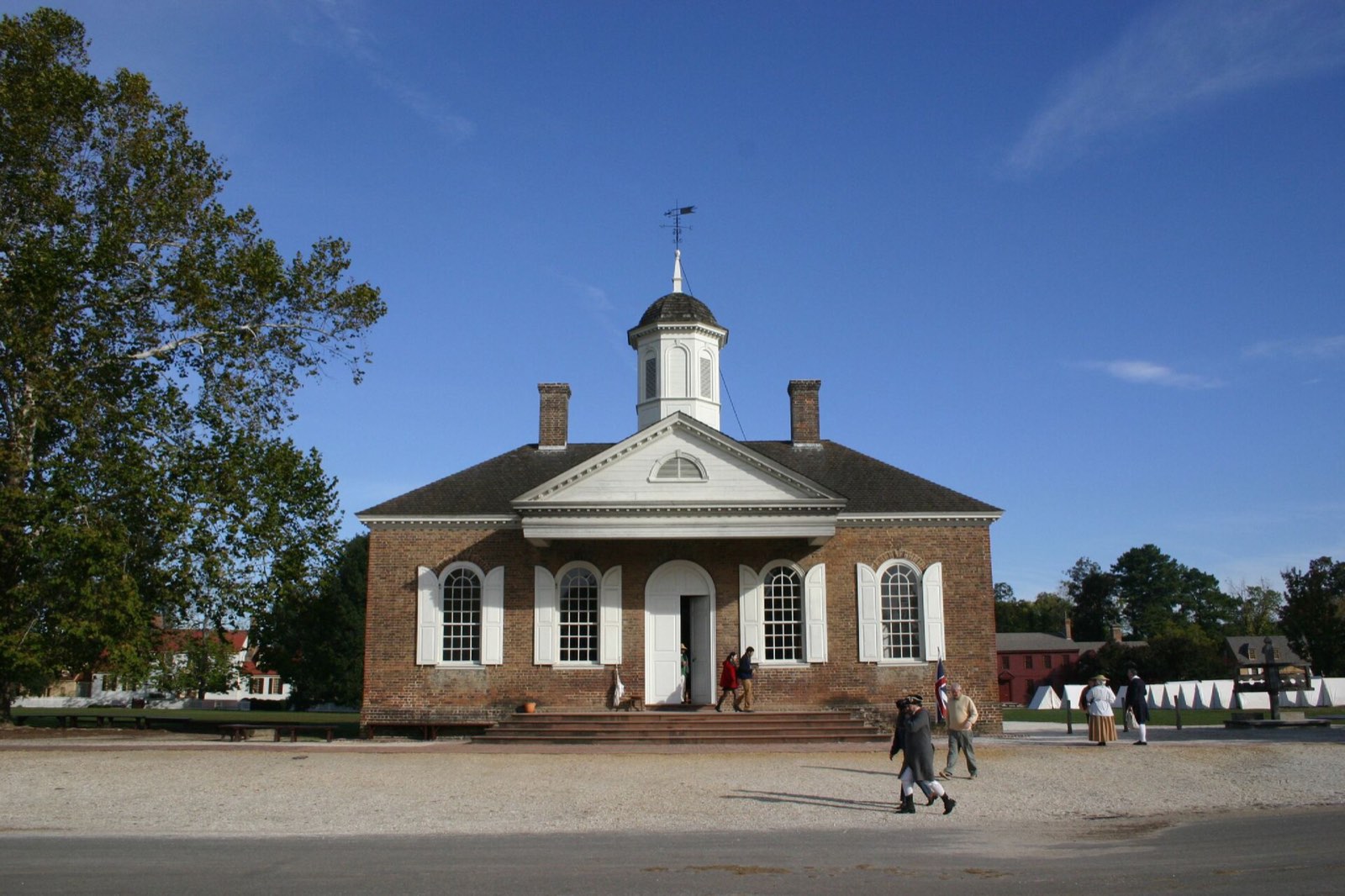
The right to vote in colonial Virginia changed several times between the 1640s and the Revolution. For most of the colonial period it depended on owning land.
Quick answer: For most of the colonial period, the right to vote in colonial Virginia belonged to free adult white men who owned land, with some tenants holding life leases. From 1736 a voter needed 100 acres of unimproved land or 25 acres of improved land, held for at least a year. Women, men under 21, and free Black, mixed-race and Native men were excluded.
Contents
- Changing Rules, 1646-1736
- Who Was Excluded
- How Many Men Could Vote
- What Voters Elected
- Frequently asked questions
Changing Rules, 1646-1736
The qualifications for voting were set by the General Assembly and changed over time.[1]
| Year | Rule |
|---|---|
| About 1646 | All freemen (men who were neither enslaved nor indentured servants) |
| 1655 | Only “housekeepers,” the heads of households; all freemen again in 1656 |
| 1670 | Only freeholders (landowners) and housekeepers |
| 1676 | Limit lifted during Bacon’s Rebellion; restored in 1677 |
| 1684 | Tenants with life leases could vote; a man could vote in any county where he held land |
| 1736 | 100 acres of unimproved land, or 25 acres of improved land, owned for at least one year |
The House of Burgesses tried to lower the unimproved-land requirement to 50 acres in 1762 and again in 1769. Both attempts were rejected in England, so the 1736 rule remained in force until the end of the colonial period.[1]
Who Was Excluded
- Women and men under 21 were formally excluded in 1699.[1]
- Free Black, mixed-race and Native men were barred from voting in 1723.[1]
- Religion: in the 1600s only members of the Church of England voted. Quakers gained the vote after the Toleration Act of 1689, and by the 1750s other dissenters voted without official approval.[1]
- Enslaved people and indentured servants were never freemen and could not vote.[1]
How Many Men Could Vote
By the middle of the 1700s, an average county had about 350 voters, though some had as few as 125 and others more than 1,000. Roughly half of adult white men qualified by owning land, and about 20 percent more qualified as life tenants.[1]
What Voters Elected
Voters chose the members of the House of Burgesses, the lower house of the General Assembly and the only elected body in the colony. The council members and the governor were not elected.[2] By the 1690s each county sent two burgesses.[1] Election day was a public event that drew crowds and had a “carnival-like atmosphere,” in the words of the Library of Virginia.[2]
Frequently asked questions
Was the right to vote in colonial Virginia only held by land owners? Mostly. From 1670 voting was limited to freeholders and housekeepers, and from 1684 tenants with life leases could also vote.
How much land did you need to vote in colonial Virginia? After 1736, 100 acres of unimproved land or 25 acres of improved land, owned for at least one year.
Could women vote in colonial Virginia? No. Women were formally excluded in 1699.
When were free Black men barred from voting in Virginia? In 1723.
References
- [1] Encyclopedia Virginia (Virginia Humanities), John G. Kolp, Elections in Colonial Virginia – last checked 11/08/2026
- [2] Library of Virginia, Virginia’s Political History: Colonial Period – last checked 11/08/2026
The structure of the colonial government is described in Virginia Colony Government.