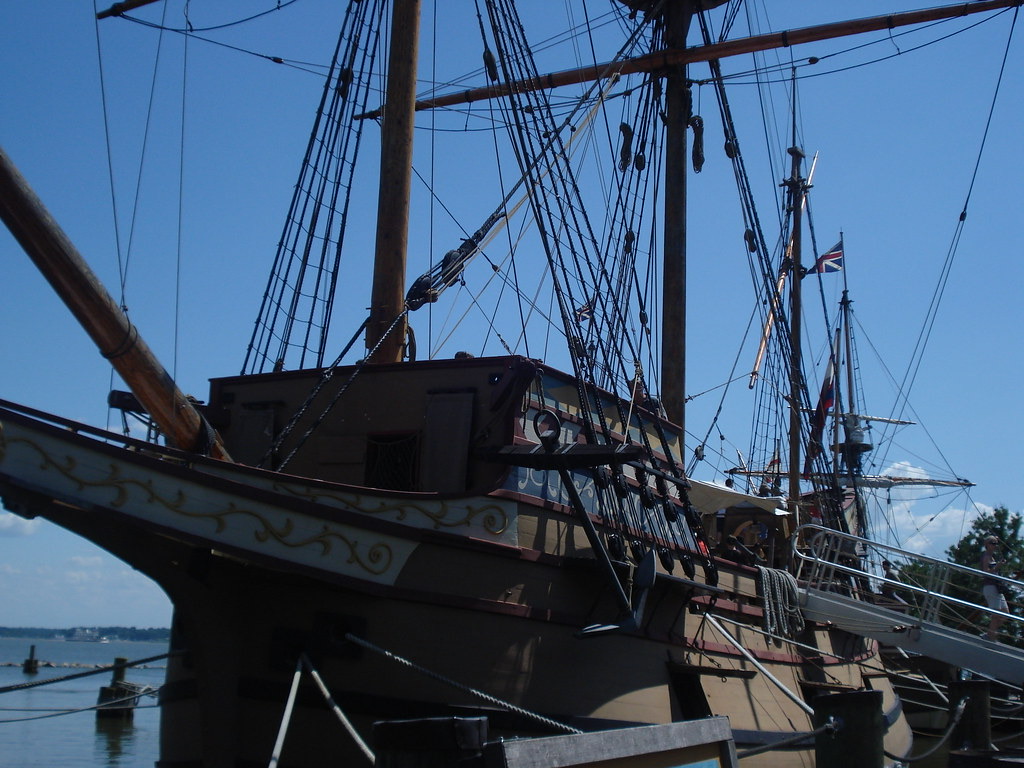
Jamestown was not founded by the English crown. It was founded by a company. A group of London merchants and gentlemen pooled their money, obtained a royal charter, and sent ships across the Atlantic hoping that a colony in Virginia would pay them back. It never did, at least not for the shareholders. Yet the decisions the company made in its eighteen years, from how it rewarded settlers with land to how it let colonists elect an assembly, shaped Virginia for centuries.
Quick answer: The Virginia Company of London was a joint-stock company chartered by King James I on April 10, 1606, to plant an English colony between 34° and 41° north. Investors bought shares at £12 10s each. Its first colonists chose Jamestown on May 13, 1607. New charters in 1609 and 1612 reorganized the company, let it appoint a governor, added Bermuda and allowed a lottery. Profits never came; the company turned to land grants (headrights, from 1617), backed tobacco and, under Sir Edwin Sandys after 1619, a representative assembly. After the 1622 Powhatan attack and years of debt and infighting, James I revoked the charter on May 24, 1624, and Virginia became a royal colony.[1][2]
Contents
- A company, not a kingdom
- The 1606 charter and the two branches
- Shares, investors and managers
- The first voyage and the sealed box
- The 1609 charter: one governor in charge
- The Starving Time and a near abandonment
- Selling the colony: pamphlets and a lottery
- Land instead of dividends
- Tobacco changes the math
- Sandys, the assembly and 1619
- 1622 and the end of the company
- What the company left behind
- Timeline
- Frequently asked questions
A company, not a kingdom
England came late to North America. In the 1580s Sir Walter Raleigh had financed the Roanoke colony on the Outer Banks, and its disappearance, the “Lost Colony,” left the crown unwilling to spend its own money on another try.[1] The solution in 1606 was the same one English merchants had used to trade with Russia and Asia: the joint-stock company. The Muscovy Company and the East India Company had shown that many investors, each buying shares, could spread the risk of a distant and dangerous venture. The Virginia Company copied that model.[1]
The arrangement suited King James I. He granted the charter, kept final authority through a royal council, and risked none of his own treasury. If the colony found gold, a passage to the Pacific or valuable trade goods, England would gain. If it failed, private investors would absorb the loss.
The 1606 charter and the two branches
The First Charter, dated April 10, 1606, authorized two groups of “adventurers.” One, centered in London, could settle between 34 and 41 degrees of north latitude. The other, made up of men from Bristol, Exeter and Plymouth, could settle between 38 and 45 degrees. Each colony would control land 50 miles up and down the coast from its first seat and 100 miles inland, and the two had to stay at least 100 miles apart where their zones overlapped.[4] A council in England, named by the king, would oversee both, while a local council in each colony would run daily affairs.[4]
The Plymouth branch planted a short-lived colony where the Kennebec River meets the sea, in present-day Maine, in 1607, which was abandoned the next year. The London branch’s colony at Jamestown survived, and “the Virginia Company” usually means the London company. The way these charter lines later shrank to the Virginia we know is told in Virginia charters and colonial boundaries.
Shares, investors and managers
A share in the company cost £12 10s, and anyone who bought one shared in the colony’s success or failure.[1] The company had two goals that did not always fit together: to earn a return for its shareholders and to establish an English colony.[1] Its first treasurer, the chief executive of the enterprise, was Sir Thomas Smith (also spelled Smythe), a London merchant already active in overseas trading companies.[1]
Two kinds of people went to Virginia on the company’s account. Laborers were armed, clothed and fed from a common store, and were promised land of their own after seven years of work. Gentlemen, who supplied their own arms and armor, expected to be rewarded in land, dividends or additional shares.[1] In other words, almost everyone in early Jamestown was working for the company.
The first voyage and the sealed box
The company’s three ships, the Susan Constant, the Godspeed and the Discovery, left England in December 1606 with 104 men and boys who arrived in Virginia the next spring.[2] The company’s instructions told them to find a site that could be defended against a Spanish attack, and on May 13, 1607, they chose a peninsula on the James River that was surrounded by water on three sides, far upriver and deep enough for ships to tie up at the bank.[2] (See Jamestown: why there?.)
The names of the seven men who would govern the colony were kept in sealed boxes until the ships arrived. When the box was opened, the council turned out to be Edward Maria Wingfield as president, with Bartholomew Gosnold, Christopher Newport, John Martin, John Ratcliffe, George Kendall and John Smith.[2] Rivalries among these men would trouble the council from the start. The settlers finished a triangular wooden fort by mid-June 1607.[2][3]
The 1609 charter: one governor in charge
Government by a council that elected its own president did not work well. Leadership changed hands repeatedly, and the colony suffered from disease, food shortages and conflict with the Powhatan people. John Smith, the third president, was a stronger leader, but he was badly injured in a gunpowder accident and returned to England in October 1609.[1][3]
In London the company obtained a Second Charter in 1609. It turned the company into a corporation run by its treasurer and council in London and allowed it to choose a governor for the colony from among its shareholders.[1][5] The same charter greatly enlarged the grant, to 200 miles north and 200 miles south of Point Comfort and “from sea to sea,” west and northwest across the continent.[5] A burst of recruiting followed: more than 600 colonists sailed for Virginia between 1608 and 1609.[1]
The Starving Time and a near abandonment
The new arrangements met disaster at sea. The ship carrying the deputy governor, Sir Thomas Gates, was wrecked on Bermuda in 1609, and he did not reach Virginia until May 1610.[1][2] Meanwhile the winter of 1609–1610 became the “Starving Time.” About 300 settlers crowded into the fort under siege, and only about 60 were alive in the spring.[3]
Gates found the fort in ruins and decided to abandon the colony. The survivors had already sailed downriver when they met the fleet of the new governor, Lord De La Warr, coming upstream, and everyone turned back to Jamestown.[2] Under De La Warr and his successors the colony was run under strict rules close to martial law, with the settlers treated as company workers who owed obedience and labor.
The news from Virginia was a financial catastrophe. Many people who had pledged to buy shares refused to pay, and the company was drawn into dozens of lawsuits while it went deeper into debt to send more colonists.[1]
Selling the colony: pamphlets and a lottery
To keep money coming in, the company launched what amounted to an advertising campaign. It posted broadsides, printed persuasive articles and asked ministers to preach in favor of colonization. Before it was dissolved it had published 27 books and pamphlets about Virginia.[1] The pitch shifted from quick profits to patriotism: buying a share would make England stronger, spread the Church of England, employ the idle poor and open new markets.[1]
By 1612 the company’s debts were over £1,000. A Third Charter issued that year gave short-term relief. It allowed the company to raise money through a lottery and added the islands within 300 leagues of the coast, which brought Bermuda into the grant.[1][6] Bermuda soon became a separate venture of its own.
Land instead of dividends
The company had promised its early investors a division of profits after seven years, and it had promised its laborers land. By 1616 there were no profits to divide. The company paid what it could in the only asset it had in abundance: it handed out 50-acre lots instead of cash.[1]
The next year it introduced the headright system. Anyone who paid for a person’s passage to Virginia could claim land for that “head,” so investors and residents could build estates by importing settlers, most of whom then worked for a term of years as servants.[1] The Library of Virginia notes that a few patents issued by the company were later recorded or confirmed in the colony’s first patent books.[7] Land, rather than gold, became the reward that drew people across the ocean. The full story of headrights, patents and treasury rights is told in headrights and land titles in colonial Virginia.
Tobacco changes the math
What finally gave Virginia an export worth shipping was tobacco. In 1612 John Rolfe, who had been among the castaways on Bermuda, began growing a new strain from seeds he brought from elsewhere, and tobacco became the colony’s cash crop.[2] Early experiments with glass, pitch, tar and potash had barely paid, since those goods were cheaper in Europe.[1]
Tobacco solved one problem and created another. The crop needed land and a great deal of labor, so the colony’s appetite for both grew without limit. That appetite pushed settlement deeper into Powhatan territory and, after 1619, toward the forced labor of Africans.
Sandys, the assembly and 1619
Inside the company, two visions competed. Smith, as treasurer, saw Virginia mainly as a trading business. Sir Edwin Sandys wanted a permanent colony that would enlarge English territory, absorb England’s surplus population and create a market for English goods, and he strongly backed headrights.[1] Sandys’s view won when he was elected treasurer in 1619. He promoted settlement and sought protection for Virginia tobacco in England, while urging colonists, without success, to plant other crops too.[1]
The company’s new instructions also changed how the colony was governed. On July 30, 1619, Governor George Yeardley convened the first representative legislative assembly in English America, in the church at Jamestown.[2][3] The same year the company recruited about 90 women to sail to Virginia to marry and start families, and the first documented Africans were brought to the colony and forced to work in the tobacco fields.[2]
1622 and the end of the company
By 1621 the company’s debt had passed £9,000, and the heavy use of lotteries and the lack of dividends had made new investors wary.[1] In March 1622 the Powhatan paramount chief Opechancanough launched a coordinated attack on the English settlements. Between 350 and 400 of the roughly 1,200 colonists were killed; Jamestown itself was spared because of a warning.[2]
The attack, the debts and the bitter factional quarrels in London persuaded the king to act. When the crown proposed a new charter that would have sharply limited the company’s say in governing Virginia, the members rejected it.[1] On May 24, 1624, King James I revoked the charter, and Virginia became a royal colony with a governor appointed by the king.[2] The assembly the company had created survived; it received royal approval in 1627.[1]
What the company left behind
As an investment the Virginia Company failed: its shareholders never earned a profit, and its colonists paid a heavy price for mismanagement from across the ocean.[1] As a colonizing venture it succeeded beyond anything its founders could have measured. It left behind:
- a permanent English colony, the first in North America;
- a land system based on headrights, which tied immigration to land grants for more than 150 years;
- a representative assembly, the ancestor of today’s General Assembly;
- a tobacco economy that would dominate Virginia for two centuries; and
- huge charter claims in the West that later fed Virginia’s frontier expansion (see Shenandoah Valley land grants).
Timeline
| Date | Event |
|---|---|
| April 10, 1606 | First Charter of the Virginia Company |
| December 1606 | Three ships leave England |
| May 13, 1607 | Jamestown site chosen |
| 1607–1608 | Plymouth branch’s colony in Maine founded and abandoned |
| 1609 | Second Charter; governor appointed by the company; Gates’s ship wrecked on Bermuda |
| 1609–1610 | Starving Time |
| June 1610 | Near abandonment; Lord De La Warr arrives |
| 1612 | Third Charter: lottery and Bermuda; Rolfe’s tobacco |
| 1616 | 50-acre lots in place of dividends |
| 1617 | Headright system begins |
| 1619 | Sandys becomes treasurer; first General Assembly (July 30); first documented Africans |
| March 1622 | Opechancanough’s attack |
| May 24, 1624 | Charter revoked; Virginia becomes a royal colony |
Frequently asked questions
Who owned the Virginia Company? Its shareholders. Anyone who bought a share at £12 10s, from London merchants to gentry and clergy, became a member and shared in the risk.[1]
Did the Virginia Company make money? No. It never paid its investors a profit; by 1621 its debts were over £9,000.[1]
Why did the Virginia Company lose its charter? Mounting debt, the 1622 attack that killed about a third of the colonists, factional conflict among its leaders and its refusal of a new, more restrictive charter led James I to revoke it in 1624.[1][2]
What was the difference between the London and Plymouth companies? They were two branches authorized by the same 1606 charter. London’s colony was Jamestown; Plymouth’s was in Maine and lasted only a year.[4]
Where are the company’s records today? Many of the company’s court books and papers were published in the early 20th century as The Records of the Virginia Company of London.[8]
See also: the Virginia Colony overview, Virginia colony government, Virginia colony economy, Virginia colony timeline.
References
- National Park Service, Historic Jamestowne, “The Virginia Company of London.” https://www.nps.gov/jame/learn/historyculture/the-virginia-company-of-london.htm
- National Park Service, Historic Jamestowne, “A Short History of Jamestown.” https://www.nps.gov/jame/learn/historyculture/a-short-history-of-jamestown.htm
- Jamestown Rediscovery (Preservation Virginia), “History of Jamestown.” https://historicjamestowne.org/history/history-of-jamestown/
- “The First Charter of Virginia; April 10, 1606,” Avalon Project, Yale Law School. https://avalon.law.yale.edu/17th_century/va01.asp
- “The Second Charter of Virginia; May 23, 1609,” Avalon Project, Yale Law School. https://avalon.law.yale.edu/17th_century/va02.asp
- “The Third Charter of Virginia; March 12, 1611,” Avalon Project, Yale Law School. https://avalon.law.yale.edu/17th_century/va03.asp
- Library of Virginia, “Virginia Land Patents and Grants” research guide. https://lva-virginia.libguides.com/land-grants
- Susan Myra Kingsbury (ed.), The Records of the Virginia Company of London, vol. 3 (Government Printing Office, 1906 series), Internet Archive. https://archive.org/details/recordsofvirgini03virg