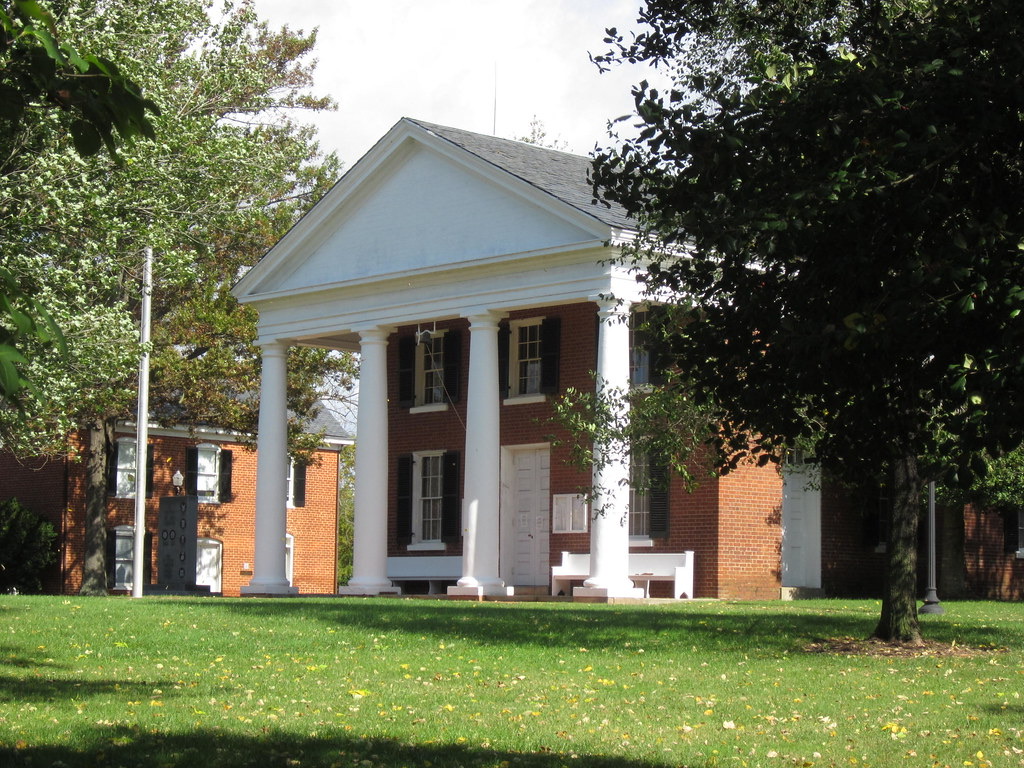
For two centuries the most important government in a Virginian’s life was the county court. Its justices, appointed rather than elected, tried lawsuits and minor crimes, but they also levied local taxes, licensed taverns and ferries, laid out roads and recorded deeds. Court day, when the justices met, brought the county to the courthouse to trade, gossip and hear the lawyers argue. Today Virginia’s courts are a four-level system run under the Supreme Court of Virginia, and county government has long since passed to elected supervisors. One colonial legacy survives: Virginia’s judges are still chosen by the legislature, not by voters.
Quick answer: Virginia’s court system has four levels: General District Courts and Juvenile and Domestic Relations District Courts (in 32 districts), Circuit Courts (in 31 circuits) that try major civil and criminal cases, the Court of Appeals, and the Supreme Court of Virginia, which has seven justices. All judges are elected by a majority of the members of each house of the General Assembly: Supreme Court justices for 12-year terms and other judges for 8-year terms.[1][2][3]
Contents
- Courts in colonial Virginia
- After independence
- Electing and appointing judges
- The courts today
- How judges are chosen today
- Crime and punishment
- Timeline
- Frequently asked questions
Courts in colonial Virginia
In the first years at Jamestown, the governor and council judged disputes and crimes themselves. As settlement spread along the rivers, local courts took over routine cases. These county courts, which operated from the 1620s, became the backbone of local government and kept running, almost unchanged, until the Civil War era.[5]
The colonial court system had two levels:
| Court | Members | Duties |
|---|---|---|
| General Court | The governor and the Council of State, meeting at the capital | Serious crimes, appeals from county courts, large civil cases |
| County courts | Justices of the peace appointed by the governor | Small civil cases and minor crimes, plus local taxes, roads, licenses, orphans, deeds and wills |
The justices were usually the leading planters of the county, and they often recommended their own replacements, so the courts were largely self-perpetuating. No one in the county elected them. The General Assembly created new counties as settlement moved west, partly so that people would not have to travel too far to reach a courthouse. See how the colony was governed.
After independence
The 1776 constitution kept the county courts and their appointed justices, and the General Assembly elected the judges of the new state courts of admiralty, common law, equity and appeal.[5] A Court of Appeals sat at the top. Equity cases went to a High Court of Chancery, whose best-known judge was George Wythe, professor of law at William and Mary. After the government moved to Richmond, Wythe used the old Capitol at Williamsburg for moot courts and mock legislatures to train the leaders of the next generation.[6]
Over the next decades the legislature created district and circuit courts to bring higher courts closer to the people. The Constitution of 1830 still left the General Assembly in charge of electing all judges except the justices of the peace.[5]
Electing and appointing judges
The democratic Constitution of 1851 made a dramatic change: voters elected judges of the circuit courts and the Supreme Court of Appeals, and also elected the justices of the county courts. The same constitution created a more uniform system of circuit and appellate courts across the state.[5]
The experiment with popular election of judges did not last, and under the current constitution the General Assembly again chooses all judges.[3] The Constitution of 1869, by creating elected county boards of supervisors, finally separated local government from the county courts.[5]
The courts today
Virginia’s courts form a single system administered by the Supreme Court of Virginia:[1]
| Level | Number | What it does |
|---|---|---|
| Supreme Court of Virginia | 7 justices | Court of last resort; reviews decisions of the circuit courts and the Court of Appeals when appeals are allowed, State Corporation Commission decisions and some attorney discipline cases |
| Court of Appeals of Virginia | Created 1985 | Intermediate appeals court; hears appeals of right in civil and criminal cases and reviews administrative agencies and the Workers’ Compensation Commission |
| Circuit Courts | 31 circuits[4] | General trial courts for all types of civil and criminal cases, including jury trials |
| General District Courts | 32 districts | Civil cases up to $25,000, traffic infractions and misdemeanors |
| Juvenile and Domestic Relations District Courts | 32 districts | Cases involving children and families |
Magistrates, who work in offices in all 32 districts, issue warrants and set bail.[1] The Supreme Court’s original jurisdiction is limited to writs such as habeas corpus, mandamus and prohibition, and claims of actual innocence; in most cases there is no appeal to it as a matter of right.[7] The justices elect a chief justice for four-year terms.[2] The court’s website records the investiture of Cleo E. Powell as chief justice.[7] The Court of Appeals was established effective January 1, 1985, and its judges are elected by the General Assembly for eight-year terms.[8]
How judges are chosen today
Supreme Court justices are chosen by a majority of the members elected to each house of the General Assembly for 12-year terms; judges of all other courts of record for 8-year terms. When a vacancy occurs while the legislature is not in session, the governor may appoint a judge to serve until 30 days into the next session, when the General Assembly elects someone to a full term.[3] The size of the Supreme Court can be changed only if three-fifths of each house votes to do so at two successive regular sessions, and it may not have fewer than seven justices.[9]
Judges, like the governor and other officers, can be impeached by the House of Delegates and tried by the Senate.[12]
Crime and punishment
Punishments in Virginia have changed greatly since colonial times, when the law treated enslaved people far more harshly than free people. Three modern changes stand out:
- The end of parole. Anyone sentenced for a felony committed on or after January 1, 1995, is not eligible for parole.[10]
- The end of the death penalty. Today the most serious crimes, Class 1 felonies, are punished by life imprisonment, without parole for adult offenders.[11]
- Voting after prison. Since the 1902 constitution, a felony conviction cost a person the vote for life unless the governor restored it; under the amendment approved in November 2026, rights return automatically on release from prison. See disfranchisement and felon voting.
Timeline
| Year | Event |
|---|---|
| 1620s | County courts begin operating |
| 1776 | General Assembly elects judges of the new state courts |
| 1851 | Voters elect judges and county justices |
| 1869 | Elected county boards of supervisors created |
| 1971 | Current constitution and unified court system |
| 1985 | Court of Appeals of Virginia established |
| 1995 | Parole abolished for new felonies |
Frequently asked questions
How many justices are on the Supreme Court of Virginia? Seven.[2]
How are judges chosen in Virginia? By a majority vote of the members elected to each house of the General Assembly; the governor fills vacancies only temporarily when the legislature is out of session.[3]
How long is a Virginia judge’s term? Twelve years for Supreme Court justices and eight years for other judges of courts of record.[3]
Does Virginia have parole? Not for felonies committed on or after January 1, 1995.[10]
Does Virginia have the death penalty? No. The most serious felonies are now punished by life imprisonment.[11]
References
- Virginia’s Judicial System, “Virginia’s Court System.” https://www.vacourts.gov/courts/home.html
- Code of Virginia § 17.1-300, Composition of Court; quorum; Chief Justice. https://law.lis.virginia.gov/vacode/title17.1/chapter3/section17.1-300/
- Constitution of Virginia, Article VI, Section 7, Selection and qualification of judges. https://law.lis.virginia.gov/constitution/article6/section7/
- Code of Virginia § 17.1-506, Judicial circuits (list of the 31 circuits). https://law.lis.virginia.gov/vacode/title17.1/chapter5/section17.1-506/
- Library of Virginia, “Virginia’s Constitutions: Discover.” https://lva.virginia.gov/constitutions/discover
- Virginia House of Delegates, House History, “State Capitol Locations.” https://history.house.virginia.gov/capitols
- Supreme Court of Virginia, official page. https://www.vacourts.gov/courts/scv/home.html
- Code of Virginia § 17.1-400, Court of Appeals: creation and organization. https://law.lis.virginia.gov/vacode/title17.1/chapter4/section17.1-400/
- Constitution of Virginia, Article VI, Section 2, Supreme Court. https://law.lis.virginia.gov/constitution/article6/section2/
- Code of Virginia § 53.1-165.1, Limitation on the application of parole statutes. https://law.lis.virginia.gov/vacode/title53.1/chapter4/section53.1-165.1/
- Code of Virginia § 18.2-10, Punishment for conviction of felony. https://law.lis.virginia.gov/vacode/title18.2/chapter1/section18.2-10/
- Constitution of Virginia, Article IV, Section 17, Impeachment. https://law.lis.virginia.gov/constitution/article4/section17/