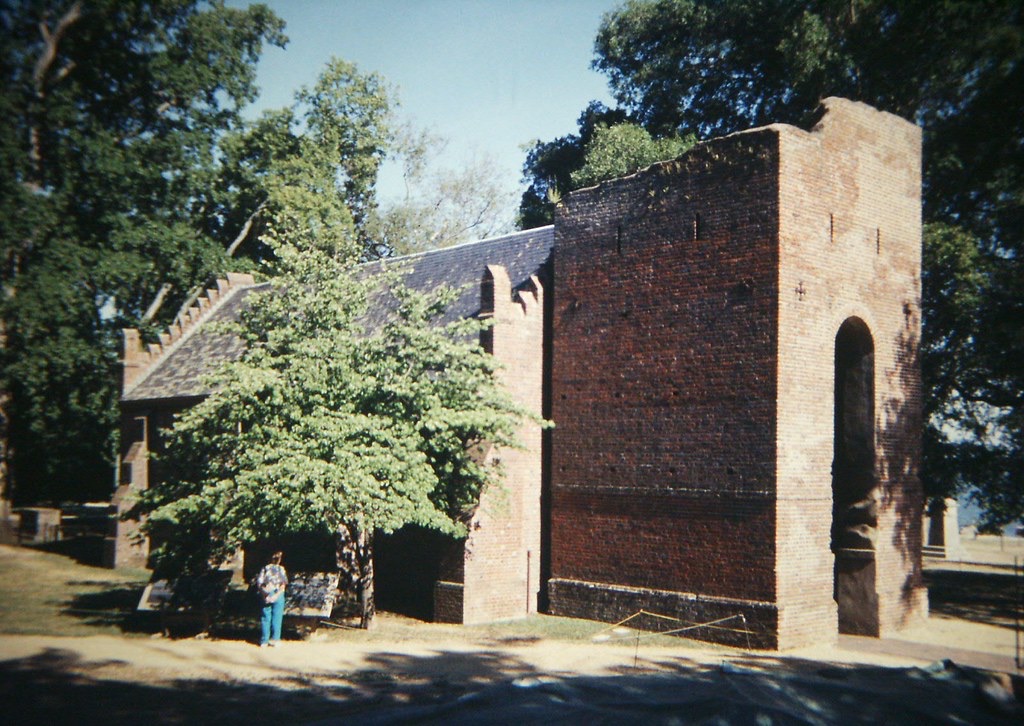
Virginia’s legislature traces its history back further than any other in the Americas. It first met in the summer of 1619 in the church at Jamestown, when the colony was still a business run by a London company, and it has met in some form ever since, through the royal takeover of 1624, a revolution, a civil war and seven constitutions. Today the General Assembly has 140 members: 40 senators and 100 delegates. It writes the state’s laws and its two-year budget, elects its judges, and, unusually among American legislatures, meets for only 60 or 30 days a year.
Quick answer: The Virginia General Assembly is the state legislature. It has two houses: a Senate of 40 members elected for four-year terms and a House of Delegates of 100 members elected for two-year terms. It meets each year on the second Wednesday in January, for up to 60 days in even-numbered years and 30 days in odd-numbered years, plus a short reconvened session in April to act on the governor’s amendments and vetoes. It descends from the assembly that first met at Jamestown in 1619.[1][2]
Contents
- The Virginia Company and Jamestown
- 1619: the first assembly
- From royal colony to commonwealth
- Where the assembly has met
- How the General Assembly is organized today
- Sessions and how a bill becomes law
- The budget
- Ties and shared power
- Who has served
- Frequently asked questions
The Virginia Company and Jamestown
English colonization of Virginia began as a private investment. On April 10, 1606, King James I granted a charter to a group of knights, merchants and gentlemen to plant colonies in the part of America “commonly called Virginia.”[3] The Virginia Company of London raised money by selling shares to investors who “adventured” their capital in hope of profit; the king endorsed the venture but did not pay for it, and no royal soldiers or ships were assigned to it.
Under the first charter, a royal council in England oversaw the colony, and a council of colonists at Jamestown chose a president from among themselves. The arrangement produced constant quarrels. A second charter in 1609 gave the company itself control and the power to appoint a governor with full authority in Virginia.[4]
To attract colonists and investors, the company changed course in 1618. Its new instructions to Governor Sir George Yeardley, sometimes called the “Great Charter,” reformed land grants and led to the calling of an assembly in which colonists would help make their own laws. See the Virginia Company and headrights and land titles.
1619: the first assembly
The first General Assembly met in the choir of the brick church at Jamestown, built in 1617, the only building large enough for the governor, the council and the burgesses elected to represent the settlements.[5] It was the earliest English-speaking legislative body in the Western Hemisphere.[5] The burgesses could pass laws, but the governor could veto them and the company in London could overrule them.
The assembly survived the company. Once the Crown took back the company’s charter in 1624, Virginia became a royal colony with a governor and council appointed by the Crown, but the burgesses kept meeting. In the following decades the elected burgesses came to sit apart from the governor and council, creating the two-house structure that Virginia still has: an elected lower house and, in colonial times, an appointed upper house, the Council of State. How the colony was run day to day is described in government of the Virginia colony.
From royal colony to commonwealth
In the 1760s and 1770s the House of Burgesses became the center of resistance to Parliament; royal governors answered by dissolving it. In 1774-1776 the burgesses met as revolutionary conventions, and the Fifth Virginia Convention adopted the first state constitution on June 29, 1776.[6] That constitution kept the House of Delegates, with two members from each county regardless of population, and created a new 24-member Senate. It made the General Assembly the dominant branch: it elected the governor every year, the Council of State and the judges.[6] Later constitutions shifted power toward voters and the governor, but the legislature still elects Virginia’s judges today.[1]
Where the assembly has met
| Years | Meeting place |
|---|---|
| 1619-1632 | Church at Jamestown |
| 1632-1699 | A series of statehouses, taverns and homes at Jamestown; Green Spring after Bacon’s Rebellion burned Jamestown in 1676 |
| 1699-1704 | College Building (Wren Building), College of William and Mary, Williamsburg |
| 1704-1747 | First Capitol at Williamsburg (burned 1747) |
| 1753-1780 | Second Capitol at Williamsburg |
| 1780-1788 | Cunningham warehouse, Richmond (with flights to Charlottesville and Staunton in 1781) |
| 1788-present | Virginia State Capitol, Richmond |
Source for the table: House of Delegates history.[5] The present Capitol, designed by Thomas Jefferson after a Roman temple at Nîmes, is described in the State Capitol in Richmond, and the moves of the capital in capitals of Virginia.
How the General Assembly is organized today
The Constitution of Virginia allows a Senate of 33 to 40 members and a House of Delegates of 90 to 100; in practice the numbers are 40 and 100. Senators are elected every four years and delegates every two years, in November elections held in odd-numbered years.[1]
- House of Delegates. The 100 delegates elect a Speaker, who presides, appoints committee members and largely controls which bills advance. Recent Speakers include William J. Howell (2003-2017), Kirk Cox (2018-2019), Eileen Filler-Corn (2020-2021), Todd Gilbert (2022-2023) and Don Scott (from 2024).[7]
- Senate. The lieutenant governor is president of the Senate but votes only to break a tie. The senators elect a president pro tempore, and the majority party controls committee assignments.[8]
- Committees. Most bills live or die in committees and subcommittees, which can kill a bill without a vote of the full chamber.
Members are part-time citizen legislators, most of whom keep other jobs.
Sessions and how a bill becomes law
Each regular session opens on the second Wednesday of January. A session in an even-numbered year may last no longer than 60 days, and one in an odd-numbered year no longer than 30 days, though two-thirds of each house can extend either by up to 30 days. The governor can call a special session at any time, and must do so if two-thirds of each house ask.[2]
A bill must pass both houses in identical form and then goes to the governor, who can sign it, veto it or send it back with amendments. On the sixth Wednesday after the session adjourns, the General Assembly returns for a reconvened session, normally lasting no more than three days, to consider the governor’s amendments and vetoes; overriding a veto takes two-thirds of those present in each chamber, provided that number is also a majority of all its elected members.[2][9] Laws passed at a regular session usually take effect on July 1.[1] The governor’s powers are described in governors of Virginia.
The budget
Virginia budgets for two years at a time. By December 20 before each even-year session, the governor must submit “The Executive Budget” and a draft appropriation act, “The Budget Bill,” to the presiding officers of both houses.[10] The money committees of each house rewrite it, and a conference committee resolves the differences. In odd-numbered years the General Assembly amends the budget it passed the year before.[11]
Because governors are elected in odd years and serve one four-year term, a new governor takes office in January while the legislature is working on the budget written by the outgoing governor. So each governor carries out one biennial plan of his or her own making and drafts another for the next governor to inherit.
Ties and shared power
Because a tie vote defeats a motion in the House of Delegates, an evenly divided House cannot easily organize itself. That happened after the 1997 elections, and from 1998 to 1999 the parties shared control of the House, the only time in its modern history.[12]
The Senate has been split 20-20 three times in recent decades: after the voting of 1995, of 2011 and of 2013. In 1996-1997 the parties shared power. After the 2011 and 2013 ties there was no formal power sharing: the lieutenant governor’s tie-breaking vote decided which party organized the chamber.[12][8] A tied election for a House seat in 2017 even decided control of the chamber by a drawing of lots; see filling vacancies and breaking ties.
Who has served
For most of its history the General Assembly was all white and all male. African American men first served after the Civil War: 40 sat in the House of Delegates in the era 1865-1871 and 50 in 1872-1890, after which none served until the 1960s. In 1924 Sarah Lee Fain and Helen Timmons Henderson became the first women to take seats in the General Assembly.[13][14] Party control has swung several times since the 1990s; as of November 2026, Democrats held the governorship and both houses.[12]
Frequently asked questions
How many members are in the Virginia General Assembly? 140: 40 senators and 100 delegates.[1]
How long is the Virginia legislative session? 60 days in even-numbered years and 30 days in odd-numbered years, each extendable by up to 30 days, plus a reconvened session.[2]
Is the Virginia General Assembly the oldest legislature in America? It traces its history to 1619 and is the earliest English-speaking legislative body in the Western Hemisphere.[5]
Who breaks a tie in the Virginia Senate? The lieutenant governor, as president of the Senate.[8]
When is the Virginia budget due? The governor submits the budget bill by December 20 before each even-year session.[10]
References
- Constitution of Virginia (full text), Article IV. https://law.lis.virginia.gov/constitution/
- Constitution of Virginia, Article IV, Section 6, Legislative sessions. https://law.lis.virginia.gov/constitution/article4/section6/
- The Avalon Project, Yale Law School, “The First Charter of Virginia; April 10, 1606.” https://avalon.law.yale.edu/17th_century/va01.asp
- The Avalon Project, Yale Law School, “The Second Charter of Virginia; May 23, 1609.” https://avalon.law.yale.edu/17th_century/va02.asp
- Virginia House of Delegates, House History, “State Capitol Locations.” https://history.house.virginia.gov/capitols
- Library of Virginia, “Virginia’s Constitutions: Discover.” https://lva.virginia.gov/constitutions/discover
- Virginia House of Delegates, House History, “Speakers and Clerks.” https://history.house.virginia.gov/speakers_and_clerks
- Constitution of Virginia, Article V, Section 14, Duties and compensation of Lieutenant Governor. https://law.lis.virginia.gov/constitution/article5/section14/
- Constitution of Virginia, Article V, Section 6, Presentation of bills; vetoes and amendments. https://law.lis.virginia.gov/constitution/article5/section6/
- Code of Virginia § 2.2-1509, Budget Bill. https://law.lis.virginia.gov/vacode/title2.2/chapter15/section2.2-1509/
- Virginia Legislative Information System, State Budget. https://budget.lis.virginia.gov/
- Ballotpedia, “Party control of Virginia state government.” https://ballotpedia.org/Party_control_of_Virginia_state_government
- Virginia House of Delegates, House History, “African American House Members Through Time.” https://history.house.virginia.gov/african_american_delegates
- Virginia House of Delegates, House History, “Women in the House of Delegates Through Time.” https://history.house.virginia.gov/female_delegates