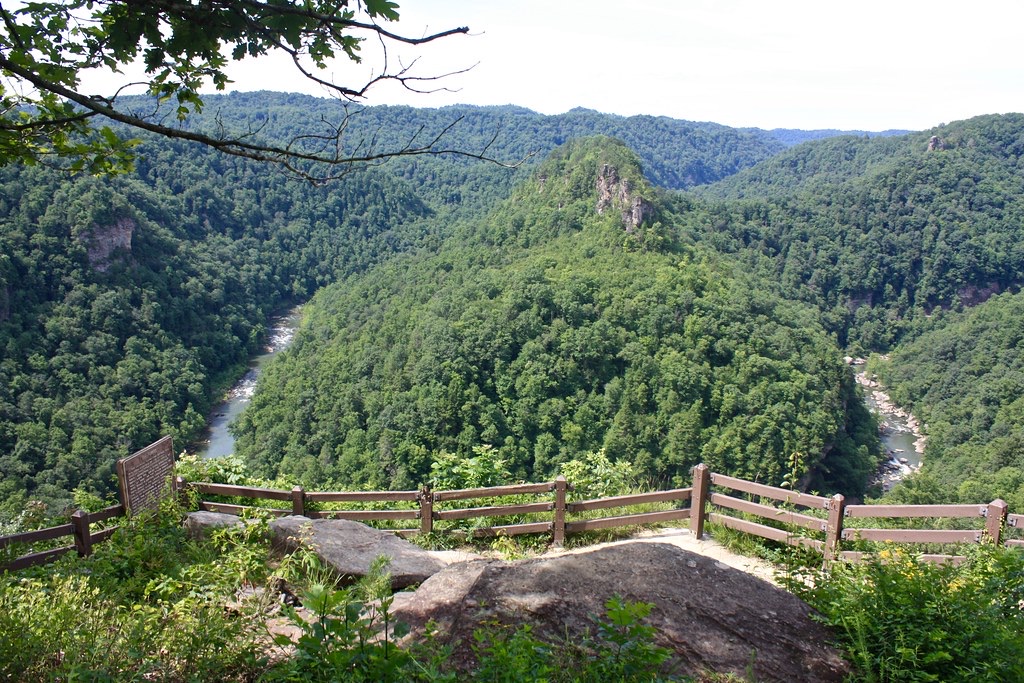
Appalachia is both a mountain range and a region of people. In Virginia, the word brings to mind the coal towns of the far Southwest, but the official Appalachian region reaches much farther, from the Shenandoah Valley’s Highland and Bath counties to Martinsville and Patrick County on the North Carolina line. Understanding what Appalachia is, and is not, helps explain some of Virginia’s sharpest regional differences.
Quick answer: For federal purposes, the Appalachian Regional Commission (ARC) defines Appalachia as 423 counties in 13 states, including all of West Virginia. In Virginia it includes 25 counties (Alleghany, Bath, Bland, Botetourt, Buchanan, Carroll, Craig, Dickenson, Floyd, Giles, Grayson, Henry, Highland, Lee, Montgomery, Patrick, Pulaski, Rockbridge, Russell, Scott, Smyth, Tazewell, Washington, Wise and Wythe) and 8 independent cities (Bristol, Buena Vista, Covington, Galax, Lexington, Martinsville, Norton and Radford).[1]
Contents
- The mountains and the region
- Virginia’s ARC counties
- Why the ARC was created
- Distressed and at-risk counties
- Settlers and society
- Coal and the mountain economy
- Music, crafts and language
- Stereotypes and images
- Appalachian identity today
- Frequently asked questions
The mountains and the region
The Appalachian Mountains stretch from Newfoundland to Alabama. In Virginia they include the Blue Ridge, the Valley and Ridge and the Appalachian Plateau (see physiographic regions). But “Appalachia” as a cultural and economic region usually refers to the central and southern mountains, where rugged land, isolation and dependence on extractive industries created distinct communities.
The ARC region, created by Congress in 1965, covers 206,000 square miles and more than 25 million people, from southern New York to northern Mississippi. West Virginia is the only state entirely inside it.[2]
Virginia’s ARC counties
| Area | Counties and cities |
|---|---|
| Coalfields | Buchanan, Dickenson, Lee, Russell, Scott, Tazewell, Wise; Norton |
| Blue Ridge Highlands | Bland, Carroll, Floyd, Grayson, Smyth, Washington, Wythe; Bristol, Galax |
| New River Valley | Giles, Montgomery, Pulaski; Radford |
| Allegheny Highlands | Alleghany, Bath, Craig, Highland, Botetourt; Covington |
| Upper James | Rockbridge; Buena Vista, Lexington |
| Southern foothills | Henry, Patrick; Martinsville |
Henry, Patrick and Martinsville are in the Piedmont foothills rather than the mountains, but were added because their economies resembled those of the mountain counties.[1]
Why the ARC was created
In the early 1960s, Appalachia’s poverty drew national attention. John F. Kennedy saw it while campaigning in West Virginia in 1960, and President Lyndon Johnson made it a symbol of his War on Poverty. The Appalachian Regional Development Act of 1965 created the ARC, a partnership of the federal government and the governors of the Appalachian states. Its largest early program built the Appalachian Development Highway System, including Corridor B (US 23) and Corridor Q (US 460) in Virginia, to end the region’s isolation. The ARC also funds water systems, schools, health clinics, broadband and job training.[2]
Distressed and at-risk counties
Each year the ARC ranks counties by unemployment, income and poverty as distressed, at-risk, transitional, competitive or attainment. In Virginia, several far Southwest coalfield counties have been ranked distressed or at-risk in recent years, while counties around Virginia Tech and Roanoke rank higher. The ranking affects how much matching money counties must provide for ARC grants.[1]
Settlers and society
Most early settlers of Virginia’s mountains were Scots-Irish, German and English families who came down the Great Wagon Road in the 1700s (see Shenandoah Valley). They farmed small hillside plots, raised cattle and hogs and hunted. Fewer enslaved people lived in the mountains than in the east, but slavery existed there, and free and enslaved Black families were part of mountain communities. Melungeons, a mixed-ancestry people, lived in parts of Lee, Scott and Wise counties and nearby Tennessee.
Coal and the mountain economy
From the 1880s, railroads and coal companies transformed the plateau counties. Absentee owners bought mineral rights cheaply, often through “broad form deeds” that let them mine with little regard for the surface owners (see split-estate mineral rights). Company towns, unions, strikes, mine disasters and cycles of boom and bust shaped life for a century. Since the 1980s, coal employment has fallen dramatically, and population has declined in counties such as Buchanan and Dickenson (see Southwest Virginia).
Music, crafts and language
Appalachian culture blends British, Irish, German and African American traditions. The banjo came from African instruments; ballads came from the British Isles; fiddle tunes, flatfoot dancing and shape-note singing grew in the mountains. Southwest Virginia’s old-time and bluegrass music, celebrated on The Crooked Road, is a living tradition. Quilting, woodworking, basket-making and pottery remain important crafts, and Appalachian English keeps words and grammar that have faded elsewhere.
Stereotypes and images
Appalachia has long been portrayed in books, films and news stories through stereotypes, the “hillbilly,” the moonshiner, poverty without context. Many residents resent those images, which ignore the region’s diversity, its contributions to American music and industry, and the role of outside companies in its economic problems. Scholars at Appalachian studies programs, including at Virginia Tech, Emory & Henry and UVA Wise, work to tell a fuller story.
Appalachian identity today
Not everyone in Virginia’s ARC counties calls themselves Appalachian. People in Blacksburg or Lexington may not, while coalfield residents often embrace the identity proudly. The region is changing: outdoor recreation, remote work, broadband, universities and new industries are attracting new residents, while older communities fight to keep young people at home.
Frequently asked questions
How many Virginia counties are in Appalachia? Twenty-five counties and eight independent cities, according to the Appalachian Regional Commission.[1]
Is Roanoke in Appalachia? The city of Roanoke and Roanoke County are not on the ARC list, though nearby Botetourt, Craig and Montgomery are.[1]
When was the Appalachian Regional Commission created? In 1965.[2]
Is all of West Virginia Appalachian? Yes, it is the only state entirely within the ARC region.[2]
See also: Southwest Virginia, Appalachian Plateau, Is Virginia a Southern state?, the regions of Virginia.
References
- Appalachian Regional Commission, “Appalachian Counties Served by ARC.” https://www.arc.gov/appalachian-counties-served-by-arc/
- Appalachian Regional Commission, “About the Appalachian Region.” https://www.arc.gov/about-the-appalachian-region/