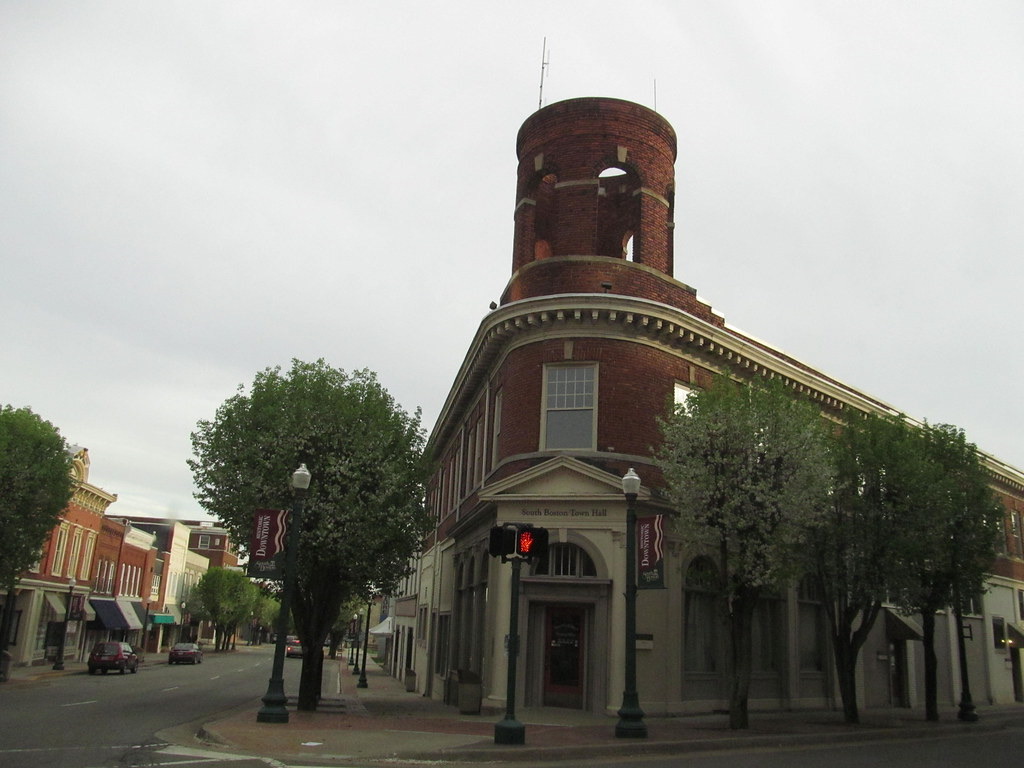
Becoming a city in Virginia once meant independence: a separate government, separate courts and separate schools, free of the county around it. Since 1995, three small cities have walked that road in reverse. South Boston, Clifton Forge and Bedford each gave up city status and became towns within their counties, a process Virginia law calls reversion or “transition to town status.” A fourth, Martinsville, came close before its voters changed course.
Quick answer: A Virginia city with fewer than 50,000 people can ask a special three-judge court to make it a town. The court must find, among other things, that the change will not substantially impair the county’s ability to serve its people and will not leave an unfair split of resources and debts. After reversion, the former city’s land and residents become part of the county; residents keep a town government but also pay county taxes and use county schools. South Boston reverted in 1995, Clifton Forge in 2001 and Bedford in 2013.[1][2][3]
Contents
- Why a city would want to become a town
- The law: how reversion works
- Who wins and who pays
- South Boston, 1995
- Clifton Forge, 2001
- Bedford, 2013
- Martinsville: the reversion that stopped
- The annexation question
- Which cities could revert
- Timeline
- Frequently asked questions
Why a city would want to become a town
An independent city must pay for everything a county provides: a school division, a sheriff and jail, courts, social services and a set of constitutional officers such as a treasurer and a commissioner of the revenue, on top of ordinary municipal services. For a city of a few thousand people, that is a heavy load.
The pressure grew after World War II. Shopping and jobs moved to the suburbs, often just across the city line, where county governments collected the property and sales taxes. Cities kept older housing and many residents who needed public services. For decades, cities answered by annexing growing county land, but Virginia stopped involuntary annexation by cities in 1987 and has kept that ban in place ever since.[4] Reversion offers a small city a different way out: hand the most expensive services to the county, and keep a town government for local matters.
The law: how reversion works
Reversion is governed by Chapter 41 of Title 15.2 of the Code of Virginia, “Transition of City to Town Status,” which dates from a 1988 act of the General Assembly.[1] The process has several steps:
- Eligibility. Only a city whose population in the latest federal census is under 50,000 may use the procedure.[1]
- Review. The city first goes through the state’s review process for boundary and status changes, which involves the Commission on Local Government.[1]
- Petition. The city council passes an ordinance by a recorded majority of all its members and petitions the circuit court. The city must give formal notice to the county’s attorney and the chairman of its board of supervisors.[1]
- Special court. The Supreme Court of Virginia appoints a special court of three judges to hear the case.[1]
- Decision. The court grants town status only if it finds that the city has fewer than 50,000 people; that the county has been made a party; that the change will not substantially impair the county’s ability to meet its residents’ needs; that the town and county will not end up dividing assets and debts in a substantially unfair way; that it is, on balance, in the best interests of the city, the county, the state and their people; and that it promotes strong and viable units of government. The court may attach terms and conditions.[5]
- Ten years of supervision. The special court does not dissolve after its decision. It stays in existence for ten years and may be reconvened by the county, the town, or a petition of at least 15 percent of the town’s voters to enforce the terms under which town status was granted.[6]
A county cannot veto reversion. It can argue its case before the court and negotiate, and in practice most reversions have ended in agreements between the city and the county, but the decision belongs to the judges.
Who wins and who pays
Reversion is the opposite of annexation: instead of a city taking land and people from a county, a county takes in an entire former city. The county gains the former city’s tax base, but also its costs.
For the former city, the gains are clear. Its residents no longer pay for a separate school division, jail and court system. In exchange, they pay two property taxes, one to the town and one to the county, and they vote in county elections. For the county, the result depends on the numbers. It receives more property and sales tax revenue, but it must educate more children and serve more people, often including a higher share of older and lower-income residents.
State school aid adds a twist, because the state’s share of school costs depends on each locality’s ability to pay. Bedford’s experience showed how much this can matter: after its reversion, Bedford County received about $6 million more in state education funding each year.[7]
South Boston, 1995
South Boston, a tobacco and textile town on the Dan River in Halifax County, became an independent city on January 1, 1960, and later annexed county land.[8] The city chose to revert, and the change took effect on June 30, 1995, when Halifax County added the former independent city of South Boston.[2] As the first city to complete the process, it became the model that later cases followed.
As a town, South Boston kept its own mayor and council for local matters, while the county became responsible for the services a city must provide on its own, from schools to courts and social services.
Clifton Forge, 2001
Clifton Forge, a railroad town in the Alleghany Highlands, became an independent city in 1906.[8] Like other small mountain cities, it struggled to fund a full set of city services as its population fell, and it chose reversion. On July 1, 2001, Alleghany County absorbed the former city and an estimated 4,289 residents.[3]
The Alleghany Highlands story did not end there. Covington stayed a city, but in 2022 its school division and the county’s merged into Alleghany Highlands Public Schools, and in 2023 the two rival high schools became one (see merging local governments in Virginia).[9]
Bedford, 2013
Bedford became a city in 1968, surrounded by a county of the same name.[8] Unlike Martinsville, it did not run a school division of its own, which made the transition simpler.[11] The two governments negotiated a reversion agreement, and Bedford became a town on July 1, 2013. The Census Bureau estimated that the change added a net 6,222 people to Bedford County.[10]
The early results were favorable for the town:[7]
- the town budget fell from $17.5 million before reversion to about $9 million;
- residents paid a combined town and county real estate rate of 82 cents per $100 of assessed value, slightly below the old city rate of 86 cents;
- the town’s unrestricted assets grew from $2.5 million to $3.6 million;
- the county received about $6 million more a year in state education funding, and began planning a new middle school.
The agreement also provided for the town to grow. Dozens of county properties were scheduled to join the town within several years, and their owners would begin paying town taxes in return for town services such as trash collection.[7] The mayor later explained that the goal had been to create efficiencies, and noted that Bedford’s case differed from others because it had no school division of its own.[11]
Martinsville: the reversion that stopped
Martinsville, an independent city since 1928 surrounded by Henry County,[8] has debated reversion since the 1980s. It studied the idea through a joint commission in the 1980s, held public hearings in 1996, commissioned studies in 2006 and 2013, and met with former cities that had reverted in 2018. The 2013 study ended with a 3-2 council vote against reversion.[11]
The driving force was decline. The city’s population fell every decade, from 18,149 in 1980 to 13,485 in 2020, and a November 2019 staff presentation to the council warned that a shrinking population meant less state money every year.[11] The city then moved ahead with formal reversion proceedings.
In May 2021 the city and the county announced an agreement for Martinsville to become a town within Henry County.[12] The two sides disagreed mainly about timing: the city wanted reversion in 2022, the county preferred 2024. Then the county’s supervisors, meeting in December 2021, voted 4-2 against approving the voluntary settlement agreement. The city’s lawyer called the vote a repudiation of promises, and the dispute headed toward arbitration and a contested court case.[13]
Voters settled it instead. In the November 2022 election they chose council candidates who had campaigned hard against reversion; they took office in January 2023, and the effort was dropped. In 2024 the General Assembly passed a bill, sponsored by the local delegate, requiring a referendum before Martinsville could revert in the future.[11] Supporters said residents should decide a change that, once made, cannot be undone.
The annexation question
The state’s freeze on annexation applies to cities, not to towns. Towns may still expand their boundaries, either by agreement with the county or through the courts (see annexation in Virginia).[4] This means a city that reverts regains a power it lost: the ability to grow by annexing county land. For counties, that possibility is one of the biggest worries about reversion, and limits on future annexation are often written into reversion agreements, as in Bedford’s planned, phased expansion.[7]
Which cities could revert
The 50,000-person threshold rules out the largest cities, such as Virginia Beach, Chesapeake, Richmond, Norfolk, Newport News, Alexandria, Hampton, Suffolk, Roanoke, Portsmouth, Lynchburg and Harrisonburg; changing their status would require action by the legislature.[1] The smaller cities, from Charlottesville and Danville down to Norton and Emporia, could in principle use the procedure. Population figures for each are in Virginia’s 38 independent cities explained.
Timeline
| Year | Event |
|---|---|
| 1906 | Clifton Forge becomes a city |
| 1960 | South Boston becomes a city |
| 1968 | Bedford becomes a city |
| 1987 | Involuntary annexation by cities halted |
| 1988 | Reversion law adopted |
| June 30, 1995 | South Boston becomes a town in Halifax County |
| July 1, 2001 | Clifton Forge becomes a town in Alleghany County |
| July 1, 2013 | Bedford becomes a town in Bedford County |
| 2019 | Martinsville council reviews a staff study on reversion |
| May 2021 | Martinsville and Henry County announce an agreement |
| December 2021 | Henry County supervisors reject the agreement, 4-2 |
| 2023 | New Martinsville council drops reversion |
| 2024 | Law requires a referendum for any future Martinsville reversion |
Frequently asked questions
Which Virginia cities have become towns? South Boston (1995), Clifton Forge (2001) and Bedford (2013).[2][3][10]
Can a county block a city from becoming a town? Not by itself. A three-judge special court decides, applying the tests in § 15.2-4106 of the Code of Virginia.[5]
Do residents of a reverted city pay county taxes? Yes. They pay town taxes and county taxes, and they vote in county elections.[7]
Why did Martinsville not become a town? Henry County rejected the negotiated agreement in 2021, and in 2023 a new city council majority opposed to reversion ended the effort.[11][13]
See also: history of independent cities in Virginia, Virginia towns that gave up their charters, Virginia cities and towns.
References
- Code of Virginia § 15.2-4101, Ordinance petitioning court for town status; notice of motion. https://law.lis.virginia.gov/vacode/title15.2/chapter41/section15.2-4101/
- U.S. Census Bureau, Substantial Changes to Counties and County Equivalent Entities: 1990s. https://www.census.gov/programs-surveys/geography/technical-documentation/county-changes/1990.html
- U.S. Census Bureau, Substantial Changes to Counties and County Equivalent Entities: 2000s. https://www.census.gov/programs-surveys/geography/technical-documentation/county-changes/2000.html
- Code of Virginia § 15.2-3201, Temporary restrictions on granting of city charters, filing annexation notices, institutions of annexation proceedings, and county immunity proceedings. https://law.lis.virginia.gov/vacode/title15.2/chapter32/section15.2-3201/
- Code of Virginia § 15.2-4106, Hearing and decision by court. https://law.lis.virginia.gov/vacode/title15.2/chapter41/section15.2-4106/
- Code of Virginia § 15.2-4120, Court granting transition to town status to exist for 10 years. https://law.lis.virginia.gov/vacode/title15.2/chapter41/section15.2-4120/
- WDBJ7, “Bedford leaders see post-reversion money savings” (June 2016). https://www.wdbj7.com/content/news/Bedford-leaders-see-post-reversion-money-savings-382290751.html
- The Newberry Library, Atlas of Historical County Boundaries, “Virginia: Consolidated Chronology of State and County Boundaries.” https://digital.newberry.org/ahcb/documents/VA_Consolidated_Chronology.htm
- Cardinal News, “In the Alleghany Highlands, two rival high schools begin the process of merging” (February 3, 2023). https://cardinalnews.org/2023/02/03/in-the-alleghany-highlands-two-rival-high-schools-begin-the-process-of-merging/
- U.S. Census Bureau, Substantial Changes to Counties and County Equivalent Entities: 2010s. https://www.census.gov/programs-surveys/geography/technical-documentation/county-changes/2010.html
- Cardinal News, “City or town? New legislation is bringing up one of Martinsville’s oldest questions” (March 21, 2024). https://cardinalnews.org/2024/03/21/city-or-town-new-legislation-is-bringing-up-one-of-martinsvilles-oldest-questions/
- Richmond Times-Dispatch, “City of Martinsville and Henry County agree on Martinsville reverting to a town within the county” (May 26, 2021). https://richmond.com/news/state-and-regional/city-of-martinsville-and-henry-county-agree-on-martinsville-reverting-to-a-town-within-the/article_ccfdc8dc-118e-513c-bb70-ea6afeca7d68.html
- WSET, “Martinsville reversion hits another setback after Henry County rejects agreement” (December 2021). https://wset.com/news/local/martinsville-reversion-hits-another-setback-after-henry-county-rejects-agreement-city-town-board-of-supervisors-virginia