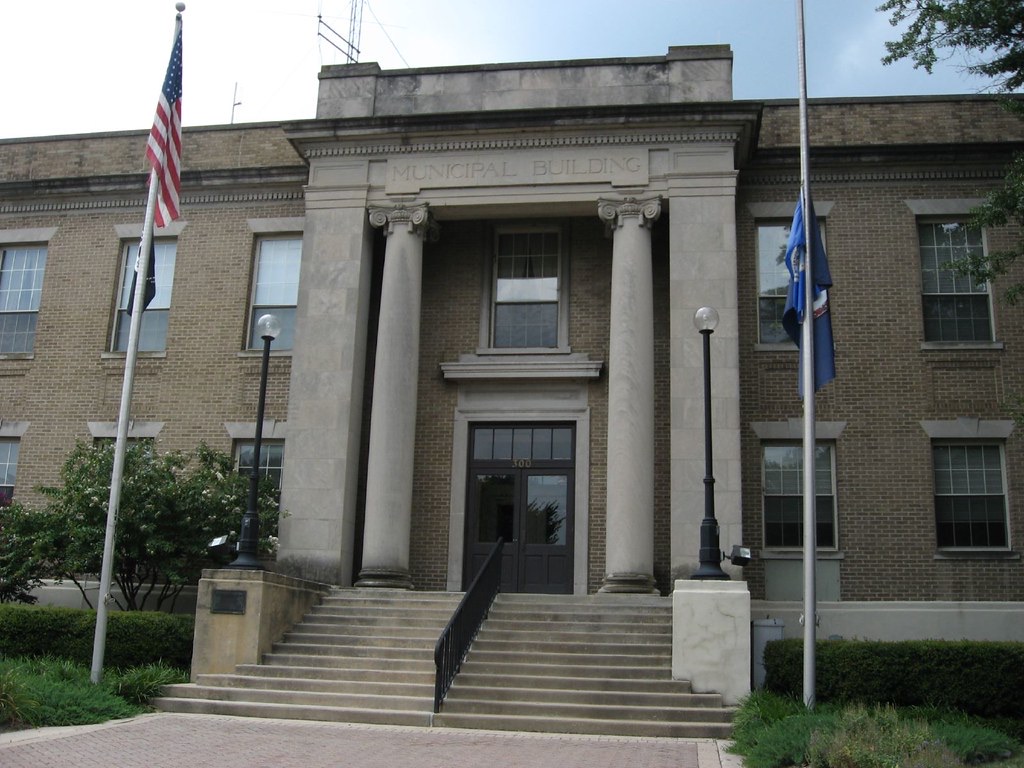
Virginia is the only state where every incorporated city stands outside any county. Of the 41 independent cities in the United States, 38 are in Virginia; the other three are Baltimore, St. Louis and Carson City.[1] The arrangement was not designed in one stroke. It grew out of colonial charters, Reconstruction-era reforms, the 1902 constitution and a long series of court cases and special acts, and it has been frozen in place since the 1970s.
Quick answer: Virginia’s cities became separate from the counties around them under the constitution of 1870, which took effect in 1871. The 1902 constitution turned this into a formal system: 18 cities were made independent that year, divided into “first class” cities with more than 10,000 people and their own circuit court, and “second class” cities that shared a court with a neighboring county. In all, 45 independent cities have been created; 7 have since disappeared through mergers or by becoming towns. No new city has been created since 1975, and state law has barred new city charters since 1987.[1][2][3]
Contents
- Colonial charters
- The 1870 constitution
- The 1902 system
- Every independent city ever created
- Why cities kept multiplying
- The 1971 constitution
- The freeze on new cities
- Dillon’s Rule and local power
- A fading difference
- Timeline
- Frequently asked questions
Colonial charters
Colonial Virginia had few towns. Tobacco planters shipped their crops from their own river landings, and repeated laws ordering the creation of port towns produced little at first (see colonial shipping and Tidewater towns). Counties, created from 1634 onward, were the real units of local government.
Williamsburg was the exception. The capital had been laid out by plan in 1699, and in 1717 its freeholders and inhabitants asked for the right to govern themselves. The charter granted in 1722 created a closed, self-renewing corporation of a mayor, six aldermen and twelve common councilmen. It gave the city wide legislative, judicial and administrative powers, but no power to tax; its revenue came from fees and fines. This form of government lasted until after the Civil War, and the city’s charter was revised by special legislation in 1884 to create an elected mayor and council.[4]
In these early centuries a city or borough was a place with special privileges, such as its own court or a seat in the legislature, but it was still part of the county around it for most purposes. The full separation came later.
The 1870 constitution
The break came after the Civil War. The constitution written in 1868 and in force from 1871 made incorporated cities independent of the counties that surrounded them, and the Virginia Association of Counties dates the legislation that created independent cities to 1871.[1][5] From then on, a city’s residents paid taxes to the city rather than the county and voted for city officers. Alexandria, for example, became an independent city in 1870, separating from Alexandria County, which was renamed Arlington County in 1920.[6]
Because the federal Bureau of Economic Analysis still groups some independent cities with the counties they came from for statistical purposes, the 1871 date remains a dividing line in economic data today.[5]
The 1902 system
The constitution adopted in 1902 made the separation complete and systematic. On July 10, 1902, it created a system of independent cities separate from the counties, and eighteen places became independent cities at once:[2]
- First class: Alexandria, Danville, Lynchburg, Newport News, Norfolk, Petersburg, Portsmouth, Richmond and Roanoke.
- Second class: Bristol, Buena Vista, Charlottesville, Fredericksburg, Manchester, Radford, Staunton, Williamsburg and Winchester.
The difference between the classes lay in the courts. A first-class city, with more than 10,000 residents, had both its own district court and its own circuit court. A second-class city had its own district court but shared a circuit court with a neighboring county.[1] A city could move from second class to first class as it grew; the Newberry Library’s boundary chronology records, for example, that Colonial Heights changed class in 1960, Salem in 1968 and Radford in 1972.[2] At one point the state had 25 first-class and 14 second-class cities.[1]
The 1902 framework also allowed new cities to be created through the courts under general law, rather than only by individual acts of the legislature, and set up a court process for cities to annex county land (see annexation in Virginia).
Every independent city ever created
The table lists all 45 independent cities, with the date each became independent according to the Newberry Library’s Atlas of Historical County Boundaries. Cities that later disappeared are marked.[2][7][8][9]
| City | Became independent | Formed from | Status today |
|---|---|---|---|
| Alexandria | 1902 (independent since 1870) | Alexandria (now Arlington) County | City |
| Bristol | 1902 | Washington County | City |
| Buena Vista | 1902 | Rockbridge County | City |
| Charlottesville | 1902 | Albemarle County | City |
| Danville | 1902 | Pittsylvania County | City |
| Fredericksburg | 1902 | Spotsylvania County | City |
| Lynchburg | 1902 | Campbell County | City |
| Manchester | 1902 | Chesterfield County | Absorbed by Richmond, 1910 |
| Newport News | 1902 | Warwick County | City |
| Norfolk | 1902 | Norfolk County | City |
| Petersburg | 1902 | Dinwiddie and Prince George counties | City |
| Portsmouth | 1902 | Norfolk County | City |
| Radford | 1902 | Montgomery County | City |
| Richmond | 1902 | Henrico County | City |
| Roanoke | 1902 | Roanoke County | City |
| Staunton | 1902 | Augusta County | City |
| Williamsburg | 1902 | James City County | City |
| Winchester | 1902 | Frederick County | City |
| Clifton Forge | 1906 | Alleghany County | Became a town, 2001 |
| Hampton | 1908 | Elizabeth City County | City (enlarged 1952) |
| Suffolk | 1910 | Nansemond County | City (merged with Nansemond, 1974) |
| Harrisonburg | 1916 | Rockingham County | City |
| Hopewell | 1916 | Prince George County | City |
| South Norfolk | 1921 | Norfolk County | Merged into Chesapeake, 1963 |
| Martinsville | 1928 | Henry County | City |
| Waynesboro | 1948 | Augusta County | City |
| Colonial Heights | 1948 | Chesterfield County | City |
| Falls Church | 1948 | Fairfax County | City |
| Virginia Beach | 1952 | Princess Anne County | City (merged with the county, 1963) |
| Warwick | 1952 | Warwick County | Merged into Newport News, 1958 |
| Covington | 1952 | Alleghany County | City |
| Galax | 1953 | Carroll and Grayson counties | City |
| Norton | 1954 | Wise County | City |
| South Boston | 1960 | Halifax County | Became a town, 1995 |
| Fairfax | 1961 | Fairfax County | City |
| Franklin | 1961 | Southampton County | City |
| Chesapeake | 1963 | Norfolk County and South Norfolk | City |
| Lexington | 1966 | Rockbridge County | City |
| Salem | 1968 | Roanoke County | City |
| Emporia | 1968 | Greensville County | City |
| Bedford | 1968 | Bedford County | Became a town, 2013 |
| Nansemond | 1972 | Nansemond County | Merged into Suffolk, 1974 |
| Manassas | 1975 | Prince William County | City |
| Poquoson | 1975 | York County | City |
| Manassas Park | 1975 | Prince William County | City |
Seven of the 45 no longer exist as cities: Manchester, South Norfolk, Warwick and Nansemond through mergers, and Clifton Forge, South Boston and Bedford by changing to town status. The remaining 38 are listed with their current populations in Virginia’s 38 independent cities explained. The stories of the vanished ones are told in city-to-town reversion in Virginia and why southeastern Virginia has no counties.
Why cities kept multiplying
Two forces drove the creation of new cities in the twentieth century.
The first was services. A city could run its own police, water and sewer systems, schools and courts, and in the early part of the century counties offered few of these. Growing towns such as Harrisonburg, Martinsville or Waynesboro often chose city status as they became regional centers.
The second was defense against annexation. Under Virginia law a city could annex land from a county, but not from another city. After World War II, counties around Norfolk and Newport News turned themselves into cities, or merged with existing cities, specifically to stop their larger neighbors from taking their most valuable land. Warwick County became the City of Warwick in 1952 for this reason, and Princess Anne County, Norfolk County and Nansemond County followed between 1963 and 1972 through mergers.[2] The result was the all-city map of Hampton Roads described in why southeastern Virginia has no counties.
Some smaller places used city status to keep control of their schools. Fairfax became a city in 1961 and since 1962 has had its students taught by Fairfax County Public Schools under a contract, while the city owns and maintains its four school buildings. Falls Church, a city since 1948, set up its own school system the following year.[6]
The 1971 constitution
The present constitution, in force since July 1, 1971, defines the three kinds of local government. A county is any existing county or one created later. A city is an independent incorporated community that became a city before noon on July 1, 1971, or that has at least 5,000 people within defined boundaries and becomes a city as provided by law. A town is an incorporated community within one or more counties that became a town before that date, or that has at least 1,000 people and becomes a town as provided by law.[3] The General Assembly may raise those minimum populations by general law.
The old split between first- and second-class cities did not survive into the modern system, although some court arrangements that grew out of it remained.[1]
The freeze on new cities
The last three cities ever created, Manassas, Poquoson and Manassas Park, all became independent in May and June 1975.[2] Since then none has been added.
The reason is a law that began as a temporary measure. Since January 1, 1987, the Code of Virginia has barred any city charter from being granted or taking effect, except for a city formed by consolidating existing governments; the same section stops cities from filing involuntary annexation actions against counties. The restriction has been extended again and again and now runs until July 1, 2032, unless the state fails to fund a specific program of aid to local police, in which case it would lapse sooner.[10]
The legal paths to new cities are still written into the Code: a town may petition a special court for city status, and any county may become an independent city by following a set procedure.[11][12] While the freeze lasts, those paths are closed. When the restriction was about to expire in 2024, a civic group in McLean, in Fairfax County, raised the idea of exploring city status for the area; the legislature has since extended the ban.[6][10]
Dillon’s Rule and local power
Virginia’s local governments, cities included, have only the powers the General Assembly gives them. The principle is known as Dillon’s Rule, after Iowa judge John F. Dillon, whose 1868 decisions held that a local government may act only where the state has clearly authorized it, and that any reasonable doubt about a power is resolved against the locality.[13]
For much of the twentieth century, city charters carried powers that counties lacked, such as wider taxing authority. That gap has narrowed. In April 2020 the General Assembly allowed counties to impose a meals tax of up to 6 percent without first holding a referendum, a power cities already had. Fairfax County voters had rejected a meals tax in 1992 and again in 2016.[14] Under state law, cities and towns with general taxing powers may levy excise taxes on cigarettes, admissions, hotel rooms and meals, while counties may do so only to the extent the law authorizes them.[15]
A fading difference
Today large suburban counties such as Fairfax, Prince William, Henrico and Chesterfield run police departments, water systems and planning offices that look much like those of cities. The legal line between city and county still matters for taxes, courts and elections, but in daily life it can be hard to see.
Relations between cities and counties now often depend on shared services. In 2022, for example, Prince William County planned to replace the state-run health district that served the county and the cities of Manassas and Manassas Park with a locally run department; the General Assembly had passed a bill allowing the change the year before. Manassas council members worried about cost, access and control, since the cities would pay a share based on population without running the new department.[16]
For the government structure that results, see government of Virginia: counties, cities and towns.
Timeline
| Year | Event |
|---|---|
| 1634 | First counties (“shires”) created |
| 1722 | Williamsburg receives a city charter |
| 1870 | Alexandria separates from Alexandria County |
| 1871 | Constitution of 1870 takes effect; cities independent of counties |
| 1902 | New constitution: 18 independent cities in two classes |
| 1906 | Clifton Forge becomes a city |
| 1910 | Richmond absorbs Manchester |
| 1948 | Waynesboro, Colonial Heights and Falls Church become cities |
| 1952 | Virginia Beach, Warwick and Covington become cities |
| 1963 | Chesapeake formed; Virginia Beach merges with Princess Anne County |
| 1971 | Current constitution defines city (5,000) and town (1,000) |
| 1975 | Manassas, Poquoson and Manassas Park: the last new cities |
| 1987 | Ban on new city charters begins |
| 1995-2013 | Three small cities (South Boston, Clifton Forge, Bedford) become towns |
| 2020 | Counties gain meals-tax power without referendum |
Frequently asked questions
When did Virginia cities become independent? Under the constitution of 1870, effective in 1871. The 1902 constitution formalized the system with 18 independent cities.[1][2]
How many independent cities has Virginia had? Forty-five in total. Thirty-eight remain.[2]
What were first-class and second-class cities? First-class cities had more than 10,000 people and their own circuit court; second-class cities shared a circuit court with a county.[1]
What was the last city created in Virginia? Manassas Park, on June 1, 1975, shortly after Manassas and Poquoson.[2]
Can a new city be created in Virginia today? Not while the moratorium in § 15.2-3201 of the Code of Virginia is in force, currently through July 1, 2032, except for a city formed by consolidation.[10]
See also: Virginia cities and towns, merging local governments in Virginia.
References
- WRIC ABC 8News, “Why does Virginia have independent cities and other states don’t?” https://www.wric.com/news/virginia-news/why-does-virginia-have-independent-cities-and-other-states-dont/
- The Newberry Library, Atlas of Historical County Boundaries, “Virginia: Consolidated Chronology of State and County Boundaries.” https://digital.newberry.org/ahcb/documents/VA_Consolidated_Chronology.htm
- Constitution of Virginia, Article VII, Section 1, Definitions. https://law.lis.virginia.gov/constitution/article7/section1/
- City of Williamsburg, “History of City Government.” https://www.williamsburgva.gov/490/History-of-City-Government
- Virginia Association of Counties, “Virginia Counties.” https://www.vaco.org/virginia-counties/
- InsideNoVA, “City status for McLean? One civic group wants to take a look” (December 2020). https://www.insidenova.com/news/fairfax/local/mclean/city-status-for-mclean-one-civic-group-wants-to-take-a-look/article_ada3515c-3a4d-11eb-b3f5-8b5bbea97bc3.html
- U.S. Census Bureau, Substantial Changes to Counties and County Equivalent Entities: 1990s. https://www.census.gov/programs-surveys/geography/technical-documentation/county-changes/1990.html
- U.S. Census Bureau, Substantial Changes to Counties and County Equivalent Entities: 2000s. https://www.census.gov/programs-surveys/geography/technical-documentation/county-changes/2000.html
- U.S. Census Bureau, Substantial Changes to Counties and County Equivalent Entities: 2010s. https://www.census.gov/programs-surveys/geography/technical-documentation/county-changes/2010.html
- Code of Virginia § 15.2-3201, Temporary restrictions on granting of city charters, filing annexation notices, institutions of annexation proceedings, and county immunity proceedings. https://law.lis.virginia.gov/vacode/title15.2/chapter32/section15.2-3201/
- Code of Virginia § 15.2-3800, Ordinance petitioning court for city status. https://law.lis.virginia.gov/vacode/title15.2/chapter38/section15.2-3800/
- Code of Virginia § 15.2-3900, Transition of counties to cities authorized. https://law.lis.virginia.gov/vacode/title15.2/chapter39/section15.2-3900/
- National League of Cities, “Cities 101: Delegation of Power.” https://www.nlc.org/resource/cities-101-delegation-of-power/
- InsideNoVA, “Meals tax more likely in Fairfax, but not anytime soon” (April 28, 2020). https://www.insidenova.com/news/business/meals-tax-more-likely-in-fairfax-but-not-anytime-soon/article_6d69e5c4-893b-11ea-82e3-176e5e47f665.html
- Code of Virginia § 58.1-3840, Certain excise taxes permitted. https://law.lis.virginia.gov/vacode/title58.1/chapter38/section58.1-3840/
- InsideNoVA, “Health district costs concern Manassas council” (April 22, 2022). https://www.insidenova.com/headlines/health-district-costs-concern-manassas-council/article_864fd03e-c224-11ec-803e-93e11837eb32.html