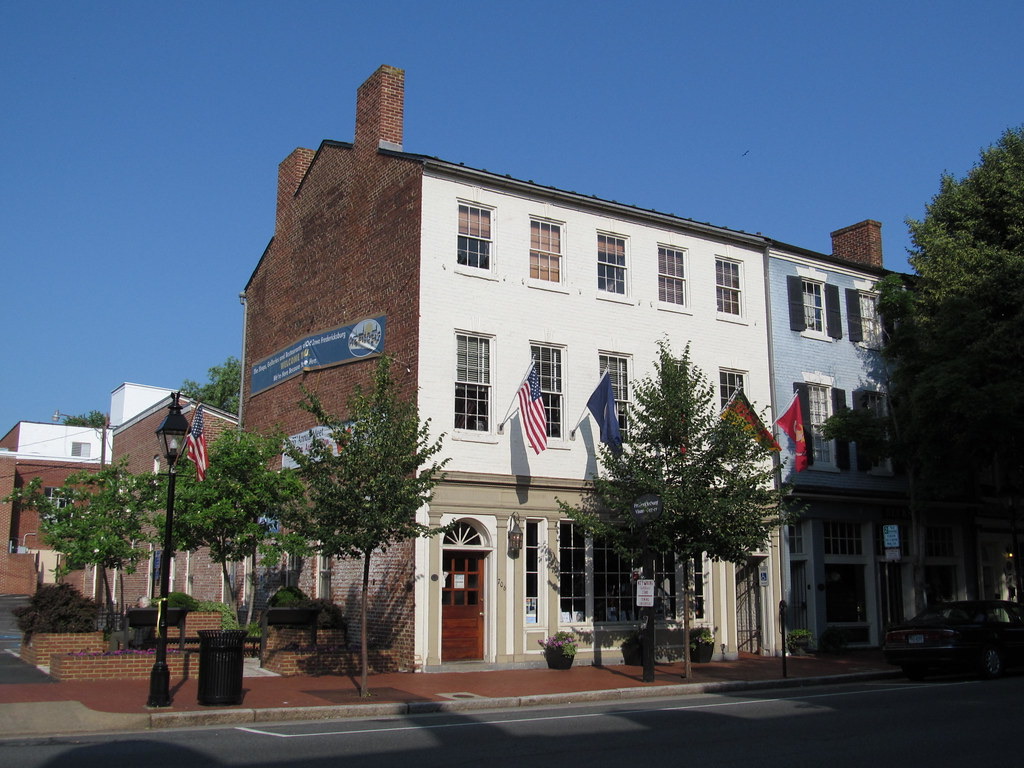
Virginia organizes its communities in a way no other state does. Its 38 cities are independent of any county, its towns remain inside counties, and its counties cover everything else. Behind that structure lie four centuries of choices about where to put capitals and ports, how to pay for urban services, and who gets to tax the land at the edge of a growing city. This guide summarizes the story and links to detailed pages on each part of it.
Quick answer: Virginia has 95 counties and 38 independent cities, which the Census Bureau treats as county equivalents, plus many incorporated towns that are part of their counties.[1] Cities have been separate from counties since the constitution of 1870 took effect in 1871, and a formal system of independent cities began in 1902. Forty-five cities have been created in all; seven disappeared through mergers or by becoming towns. No new city has been created since 1975, and since 1987 state law has blocked new city charters and city annexation of county land.[2][3]
Contents
- Cities, towns and counties
- The 38 cities today
- How the map took shape
- Growth, annexation and the freeze
- Mergers, reversions and dissolved towns
- Pages in this section, A to Z
- Frequently asked questions
Cities, towns and counties
The three kinds of local government differ in one key way: cities are separate from counties; towns are not.
- A county covers all land outside the cities. It runs schools, courts, a sheriff’s office and social services, and elects a board of supervisors.
- An independent city does everything a county does within its own boundaries, plus urban services. City residents pay no county taxes and do not vote for county officials. Under the present constitution, a new city needs at least 5,000 residents.[4]
- A town is an incorporated community inside one or more counties. Residents elect a mayor and council and pay town taxes, but they also vote in county elections and pay county taxes. A new town needs at least 1,000 residents.[4]
Because cities sit outside counties, a city that serves as a county seat is often not part of the county it serves. Fairfax city, for instance, is separate from Fairfax County, and the two are counted as different jurisdictions.[1] For a fuller explanation, see government of Virginia: counties, cities and towns.
The 38 cities today
The 38 independent cities range from Virginia Beach, with more than 450,000 residents, to Norton, with fewer than 3,500. Only three other independent cities exist in the United States: Baltimore, St. Louis and Carson City.[5] The complete list, with population estimates and recent changes, is on Virginia’s 38 independent cities explained.
The list is not fixed. Cities can be created (none has been since 1975), they can merge, and small ones can give up their status. Between 1995 and 2013 South Boston, Clifton Forge and Bedford all became towns again.[2]
How the map took shape
Virginia’s settlement pattern began with Native towns beside fields and fisheries, then spread into a colonial countryside of tobacco plantations with very few towns. Cities grew where transportation gave them an advantage: at the fall line where ships had to stop, at deep harbors, at railroad junctions, in the coalfields, and later around universities, airports and interstates. That story is told in why Virginia’s cities grew where they did.
Government decisions played a large part. Jamestown, Williamsburg and Richmond each served as the capital, and the 1780 move to Richmond shaped the growth of both Richmond and Williamsburg for centuries. See the capitals of Virginia.
The legal idea of the independent city grew out of colonial charters, the Reconstruction-era constitution and the reforms of 1902, which divided cities into first and second class. The details, with a table of all 45 cities ever created, are in the history of independent cities in Virginia.
Growth, annexation and the freeze
For most of the twentieth century, Virginia cities grew by annexing land from neighboring counties through special courts. Each annexation moved taxpayers and voters out of a county for good, so counties fought back. Richmond’s 1970 annexation of part of Chesterfield County, which lowered the city’s Black population share from 52 to 42 percent, reached the U.S. Supreme Court under the Voting Rights Act.[6]
Since January 1, 1987, the Code of Virginia has barred cities from filing annexation actions against counties, except to carry out agreements, and has blocked new city charters except for consolidated cities. The restriction, extended many times, now runs through July 1, 2032.[3] Towns may still annex, and localities often settle boundaries by negotiation. See annexation in Virginia.
Mergers, reversions and dissolved towns
The fear of annexation transformed Hampton Roads. Between 1952 and 1974, Elizabeth City, Warwick, Norfolk, Princess Anne and Nansemond counties all merged into cities or became cities themselves, leaving the core of the region with no counties and therefore no towns.[2] See why southeastern Virginia has no counties.
Elsewhere, full mergers have been rare, but localities increasingly share services. Alleghany County and the city of Covington combined their school divisions, and their high schools merged in 2023. Proposals for new cities, from Fairfax County to McLean, have so far gone nowhere. See merging local governments in Virginia.
Some small cities have taken the opposite path and asked a special court to make them towns. South Boston (1995), Clifton Forge (2001) and Bedford (2013) did so; Martinsville came close before voters changed course. See city-to-town reversion in Virginia.
Towns, too, can disappear. Castlewood voted to give up its charter in 1997, the General Assembly ended St. Charles in 2022, and Glen Lyn voted itself out of existence in 2024, while Pound narrowly kept its charter. See Virginia towns that gave up their charters.
Pages in this section, A to Z
- Annexation in Virginia: how cities and towns moved their boundaries, the Richmond-Chesterfield case and the moratorium.
- Capitals of Virginia: Werowocomoco, Jamestown, Williamsburg, Richmond and the emergency seats of 1781 and 1865.
- City-to-town reversion in Virginia: South Boston, Clifton Forge, Bedford and Martinsville.
- History of independent cities in Virginia: from the 1722 Williamsburg charter to the 1987 freeze, with all 45 cities.
- Merging local governments in Virginia: consolidations, shared schools and the question of a 39th city.
- Virginia towns that gave up their charters: Castlewood, Clover, St. Charles, Glen Lyn and Pound.
- Why southeastern Virginia has no counties: how Hampton Roads became all cities.
- Why Virginia’s cities grew where they did: rivers, ports, railroads, coal, colleges and highways.
Related pages elsewhere on the site:
- Government of Virginia: counties, cities and towns
- How many counties are in Virginia?
- Virginia’s 38 independent cities explained
- Map of Virginia counties and cities
Frequently asked questions
How many cities are in Virginia? Thirty-eight independent cities, alongside 95 counties.[1]
What is the difference between a city and a town in Virginia? A city is independent of any county; a town is part of its county, and its residents pay both town and county taxes.[1][4]
Why does Virginia have independent cities? Cities became separate from counties under the constitution of 1870, effective 1871, and the 1902 constitution built a full system around them.[5][2]
Can a Virginia city become a town? Yes. A city with fewer than 50,000 people can petition a special court for town status. Three cities have done so since 1995.[7]
When was the last new city created in Virginia? In 1975, when Manassas, Poquoson and Manassas Park became cities.[2]
References
- Virginia Association of Counties, “Virginia Counties.” https://www.vaco.org/virginia-counties/
- The Newberry Library, Atlas of Historical County Boundaries, “Virginia: Consolidated Chronology of State and County Boundaries.” https://digital.newberry.org/ahcb/documents/VA_Consolidated_Chronology.htm
- Code of Virginia § 15.2-3201, Temporary restrictions on granting of city charters, filing annexation notices, institutions of annexation proceedings, and county immunity proceedings. https://law.lis.virginia.gov/vacode/title15.2/chapter32/section15.2-3201/
- Constitution of Virginia, Article VII, Section 1, Definitions. https://law.lis.virginia.gov/constitution/article7/section1/
- WRIC ABC 8News, “Why does Virginia have independent cities and other states don’t?” https://www.wric.com/news/virginia-news/why-does-virginia-have-independent-cities-and-other-states-dont/
- City of Richmond v. United States, 422 U.S. 358 (1975), Legal Information Institute, Cornell Law School. https://www.law.cornell.edu/supremecourt/text/422/358
- Code of Virginia § 15.2-4101, Ordinance petitioning court for town status; notice of motion. https://law.lis.virginia.gov/vacode/title15.2/chapter41/section15.2-4101/