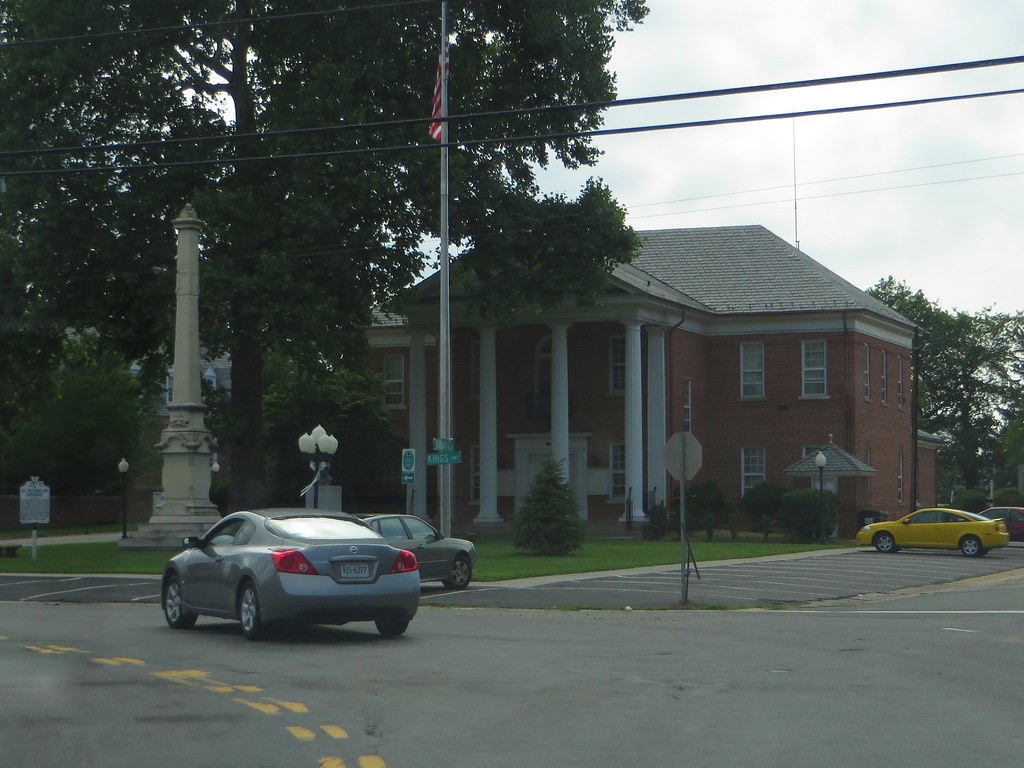
In 1776 Virginia declared that all power comes from the people. That principle created the Commonwealth, but it did not make Virginia’s counties, cities and towns into little republics. Local governments in Virginia are creations of the state, and under a legal doctrine called the Dillon Rule they may exercise only the powers the General Assembly has granted them. When a city council wants to try something new, its first question is often not “Do our residents want this?” but “Has Richmond given us the authority?” Alongside the counties, cities and towns, Virginia has a dense layer of other governing bodies: sanitary districts, water and transportation authorities, planning commissions, homeowner associations and interstate commissions shared with neighboring states.
Quick answer: Virginia is a Dillon Rule state. Local governments have only the powers expressly granted by the General Assembly, those necessarily implied by those grants, and those essential to their purposes; if there is reasonable doubt whether a locality has a power, courts assume it does not. Virginia’s Supreme Court has applied the rule since 1896. The state constitution lets the General Assembly provide by law for the organization, powers and boundaries of counties, cities, towns and regional governments.[1][2][3]
Contents
- Where government power comes from
- Two centuries of appointed local government
- What the Dillon Rule says
- The Dillon Rule in practice
- Charters and general powers
- Special districts and authorities
- Homeowner associations
- Multi-state and federal-state organizations
- Frequently asked questions
Where government power comes from
The Virginia Declaration of Rights, adopted on June 12, 1776, says that all power is vested in and derived from the people, and that officials are the people’s trustees and servants. The current constitution repeats those words.[4][5] The U.S. Constitution likewise begins “We the People.”
The source of local power is different. Counties, cities and towns were not created by their residents; they were created, and can be reshaped, by the General Assembly. The constitution directs the legislature to provide by general law for the organization, government, powers, boundary changes, consolidation and dissolution of counties, cities, towns and regional governments, and it allows optional forms of government that local voters may adopt.[2] The Senate of Virginia’s civics guide puts it plainly: all local governments in Virginia are tools of the state.[1]
Two centuries of appointed local government
For most of Virginia’s history, local residents could not elect the people who governed them day to day. Colonial voters elected only burgesses to the General Assembly. The justices of the county courts, who levied local taxes, licensed taverns and ferries, approved roads and heard local lawsuits, were appointed, and the 1776 constitution left them in place. Anglican parish vestries, which handled poor relief until disestablishment in 1786, filled their own vacancies.[6]
Only the Constitution of 1851 let voters elect county justices and other local officials, and the Constitution of 1869 created elected boards of supervisors to govern counties.[6] Even today Virginia’s judges, including those of the local district and circuit courts, are chosen by the General Assembly rather than by local voters.[7] See the courts and judiciary.
What the Dillon Rule says
The rule is named for John Forrest Dillon, an Iowa Supreme Court judge and later federal judge and Columbia law professor who wrote the first treatise on municipal corporations in 1872. He described local governments as owing their origin and all their powers to the legislature, which “breathes into them the breath of life.”[3]
As summarized in the Virginia Senate’s civics guide, the rule has two parts:[1]
- Local governments have only three kinds of powers: those granted in express words, those necessarily or fairly implied by or incident to those powers, and those essential (not merely convenient) to their declared purposes.
- If there is any reasonable doubt whether a power has been granted, it has not been. This “strict construction” is what makes the rule bite.
Every state treats localities as creations of the state, but some grant broad “home rule” while others, like Virginia, read local powers narrowly. Virginia’s Supreme Court has followed the strict version since 1896.[3]
The Dillon Rule in practice
The practical result is that the General Assembly spends a large share of each session on local matters. Bills give a single county permission to adopt a particular ordinance, amend a city’s charter or extend a power that other localities already have. Localities often ask the legislature for authority on questions that, in home-rule states, a city council would simply decide.
Attempts to loosen the rule have failed. During the constitutional revision of 1969, a proposal would have reversed it by giving localities all powers not withheld by the state, but it was not adopted.[3] In 2000, in Arlington County v. White, the Supreme Court of Virginia held that Arlington lacked authority to extend employee health benefits to domestic partners, a classic Dillon Rule decision.[3]
The rule has defenders and critics. Supporters say it keeps law uniform across the state, while critics say it makes fast-growing localities wait on legislators from elsewhere to solve local problems.
Charters and general powers
Within those limits, localities do have real authority:
- Counties have a general power to adopt measures to secure and promote the health, safety and general welfare of their residents, as long as these are not inconsistent with state law; the statute lists examples such as quarantine and disease control rules.[8]
- Cities and towns operate under charters, which are acts of the General Assembly and can be amended only by the legislature.
- Optional forms. Counties may adopt one of several optional forms of government set out in state law if local voters approve.[2]
- Cooperation. The constitution lets localities exercise powers jointly with each other, with the state or with governments outside Virginia, and lets services be transferred to or shared with regional governments.[9]
Virginia’s independent cities, which are not part of any county, are explained in government of Virginia counties, cities and towns and merging local governments.
Special districts and authorities
Many public services in Virginia are delivered not by counties or cities directly but by special-purpose bodies created under state law:
| Type | Legal basis | What it does |
|---|---|---|
| Sanitary districts | Code of Virginia, Title 21, Chapter 2 | Areas within a county (or city) where extra taxes pay for water, sewer, trash or street lights[10] |
| Water and waste authorities | Virginia Water and Waste Authorities Act | Regional water, sewer and solid waste systems run by boards appointed by member localities[11] |
| Planning district commissions | Regional Cooperation Act (1968) | Regional planning bodies covering groups of localities[12] |
| Interstate authorities | Compacts approved by Congress | For example the Metropolitan Washington Airports Authority, which runs Reagan National and Dulles[13] |
Special districts can levy taxes or fees inside their boundaries, but their creation and powers still depend on state law.
Homeowner associations
A large and growing share of Virginians live under another kind of private government: property owners’ associations (HOAs) and condominium associations. They are private corporations, not local governments, but they can levy assessments, enforce rules on architecture, parking and pets, and place liens on homes. Their powers and duties are regulated by state law, chiefly the Property Owners’ Association Act, which defines the association, its board of directors, its budget and reserves for capital components, and owners’ rights to records and meetings.[14]
Multi-state and federal-state organizations
Some problems cross state lines, so Virginia shares governing bodies with its neighbors and the federal government. An interstate compact is an agreement between two or more states that Congress approves under Article I, Section 10 of the U.S. Constitution, and Virginia publishes its compacts as part of its official law.[13] Examples include:
- Potomac River Fisheries Commission, created under the Potomac River Compact with Maryland, which regulates recreational and commercial fishing, crabbing, oystering and clamming in the Potomac.[15][13]
- Chesapeake Bay Commission, a tri-state legislative commission of Virginia, Maryland and Pennsylvania that advises their legislatures on bay policy.[16]
- Interstate Commission on the Potomac River Basin, which coordinates drinking water planning and monitors water quality and aquatic life in the Potomac basin.[17]
- Washington Metropolitan Area Transit Authority (Metro), created by compact among Virginia, Maryland and the District of Columbia.[18]
- Breaks Interstate Park Compact with Kentucky, and the Appalachian Region Interstate Compact.[13]
- Appalachian Regional Commission, a federal-state partnership that invests in economic development in Appalachian counties, including Southwest Virginia.[19]
Frequently asked questions
Is Virginia a Dillon Rule state? Yes. Local governments have only the powers the General Assembly grants, and doubts are resolved against the locality.[1]
When did Virginia adopt the Dillon Rule? Virginia’s Supreme Court has applied it since 1896.[3]
Is the Dillon Rule in the Virginia Constitution? No. It is a rule of interpretation used by courts; a 1969 proposal to reverse it was not adopted.[3]
Are HOAs local governments in Virginia? No. They are private associations, but state law regulates their powers.[14]
What is an interstate compact? An agreement between states approved by Congress, such as the Potomac River Compact with Maryland.[13]
References
- Senate of Virginia, “Virginia Government In Brief: Local Government.” https://sites.google.com/senate.virginia.gov/vgib/local-government
- Constitution of Virginia, Article VII, Section 2, Organization and government. https://law.lis.virginia.gov/constitution/article7/section2/
- Michael McMorrow, “What Is ‘Dillon’s Rule?’,” Connection Newspapers, August 1, 2013. https://www.connectionnewspapers.com/news/2013/aug/01/what-dillons-rule
- The Avalon Project, Yale Law School, “Virginia Declaration of Rights.” https://avalon.law.yale.edu/18th_century/virginia.asp
- Constitution of Virginia, Article I, Section 2, People the source of power. https://law.lis.virginia.gov/constitution/article1/section2/
- Library of Virginia, “Virginia’s Constitutions: Discover.” https://lva.virginia.gov/constitutions/discover
- Constitution of Virginia, Article VI, Section 7, Selection and qualification of judges. https://law.lis.virginia.gov/constitution/article6/section7/
- Code of Virginia § 15.2-1200, General powers of counties. https://law.lis.virginia.gov/vacode/title15.2/chapter12/section15.2-1200/
- Constitution of Virginia, Article VII, Section 3, Powers. https://law.lis.virginia.gov/constitution/article7/section3/
- Code of Virginia, Title 21, Chapter 2, Sanitary Districts (§ 21-112.22). https://law.lis.virginia.gov/vacode/title21/chapter2/section21-112.22/
- Code of Virginia § 15.2-5100, Virginia Water and Waste Authorities Act. https://law.lis.virginia.gov/vacode/title15.2/chapter51/section15.2-5100/
- Code of Virginia § 15.2-4200, Regional Cooperation Act. https://law.lis.virginia.gov/vacode/title15.2/chapter42/section15.2-4200/
- Virginia Law, “Virginia Compacts.” https://law.lis.virginia.gov/compacts/
- Code of Virginia § 55.1-1800, Property Owners’ Association Act: definitions. https://law.lis.virginia.gov/vacode/title55.1/chapter18/section55.1-1800/
- Potomac River Fisheries Commission, official website. https://prfc.us/
- Chesapeake Bay Commission, official website. https://www.chesbay.us/
- Interstate Commission on the Potomac River Basin, official website. https://www.potomacriver.org/
- Washington Metropolitan Area Transit Authority, “About Metro.” https://www.wmata.com/about/
- Appalachian Regional Commission, official website. https://www.arc.gov/