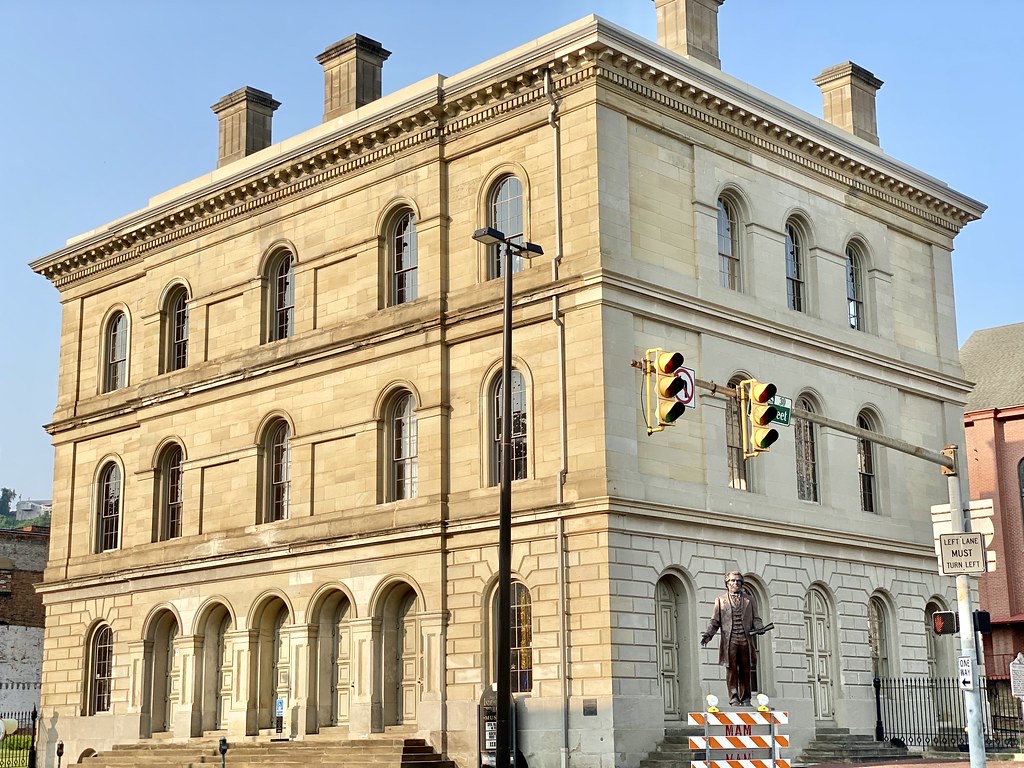
West Virginia is the only state created by breaking away from a Confederate state during the Civil War. But the split did not begin in 1861. For decades, Virginians west of the mountains had complained that the eastern planters who controlled the government ignored their needs. The war gave them a chance to act. Yet the new state’s boundaries were drawn by politics, railroads and armies, not by a clear line of loyalty, which is why much of the mountainous west, including the Shenandoah Valley and Southwest Virginia, stayed with Virginia.
Quick answer: Western Virginians resented eastern domination of the state government, especially over representation that counted enslaved people, taxes that favored slaveholders, and spending on roads and canals. When the Virginia convention voted for secession in April 1861, Unionists in the northwest met at Wheeling, formed a Restored Government of Virginia loyal to the Union, and approved the formation of a separate state. West Virginia was admitted on June 20, 1863. Areas where Confederate support or Confederate armies were strong, including most of the Shenandoah Valley and Southwest Virginia, remained part of Virginia.[1][2]
Contents
- Two Virginias
- Representation: who counts?
- The Convention of 1829–30
- The Reform Convention of 1850–51
- Roads, canals and railroads
- Slavery in the west
- Secession, 1861
- The Wheeling conventions
- Statehood
- Why the Valley and the Southwest stayed
- After the war: counties and debts
- Timeline
- Frequently asked questions
Two Virginias
By the early 1800s, Virginia had two very different societies. East of the Blue Ridge, in Tidewater and the Piedmont, large plantations worked by enslaved people grew tobacco and wheat, and wealthy planters dominated politics. West of the Alleghenies, in the region that became West Virginia, most people were small farmers, with few enslaved workers, and their trade ran down the Ohio River toward Pittsburgh, Cincinnati and the West rather than east to Richmond (see the regions of Virginia).
Representation: who counts?
Under Virginia’s first constitution of 1776, each county had the same number of delegates regardless of population, and only property owners could vote. As western counties grew, they were badly underrepresented. Westerners wanted representation based on the white population (“white basis”); easterners wanted a “mixed basis” that counted property, including enslaved people, so that slaveholding counties kept control (see who could vote in colonial Virginia).
The Convention of 1829–30
A constitutional convention met in Richmond in 1829–30 with former presidents James Madison and James Monroe and Chief Justice John Marshall among its members. After long debates, it adopted a compromise that still favored the east and kept property qualifications for voting, slightly loosened. Every western delegate but one voted against the new constitution, and talk of dividing the state began.
The Reform Convention of 1850–51
A second convention in 1850–51 finally gave all white men the vote and based the House of Delegates on white population, but the Senate still favored the east. In return, the east won a provision that capped taxes on enslaved people, while other property, including western land and livestock, was taxed at full value. That tax issue became a major grievance again in 1861.
Roads, canals and railroads
Westerners wanted the state to build roads, canals and railroads to connect them to markets. The state’s Board of Public Works funded many projects, but westerners felt the big investments, such as the James River and Kanawha Canal, served the east (see canals of Virginia and turnpikes). The Baltimore and Ohio Railroad, which reached Wheeling in 1853 across northern Virginia, tied the northwest to Baltimore and the North, not to Richmond.
Slavery in the west
Slavery existed in the west, especially in the Kanawha Valley salt industry and in the eastern panhandle, but enslaved people were a much smaller share of the population than in the east. Many westerners were not abolitionists, but they had less stake in defending slavery and resented being taxed and outvoted to protect it.
Secession, 1861
After Abraham Lincoln’s election and the secession of the Deep South states, a Virginia convention met in February 1861. It at first rejected secession, but after the attack on Fort Sumter and Lincoln’s call for troops, it voted on April 17, 1861, to secede. Most delegates from the northwestern counties voted against. Voters ratified secession in May 1861, but in the northwest, where many polls were held under Union protection, majorities voted no.
The Wheeling conventions
Unionists from the northwestern counties met at Wheeling in May and June 1861. The Second Wheeling Convention declared that the secession convention’s acts were void and that the state offices were vacant, and created the Restored Government of Virginia, loyal to the United States, with Francis H. Pierpont as governor. The federal government recognized it as the legitimate government of Virginia.[3]
The Restored Government’s legislature then approved, in Virginia’s name, the formation of a new state, satisfying, at least on paper, the U.S. Constitution’s requirement that no state be formed from another state without its legislature’s consent.[1]
Statehood
A constitutional convention for the new state, first called “Kanawha,” met in 1861–62. Congress passed the statehood bill in December 1862, requiring the gradual emancipation of enslaved people as a condition. After debate in his cabinet about whether it was constitutional, Lincoln signed it. West Virginia became the 35th state on June 20, 1863. The Restored Government moved to Alexandria and governed the small parts of Virginia under Union control for the rest of the war.[1]
Why the Valley and the Southwest stayed
The new state’s boundary was not a line between Unionists and Confederates. Its makers wanted enough territory to be viable, including the route of the B&O Railroad, but could not take counties where Confederate armies and sentiment were strong.
- The Shenandoah Valley: its farmers were tied by trade, family and slavery to eastern Virginia, and Confederate armies controlled it for much of the war. Most of it stayed in Virginia; only the lower valley counties along the B&O, Berkeley and Jefferson, were added to West Virginia, and only after disputed votes in 1863.
- Southwest Virginia: the Virginia and Tennessee Railroad, completed in 1856, linked it to Lynchburg and Richmond, and its salt and lead were vital to the Confederacy. Confederate forces held it throughout the war.
- Greenbrier, Monroe and other southern counties with Confederate majorities were nevertheless included in West Virginia to give the state a defensible southern border.
After the war: counties and debts
After the war, Virginia sued to get Berkeley and Jefferson counties back, arguing that the votes had been irregular. In Virginia v. West Virginia (1871), the U.S. Supreme Court ruled that the counties belonged to West Virginia.[4] The two states also fought for decades over how much of Virginia’s prewar debt West Virginia should pay. In 1911 the Supreme Court ruled that West Virginia owed a share; after further proceedings a final decree came in 1915, and West Virginia made its last payment in 1939.[5] For the boundary itself, see the Virginia–West Virginia border.
Timeline
| Date | Event |
|---|---|
| 1776 | First constitution: equal county representation |
| 1829–30 | Constitutional convention keeps eastern control |
| 1850–51 | Reform convention: white manhood suffrage, tax cap on enslaved people |
| 1853 | B&O Railroad reaches Wheeling |
| April 17, 1861 | Virginia convention votes to secede |
| June 1861 | Second Wheeling Convention creates the Restored Government |
| December 1862 | Congress passes West Virginia statehood act |
| June 20, 1863 | West Virginia admitted as the 35th state |
| 1871 | Supreme Court awards Berkeley and Jefferson counties to West Virginia |
| 1911–1915 | Supreme Court decides the debt case |
Frequently asked questions
Why did West Virginia break away from Virginia? Because of long-standing conflict with eastern Virginia over representation, taxes, internal improvements and slavery, brought to a head by Virginia’s secession in 1861.[2]
When did West Virginia become a state? June 20, 1863.[1]
Was the creation of West Virginia legal? Congress and Lincoln accepted the consent of the Restored Government of Virginia; Virginia contested it, but the Supreme Court later treated the separation as valid.[4]
Why didn’t the Shenandoah Valley join West Virginia? Its economy and politics were tied to eastern Virginia, and Confederate forces controlled it during most of the war.
See also: The Virginia–West Virginia border, Virginia charters and colonial boundaries, Shenandoah Valley.
References
- National Archives, “West Virginia Statehood” (legislative records). https://www.archives.gov/legislative/features/west-virginia
- e-WV, The West Virginia Encyclopedia (West Virginia Humanities Council). https://www.wvencyclopedia.org/
- West Virginia Department of Arts, Culture and History, official website (West Virginia Archives and History). https://www.wvculture.org/
- Virginia v. West Virginia, 78 U.S. 39 (1871), Legal Information Institute, Cornell Law School. https://www.law.cornell.edu/supremecourt/text/78/39
- Virginia v. West Virginia, 220 U.S. 1 (1911), Legal Information Institute, Cornell Law School. https://www.law.cornell.edu/supremecourt/text/220/1