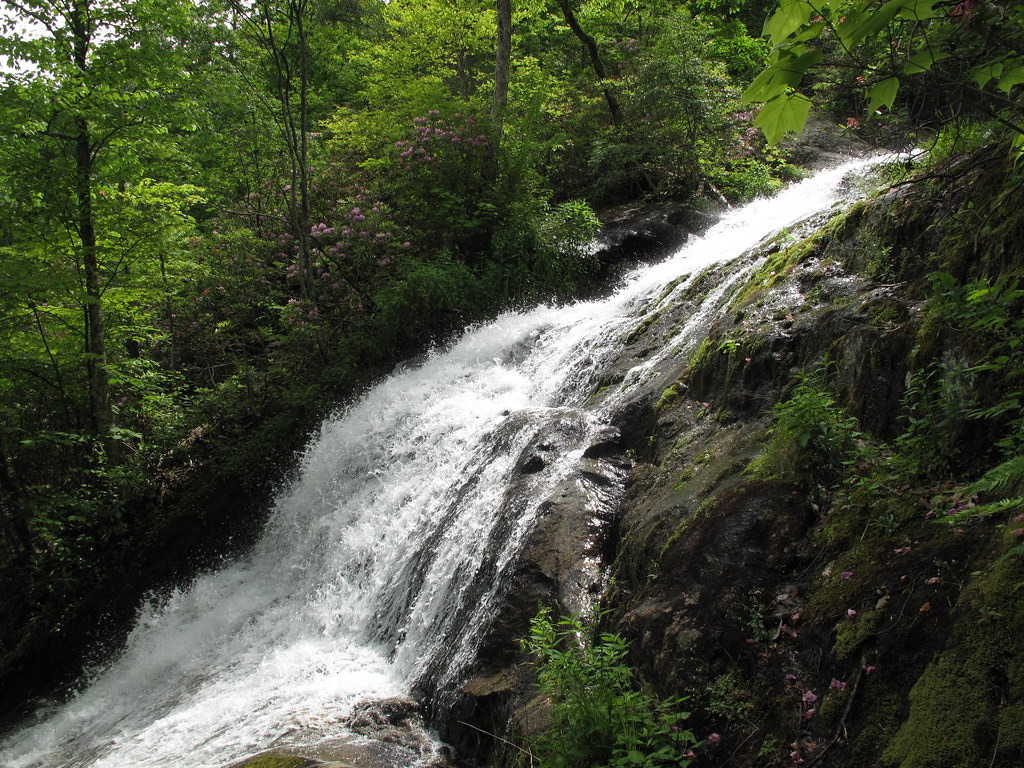
Falling water was Virginia’s first large-scale source of mechanical power, and it is still part of the electric grid today. The physics has not changed since the colonial gristmill: water held at a height has energy, and letting it drop through a wheel or turbine turns that energy into motion. What has changed is the scale, from a miller’s pond the size of a backyard to two mountain reservoirs in Bath County that can deliver as much power as a large nuclear plant.
Quick answer: Virginia has about 25 conventional hydroelectric plants and 2 pumped-storage stations. Conventional hydro supplied about 1% of the state’s electricity in 2025. The Bath County Pumped Storage Station, with about 3,000 megawatts of capacity, is the largest power plant in Virginia by capacity and the largest pumped-storage plant in North America; the Smith Mountain Project on the Roanoke River is the other pumped-storage station. Most hydro plants sit in the west, where the Piedmont rises toward the Blue Ridge.[1][2][3]
Contents
- How hydropower works
- Mills, millponds and millraces
- Water-powered industry on the Fall Line
- The first hydroelectric plants
- The big dams of the 20th century
- Pumped storage: Smith Mountain and Bath County
- Hydropower today
- Limits and environmental trade-offs
- Timeline
- Frequently asked questions
How hydropower works
People have used moving water in many ways. Native Virginians soaked cracked acorns in running streams to wash out the bitter tannins, and both Native canoeists and colonial sailors timed trips to ride currents and tides. But “hydropower” usually means one thing: letting water fall through a machine.
In a water mill, the falling water turns a wheel. In an overshot wheel, the most common type in hilly country, water pours into buckets at the top and its weight spins the wheel; an overshot wheel needs a drop a bit taller than the wheel itself. An undershot wheel is pushed by flowing water at the bottom and works with less drop but less efficiency.
In a hydroelectric plant, water flows through a turbine that spins a generator, where magnets rotate inside coils of copper wire to produce current. A dam does two jobs: it raises the water level, adding “head” (the height the water falls), and it stores water for times when the river runs low. In that sense a reservoir is a battery for potential energy. Because rain keeps refilling the watershed, hydropower counts as a renewable source.[4]
Mills, millponds and millraces
The colonists used waterpower almost from the start. Within about a dozen years of the founding of Jamestown, they were building an ironworks at Falling Creek, at the point where a creek spills off the Fall Line below present-day Richmond, to drive the bellows of a furnace. The 1622 attack ended the project, but it was the first attempt at water-powered industry in English America (see early energy in Virginia).
Grinding grain was the everyday use. A miller dammed a creek to make a pond, dug a ditch called a millrace to lead water to the wheel, and opened a gate when he wanted to grind corn or wheat. The same arrangement powered sawmills, where a crank turned by the wheel drove a blade up and down through logs. The technique was ancient: water mills were already grinding grain in the Mediterranean world some 2,000 years ago.
In flat Tidewater, mills were fewer, and many have vanished, but their ponds often survive. Chandler’s Mill Pond on Cat Point Creek in Westmoreland County was first built around 1670 by the Sturman family; today it is a public fishing lake under an agreement with the Virginia Department of Wildlife Resources.[5] West of the Fall Line, where streams drop faster, mills became thick on the ground. Some were private plantation mills; others were merchant mills that ground grain for paying customers and became local crossroads.
Water-powered industry on the Fall Line
The Fall Line, where rivers tumble from the Piedmont onto the Coastal Plain, was Virginia’s natural power strip. Richmond is the best example. Water drawn from the James River and Kanawha Canal and from mill canals along the river turned the stones and rollers of some of the largest flour mills in the country, and it powered machinery at the Tredegar Iron Works, which made rails, locomotives and Confederate cannon. Leather belts carried the power from water turbines to machines across the factory floor. A cotton and wool mill built beside Mayo’s Bridge in the late 1830s later became a paper mill.
Fredericksburg used the falls of the Rappahannock the same way. An old navigation canal was converted into a power canal, and Embrey Dam, built in the early 1900s, raised the river to supply more power to local industry. Petersburg on the Appomattox and Lynchburg on the James also grew up around water-driven mills (see canals of Virginia).
The first hydroelectric plants
Electricity changed hydropower from a local tool into something that could serve a whole region. In 1880, a water turbine driving a dynamo lit a theater and storefront in Grand Rapids, Michigan, and a year later a turbine in a Niagara Falls flour mill powered street lights.[6] Within two decades, Virginia entrepreneurs were adding turbines and generators to industrial dams on the Roanoke, the James, the Shenandoah and the New rivers, and building new dams for power alone. Small plants from this era still operate, some of them refurbished in recent decades after long periods out of service.
The advantage was the transmission line. A factory no longer needed to sit next to the waterfall; it could buy power sent by wire. That freedom eventually pulled generation away from the Fall Line cities to larger dams farther west.
The big dams of the 20th century
From the 1930s to the 1960s, utilities and the federal government built the large reservoirs that now define parts of the Virginia map.
- Claytor Dam (1939), New River, Pulaski County. Built by the predecessor of Appalachian Power, the 75-megawatt plant created Claytor Lake.[7][8]
- John H. Kerr Dam (1953) and Philpott Dam (1950s). Built by the U.S. Army Corps of Engineers on the Roanoke and Smith rivers, mainly for flood control, with hydroelectric units added. Kerr Reservoir, called Buggs Island Lake in Virginia, is the largest lake on the Virginia–North Carolina line (see lakes and reservoirs).
- Gaston Hydro Station (1963), Roanoke River. Dominion Energy’s four generators at Lake Gaston, just across the North Carolina line, have a net capacity of about 220 megawatts.[9]
- Smith Mountain Project (mid-1960s), Roanoke River. Appalachian Power’s two-reservoir project created Smith Mountain Lake and Leesville Lake.[3]
Not every federal dam makes electricity. The Corps also built Flannagan Dam on the Pound River and Gathright Dam on the Jackson River, creating Lake Moomaw, primarily for flood control and downstream water supply. Private developers have since sought permits to add small turbines to such dams, using federal tax credits and loans to make modest projects pay.
Pumped storage: Smith Mountain and Bath County
A pumped-storage plant works like a giant rechargeable battery. It has two reservoirs at different heights. When electricity is cheap and demand is low, usually at night, pumps move water uphill. When demand peaks, the water runs back down through turbines to generate power. The station uses more electricity than it produces, but it shifts energy from hours when it is worth little to hours when it is badly needed.[1]
Smith Mountain. Appalachian Power’s project pairs Smith Mountain Lake with Leesville Lake downstream. Water released from the upper lake generates power, and some is pumped back up from Leesville when power is cheap.[3]
Bath County. Dominion Energy’s Bath County Pumped Storage Station, in the Allegheny Mountains near the West Virginia line, is the giant. Its six units have a net generating capacity of about 3,003 megawatts. The upper reservoir sits behind a 460-foot-high rock-fill dam and its water level can swing about 105 feet in a cycle; the lower reservoir’s dam is 135 feet high. The station was licensed in 1977 and began commercial operation in December 1985. Dominion owns 60%, with the rest held by Bath County Energy and Allegheny Power.[2] The U.S. Energy Information Administration lists it as the largest power plant in Virginia by capacity and the largest pumped-storage plant in the nation.[1]
As solar and wind supply more of the grid, storage becomes more valuable. Virginia has studied whether old coal mines in the southwest could host new pumped-storage reservoirs, with one site on East River Mountain in Tazewell County evaluated by Dominion (see wind energy in Virginia).
Hydropower today
Virginia has about 25 conventional hydroelectric plants and the two pumped-storage stations. In 2025 conventional hydro provided about 1% of in-state generation; solar, biomass and hydro together made up about 14%.[1] The share is small because Virginia’s rivers are modest by national standards and most good dam sites were developed long ago.
Recent investment has gone into keeping existing plants running. Federal infrastructure money for hydroelectric upgrades reached two Appalachian Power plants on the New River in 2024: about $2.1 million toward replacing a turbine-generator unit at Byllesby in Carroll County, and about $5 million to replace original equipment on two of the four units at Claytor.[8]
Limits and environmental trade-offs
Big new dams are unlikely. After the National Environmental Policy Act of 1970, federal projects had to weigh the costs of flooding valleys, blocking fish migrations and changing river flows, and few remaining sites passed that test. The last major Corps proposal on the Rappahannock above Fredericksburg, which included no power plant at all, was never built, and Embrey Dam itself was later breached to reopen the river to migratory fish.
Diversion plants raise their own issues. Some small plants pipe water from a stream to a powerhouse downhill and return it farther down, leaving the stretch in between with reduced flow. Virginia’s water withdrawal rules aim to keep enough water in streams for fish and other aquatic life, and regulators have stepped in when a plant dried up a creek. Old mill dams also block fish, which is why dam removal and fish ladders appear in many Virginia restoration plans (see fish and freshwater mussels in Virginia).
Timeline
| Year | Event |
|---|---|
| c. 1619–1622 | Water-powered ironworks begun at Falling Creek |
| c. 1670 | Chandler’s Mill Pond dammed in Westmoreland County |
| 1880s–1900s | First hydroelectric plants added to Virginia mill and industrial dams |
| 1939 | Claytor Dam completed on the New River |
| 1953 | John H. Kerr Dam begins generating on the Roanoke River |
| 1963 | Gaston Hydro Station begins commercial operation |
| mid-1960s | Smith Mountain pumped-storage project completed |
| 1985 | Bath County Pumped Storage Station enters commercial operation |
| 2024 | Federal grants fund turbine upgrades at Claytor and Byllesby |
Frequently asked questions
How much of Virginia’s electricity comes from hydropower? About 1% from conventional hydro plants in 2025, according to the U.S. Energy Information Administration.[1]
What is the largest power plant in Virginia? By capacity, the Bath County Pumped Storage Station, at roughly 3,000 megawatts.[1][2]
How does pumped storage work? Water is pumped to an upper reservoir when power is cheap and released through turbines when demand is high. It stores energy rather than creating it.
Which lakes in Virginia were built for hydropower? Claytor Lake, Smith Mountain Lake, Leesville Lake, Lake Gaston and the reservoirs at Bath County, along with Kerr and Philpott, which combine flood control and power.
Will Virginia build more hydro dams? Probably not large ones. The best sites are taken and environmental costs are high, though small turbines may be added to existing dams.
See also: energy in Virginia, electricity in Virginia, rivers and watersheds of Virginia.
References
- U.S. Energy Information Administration, “Virginia: State Profile and Energy Estimates – Analysis.” https://www.eia.gov/state/analysis.php?sid=VA
- Dominion Energy, “Bath County Pumped Storage Station.” https://www.dominionenergy.com/projects-and-facilities/hydroelectric-power-facilities-and-projects/bath-county-pumped-storage-station
- Appalachian Power, “Smith Mountain Project.” https://www.smithmtn.com
- U.S. Energy Information Administration, “Hydropower explained.” https://www.eia.gov/energyexplained/hydropower/
- Virginia Department of Wildlife Resources, “Chandler’s Mill Pond.” https://dwr.virginia.gov/waterbody/chandlers-mill-pond/
- U.S. Department of Energy, “History of Hydropower.” https://www.energy.gov/eere/water/history-hydropower
- Appalachian Power, “Claytor Hydro.” https://www.claytorhydro.com
- Matt Busse, “Appalachian Power to get $5 million for Claytor hydroelectric upgrades,” Cardinal News, September 9, 2024. https://cardinalnews.org/2024/09/09/appalachian-power-to-get-5-million-for-claytor-hydroelectric-upgrades/
- Dominion Energy, “Gaston Hydro Station.” https://www.dominionenergy.com/projects-and-facilities/hydroelectric-power-facilities-and-projects/gaston-hydro-station