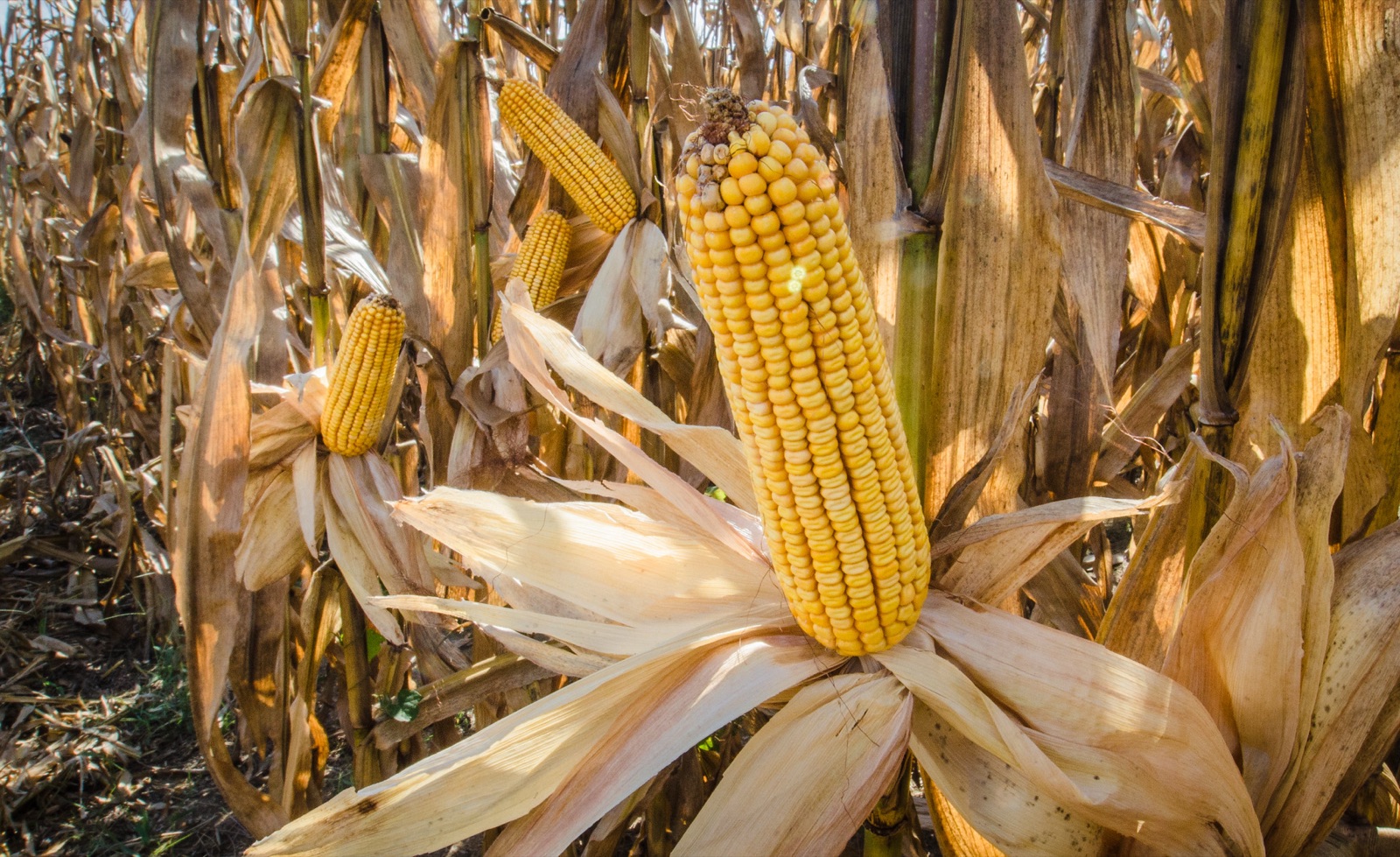
Biofuels promise to turn things Virginia already grows or throws away, such as barley, soybeans, canola, used fryer oil and the gas bubbling off manure and sewage, into fuel for cars, trucks, planes and stoves. The state has tried almost every version of that idea. Some have thrived on a small scale, some failed spectacularly, and the newest wave, renewable natural gas, is now flowing into local gas pipelines.
Quick answer: Virginia uses far more biofuel than it makes. It consumes about 424 million gallons of ethanol a year, almost all blended into gasoline, but has no operating fuel-ethanol plant after the Hopewell plant closed. It has one commercial biodiesel plant, with a capacity of about 5 million gallons a year, while using more than 36 million gallons of biodiesel. The growth area is renewable natural gas: since the 2020s, wastewater plants in Roanoke and Hampton Roads and a regional landfill in Suffolk have begun cleaning biogas and sending it into gas pipelines.[1][2][3][4]
Contents
- What counts as a biofuel
- Ethanol and the Hopewell plant
- Biodiesel: small refineries and farm fuel
- Used cooking oil, renderers and grease thieves
- Switchgrass and other energy crops
- The Renewable Fuel Standard and food prices
- Renewable diesel and sustainable aviation fuel
- Renewable natural gas
- Timeline
- Frequently asked questions
What counts as a biofuel
Biofuels are fuels made from recently living material rather than ancient fossil deposits. The main types used in Virginia are:
- Ethanol, an alcohol made by fermenting the starch or sugar in grain. Most gasoline sold in the United States contains about 10% ethanol (E10); some stations sell E15 or E85.
- Biodiesel, made by reacting vegetable oils or animal fats with methanol. It is blended with petroleum diesel, usually as B5 or B20.
- Renewable diesel, a fuel chemically almost identical to petroleum diesel, made from the same fats and oils by a refinery-style hydrogen process.
- Biogas and renewable natural gas (RNG), methane captured from decomposing organic matter and, for RNG, purified to pipeline quality.
Burning wood and crop waste for heat and electricity is covered on our page about biomass energy in Virginia.
Ethanol and the Hopewell plant
Virginia’s ethanol story centers on a single plant in the industrial city of Hopewell, on the James River. In 2011 Osage Bio Energy finished a roughly $200 million plant there designed to make about 65 million gallons of ethanol a year from barley, a grain Virginia farmers can grow as a winter crop. The plan was attractive: barley would cover fields in winter, soaking up nitrogen that might otherwise wash into the Chesapeake Bay, and farmers could still plant soybeans in the same fields after the barley harvest. The leftover grain residue, called distillers grains, would be sold as protein-rich livestock feed.
The plant never opened as planned. Its investors could not secure operating money, and Perdue, which had contracted with farmers for the barley, absorbed the loss on the first crop. A British company, Vireol, restarted the plant with state and city incentives in 2014, but it shut down within about a year as gasoline prices fell. Green Plains, a large Nebraska-based ethanol producer, bought the plant in 2015, switched it to corn and ran it until the late 2010s.[5] Today Virginia has no fuel-ethanol production, although the state accounts for about 3% of U.S. ethanol consumption.[1] Ethanol arrives by rail and ship from the Midwest and is blended into gasoline at fuel terminals.
The Hopewell saga showed how risky biofuel plants are: their costs depend on grain prices, their revenue on gasoline prices and federal mandates, and those can move in opposite directions at the worst time.
Biodiesel: small refineries and farm fuel
Biodiesel suits smaller operations. By the mid-2010s Virginia had about half a dozen biodiesel producers, from Richmond to Lee County, using soybeans, canola or waste grease. Several have since closed; by 2025 the U.S. Energy Information Administration counted one biodiesel plant in Virginia, with a capacity of about 5 million gallons a year.[1]
Some of the most interesting projects are on farms. At Riverhill Farm near Port Republic in Rockingham County, farmer Glenn Rodes began making biodiesel from his own soybeans around 2010, then added canola as a winter cover crop. The seeds are crushed for oil, which is processed into biodiesel for about $1 a gallon. The farm makes about 6,000 gallons a year, enough to run its tractors and irrigation pumps, and also burns wood chips to heat turkey houses.[6] Other operations have built “closed loops,” selling canola cooking oil to local restaurants, collecting the used oil and turning it into fuel. A truck stop in Henry County made and sold its own canola biodiesel after supply disruptions following Hurricane Katrina.
Biodiesel has drawbacks: it can gel in cold weather sooner than petroleum diesel and can corrode some tanks, which is why it is usually sold as a blend rather than pure B100.[7]
Used cooking oil, renderers and grease thieves
Restaurants produce huge amounts of used fryer oil, known in the trade as “yellow grease.” Renderers, companies that recycle animal fats and food waste into feed ingredients and fuel, have collected it for decades; Winchester-based Valley Proteins long dominated the trade in much of Northern Virginia, Richmond and the Shenandoah Valley. As biodiesel makers began competing for the same supply, restaurants that once paid to have grease hauled away found they could sell it.
When fuel prices rise, the grease becomes valuable enough to steal. Thieves break into the storage bins behind restaurants and pump the oil out to resell it. In 2023 a used-oil collection company in Waverly told reporters that restaurants it served all over Central Virginia were being hit, sometimes in broad daylight. As its owner put it, the oil “is not trash.”[8]
Switchgrass and other energy crops
Grain-based ethanol competes with food and feed, so researchers have long looked to plants that grow on poorer land. Switchgrass is a tall native prairie grass that once grew widely in Virginia’s open areas; heavy grazing by settlers’ livestock wiped out most stands, and cool-season European grasses replaced it. It can grow on land too steep, sandy or infertile for row crops and is now promoted for forage, wildlife and conservation as well as possible energy use.[9] Researchers in Danville and at Virginia Tech have worked on propagating giant miscanthus and other high-yield grasses, and in the 2010s state grants backed ventures to make fuel from grasses and even from tobacco grown densely for energy. None has yet reached large commercial scale. Turning tough plant fibers (cellulose) into fuel cheaply remains the bottleneck.
The Renewable Fuel Standard and food prices
The federal Renewable Fuel Standard, run by the U.S. Environmental Protection Agency, requires refiners and importers to blend minimum volumes of renewable fuels into the nation’s gasoline and diesel each year.[2] It created the market that keeps ethanol in nearly every gallon of gasoline.
In Virginia the mandate has been controversial among livestock and poultry farmers, especially in the Shenandoah Valley. They buy large amounts of corn and soybean meal for feed, and they argue that diverting corn to ethanol raises their costs. Corn growers and ethanol makers counter that the standard supports farm incomes and that distillers grains return much of the corn’s value as feed. Shenandoah Valley congressman Bob Goodlatte introduced bills to repeal or scale back the mandate.
Renewable diesel and sustainable aviation fuel
Renewable diesel uses the same fats and oils as biodiesel but runs them through a hydrotreating process with hydrogen. The result has no oxygen, behaves like petroleum diesel and can be used in any diesel engine at any blend.[7] Virginia had no renewable diesel refinery as of 2025.
Sustainable aviation fuel, made largely from used cooking oil, animal fats and vegetable oils with a similar process, is the airline industry’s main near-term hope for cutting emissions, but it costs several times as much as conventional jet fuel. In 2024 the U.S. Department of Energy committed $3 billion to two large sustainable aviation fuel projects in Montana and South Dakota.[10] Demand for the same waste fats is one reason used fryer oil has become a commodity worth stealing.
Renewable natural gas
When bacteria break down manure, food waste or sewage sludge without oxygen, they release biogas, a mix of methane and carbon dioxide. Methane is a powerful greenhouse gas, so capturing it instead of letting it escape or flaring it offers a climate benefit, and cleaning it into renewable natural gas creates a product that can replace fossil gas. A 2022 state law made it easier for gas utilities to invest in such projects and recover the costs from customers.
Virginia projects include:
- Roanoke. The Western Virginia Water Authority and Roanoke Gas built a system at the Roanoke Regional Water Pollution Control Plant to clean digester gas, about 63% methane, into pipeline-quality RNG for Roanoke Gas’s roughly 63,000 customers. The partners called it the first product of its kind in Virginia.[3]
- Suffolk. The Southeastern Public Service Authority’s regional landfill had long burned its landfill gas to make electricity. Terreva Renewables built a $25 million facility to turn that gas into RNG instead.[4]
- Virginia Beach. Virginia Natural Gas planned a $30 million RNG project at the Hampton Roads Sanitation District’s Atlantic Treatment Plant, which handles up to 54 million gallons of wastewater a day and has flared its biogas.[11]
- Hog farms. Align RNG, a venture backed by Smithfield Foods and Dominion Energy, covers manure lagoons on hog farms, captures the methane and pipes it to a central site for cleaning; the company lists Virginia among the states where it is developing projects, including a network of collection pipelines from about 20 hog farms to a site near Waverly.[12]
Critics warn that “renewable natural gas” can be oversold: the total supply is small compared with fossil gas, and some projects may lock in gas infrastructure. Supporters reply that methane from manure and sewage will be produced anyway, so capturing and using it is better than releasing it.
Timeline
| Year | Event |
|---|---|
| c. 2010 | Riverhill Farm begins making biodiesel from its own crops |
| 2011 | Hopewell barley-ethanol plant completed but does not open |
| 2014 | Vireol restarts the Hopewell plant |
| 2015 | Green Plains acquires the Hopewell ethanol plant |
| 2022 | Roanoke biogas-to-RNG project breaks ground; state law encourages RNG |
| 2023 | Suffolk landfill RNG facility opens; grease thefts hit Central Virginia |
| 2025 | Virginia Beach wastewater RNG project announced |
Frequently asked questions
Does Virginia produce ethanol? Not anymore. The Hopewell plant was the only large producer; Virginia now has no fuel-ethanol plant but uses about 424 million gallons a year.[1]
How much biodiesel does Virginia make? Its one remaining biodiesel plant can produce about 5 million gallons a year, while the state uses more than 36 million gallons.[1]
What is renewable natural gas? Methane captured from manure, landfills or sewage and cleaned to pipeline quality so it can replace fossil natural gas.[3]
Why do people steal used cooking oil? Because it is a valuable raw material for biodiesel, renewable diesel and aviation fuel.[8]
Can switchgrass be used for fuel? In theory yes, and it grows on poor land, but turning its fibers into fuel cheaply is still a challenge.[9]
See also: energy in Virginia, biomass energy in Virginia, corn in Virginia, soybeans in Virginia.
References
- U.S. Energy Information Administration, “Virginia: State Profile and Energy Estimates – Analysis.” https://www.eia.gov/state/analysis.php?sid=VA
- U.S. Environmental Protection Agency, “Renewable Fuel Standard.” https://www.epa.gov/renewable-fuel-standard-program
- Roanoke Gas Company, “Roanoke Gas Company and the Western Virginia Water Authority break ground on a facility to convert biogas into renewable natural gas.” https://www.roanokegas.com/roanoke-gas-company-and-the-western-virginia-water-authority-break-ground-on-a-facility-to-convert-biogas-into-renewable-natural-gas-for-the-benefit-of-the-community/
- Katherine Hafner, “From trash to fuel: Hampton Roads landfill aims to cut carbon footprint while making natural gas,” WHRO, October 18, 2023. https://www.whro.org/2023-10-18/spsa-landfill-renewable-natural-gas-facility
- Ethanol Producer Magazine, “Green Plains acquires Hopewell, Va., ethanol plant,” October 26, 2015. https://ethanolproducer.com/articles/12708/green-plains-acquires-hopewell-va-ethanol-plant
- Rachel Felver, “Alternative energy powers a Virginia farm,” Chesapeake Bay Program, December 19, 2019. https://www.chesapeakebay.net/news/blog/alternative_energy_powers_a_virginia_farm
- farmdoc daily (University of Illinois), “Biodiesel and Renewable Diesel: What’s the Difference?” February 2023. https://farmdocdaily.illinois.edu/2023/02/biodiesel-and-renewable-diesel-whats-the-difference.html
- Nicole Dantzler, “‘This is not trash. This is something that has value’: Virginia restaurants targeted by thieves for their cooking oil,” WRIC, April 19, 2023. https://www.wric.com/news/virginia-news/this-is-not-a-trash-this-is-something-that-has-value-virginia-restaurants-targeted-by-thieves-for-their-cooking-oil/
- Virginia Cooperative Extension, “Planting and Managing Switchgrass for Forage, Wildlife, and Conservation.” https://pubs.ext.vt.edu/418/418-013/418-013.html
- Canary Media, “DOE makes $3B commitment to two sustainable aviation fuel projects.” https://www.canarymedia.com/articles/air-travel/doe-makes-3b-commitment-to-two-sustainable-aviation-fuel-projects
- Katherine Hafner, “From sewage to pipeline: New project in Hampton Roads aims to make fuel from wastewater byproduct,” WHRO, May 29, 2025. https://www.whro.org/environment/2025-05-29/from-sewage-to-pipeline-new-project-in-hampton-roads-aims-to-make-fuel-from-wastewater-byproduct
- Align RNG, “Projects.” https://alignrng.com/projects.aspx