Per- and polyfluoroalkyl substances, better known as PFAS, have been made since the 1940s and used in everything from nonstick pans and stain-resistant carpets to food wrappers and firefighting foam. Their carbon-fluorine bonds are among the strongest in chemistry, which makes the products useful and the chemicals almost indestructible in the environment. That is why they are called “forever chemicals.” In Virginia, as across the country, PFAS have turned up in drinking water sources, in groundwater near military and airport fire training areas, in fish and in sewage sludge spread on farm fields.
Quick answer: PFAS are a family of thousands of long-lasting synthetic chemicals that break down very slowly. A Virginia Department of Health study, required by a 2020 law, sampled PFAS in public drinking water and reported its findings in December 2021. In 2022 GenX, a PFAS compound, was found in Roanoke County’s Spring Hollow Reservoir and traced to an industrial facility connected to the Elliston wastewater plant. At NASA’s Wallops Flight Facility, PFAS from firefighting foam reached the Town of Chincoteague’s wells, and NASA built a treatment system that has operated since April 2021. The EPA set national drinking water limits for six PFAS on April 10, 2024, including 4.0 parts per trillion for PFOA and PFOS; in May 2026 it proposed keeping those two limits, with a possible extension to 2031, and rescinding the others.[1][2][3][4][5]
Contents
- What PFAS are
- Why they matter for health
- How PFAS get into Virginia’s water
- Virginia’s drinking water study
- GenX in Spring Hollow Reservoir
- Firefighting foam: Wallops and Chincoteague
- PFAS in sludge and fish
- Federal limits and their revision
- Removing and destroying PFAS
- Frequently asked questions
- References
What PFAS are
PFAS is not one chemical but a family of thousands. All contain chains of carbon atoms bonded to fluorine. Two of the oldest and best studied are PFOA, once used to make Teflon, and PFOS, once the key ingredient in Scotchgard and in many firefighting foams. As those two were phased out by U.S. manufacturers, newer replacements such as GenX (the trade name for a technology that uses HFPO-DA) came into use. PFAS are found in many consumer, commercial and industrial products, which makes it hard to study and assess their risks one by one.[1]
Why they matter for health
Because PFAS break down so slowly, they build up in the environment and in people. Studies have linked long-term exposure to certain PFAS with some cancers, effects on the liver and immune system, high cholesterol, and problems with pregnancy and child development. The EPA has said that long-term exposure can cause cancer and other illnesses, and that unborn babies and young children are especially vulnerable.[1][5]
How PFAS get into Virginia’s water
PFAS reach water in several ways: discharges from factories that make or use them; firefighting foam sprayed at military bases, airports and fire training grounds, which soaks into groundwater; leachate from landfills full of PFAS-treated consumer products; and wastewater treatment plants, which do not remove PFAS, so the chemicals pass into rivers in treated water and into sewage sludge. Once in groundwater or reservoirs, they can travel long distances and persist for decades.
Virginia’s drinking water study
In 2020 the General Assembly passed HB586, which directed the State Health Commissioner to convene a work group and study the occurrence of PFOA, PFOS and other PFAS in Virginia’s public drinking water. The law limited the sampling to no more than 50 waterworks or major sources of supply. The Department of Health’s Office of Drinking Water designed and ran the sample study, and the work group reported its findings and recommendations in December 2021. The study was meant to inform state maximum contaminant levels under a new provision of the Code of Virginia effective January 1, 2022.[2] The department continues to publish PFAS sampling results through an interactive map.[6]
GenX in Spring Hollow Reservoir
The most striking Virginia case came from Roanoke County. The Western Virginia Water Authority detected GenX in its Spring Hollow Reservoir and in treated drinking water in August 2022 and shut its intake from the Roanoke River, which fills the reservoir. The state Department of Environmental Quality traced the chemical up the river to an industrial facility connected to the Elliston wastewater treatment plant, and both the facility and the plant operators were told to take all necessary action to eliminate the source.[3] The episode showed how a single upstream industry, discharging through a small town sewer plant, could contaminate a regional drinking water supply.
Firefighting foam: Wallops and Chincoteague
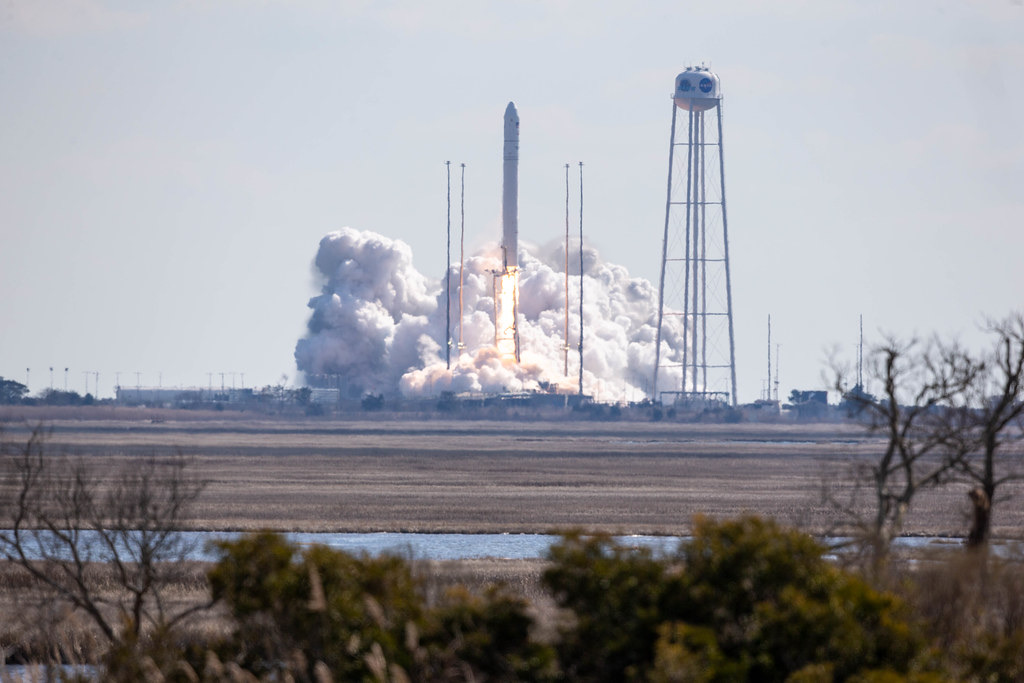
Aqueous film-forming foam, or AFFF, is the most effective product for putting out aircraft fuel fires, and for decades it contained PFAS. At NASA’s Wallops Flight Facility on the Eastern Shore, an investigation that began in 2016 found that AFFF had been used for fire training and emergency response for many years. In 2017 NASA’s groundwater testing detected PFAS in the Town of Chincoteague’s drinking water supply wells, which are on NASA property.[4]
NASA stopped pumping from the town’s shallow wells and supplied water from the Wallops system instead. It then built a groundwater treatment plant that can treat 410 gallons a minute, operating under a Virginia Department of Health permit since April 2021. NASA reports that the treated water meets the EPA standards finalized in 2024, and the town’s wells and drinking water are tested regularly.[4]
PFAS in sludge and fish
Because sewage treatment plants concentrate PFAS in their solids, biosolids spread on farm fields can carry PFAS into soils, crops and streams. This has become a major issue in the debate over land application of sludge in Virginia; see Sewage Treatment and Biosolids in Virginia. Researchers in Virginia have also studied whether PFAS are building up in fish, a concern for people who eat what they catch.[7]
Federal limits and their revision
On April 10, 2024, the EPA announced the first national, legally enforceable drinking water standards for PFAS. The rule set maximum contaminant levels of 4.0 parts per trillion each for PFOA and PFOS, and limits for PFHxS, PFNA and GenX (HFPO-DA), plus a “hazard index” for mixtures of several PFAS. Water systems were given until 2029 to comply.[5]
The rule did not stay fixed. After announcing a new approach in May 2025, the EPA on May 18, 2026, proposed two rules: one keeping the limits for PFOA and PFOS while letting water systems request two more years, to 2031, to comply; the other rescinding the limits for PFHxS, PFNA, GenX and the hazard index mixture.[5] For Virginia utilities, the PFOA and PFOS limits still mean large investments in treatment.
Removing and destroying PFAS
The main ways to remove PFAS from drinking water are granular activated carbon, ion exchange resins and high-pressure membranes such as reverse osmosis. All of them capture PFAS rather than destroy them, leaving used filters or concentrated waste that must be handled carefully. Destroying the carbon-fluorine bond takes extreme conditions, and researchers are testing methods such as supercritical water oxidation, high-temperature alkaline treatment, electrochemical oxidation and plasma. Until those become practical and affordable, preventing PFAS from entering water in the first place, by phasing out PFAS foams and products, is the most effective approach.
For other water topics, see Water Pollution and Stormwater in Virginia and Drinking Water in Virginia.
Frequently asked questions
What are PFAS? A family of thousands of synthetic chemicals that break down very slowly, used in nonstick, stain-resistant and waterproof products and in firefighting foam.[1]
Is there PFAS in Virginia drinking water? PFAS have been found in some Virginia water sources. The Department of Health studied their occurrence in 2020–2021 and publishes sampling results.[2][6]
What happened at Spring Hollow Reservoir? GenX was detected in 2022 and traced to an industrial facility discharging through the Elliston wastewater plant; the water authority shut its river intake.[3]
What is the federal PFAS limit for drinking water? The 2024 rule set 4.0 parts per trillion for PFOA and PFOS. In 2026 the EPA proposed keeping those limits, possibly with more time to comply, and dropping limits for other PFAS.[5]
References
- U.S. Environmental Protection Agency, “PFAS Explained.” https://www.epa.gov/pfas/pfas-explained
- Virginia General Assembly, Reports to the General Assembly, RD877 (2021), “Study of the Occurrence of Per- and Polyfluoroalkyl Substances (PFAS) in the Commonwealth’s Public Drinking Water.” https://rga.lis.virginia.gov/Published/2021/RD877
- WVTF, “DEQ: Source of Gen X substance in Roanoke River identified,” November 10, 2022. https://www.wvtf.org/news/2022-11-10/deq-source-of-gen-x-substance-in-roanoke-river-identified
- NASA, “PFAS at NASA Wallops Flight Facility.” https://www.nasa.gov/wallops/pfas
- U.S. Environmental Protection Agency, “Per- and Polyfluoroalkyl Substances (PFAS)” (drinking water regulation). https://www.epa.gov/sdwa/and-polyfluoroalkyl-substances-pfas
- Virginia Department of Health, Office of Drinking Water, “PFAS.” https://www.vdh.virginia.gov/drinking-water/pfas/
- WFAE, “Virginia researchers look into whether forever chemicals are building up in fish,” July 17, 2023. https://www.wfae.org/2023-07-17/virginia-researchers-look-into-whether-forever-chemicals-are-building-up-in-fish