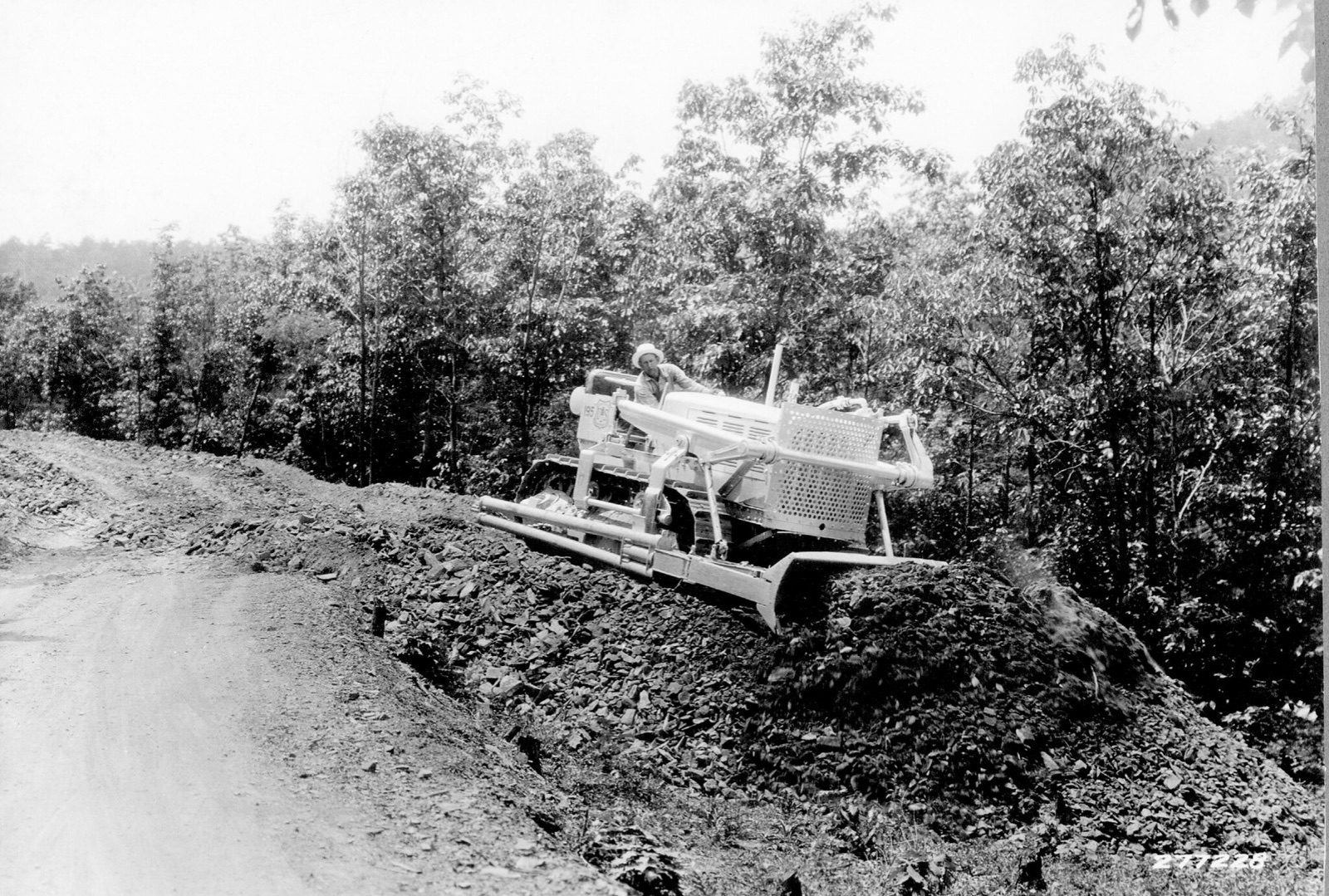
Virginia’s state forests are not parks and not wilderness. They are “working woods,” managed by the Virginia Department of Forestry to grow timber, protect water and wildlife, test forestry methods and, at the same time, welcome hikers, hunters, anglers, mountain bikers and horseback riders. Many of them, like much of Virginia’s public land, owe their existence to the Great Depression, when the federal government bought worn-out farms and the young men of the Civilian Conservation Corps planted trees, fought fires and built the roads, cabins and trails that visitors still use.
Quick answer: Virginia has about two dozen state forests, the largest being Appomattox-Buckingham and Cumberland (about 16,150 acres, mostly in Cumberland County) in the central Piedmont. They are managed for timber, water quality, wildlife and research as well as recreation, and logging and prescribed burning are part of their management. The Civilian Conservation Corps (1933–1942) enrolled young men at $30 a month, $25 of which went home to their families; in Virginia its camps built Skyline Drive and much of Shenandoah National Park, the first six state parks of 1936 and the cabin camps of today’s Prince William Forest Park.[1][2][3]
Contents
- Forests that work
- From worn-out farms to state forests
- The largest state forests
- Small forests near the cities
- What you can do in a state forest
- The Civilian Conservation Corps
- The CCC in Shenandoah
- State parks and Prince William Forest
- The CCC legacy
- Timeline
- Frequently asked questions
Forests that work
Virginia has several kinds of public woodland, and the differences matter to visitors. National forests, run by the U.S. Forest Service, cover large parts of the Blue Ridge and the Alleghenies. National and state parks emphasize recreation and preservation. Wilderness areas, natural area preserves and wildlife refuges protect natural processes and species (see wilderness, wildlife refuges and nature preserves in Virginia).
State forests sit in between. They are managed for multiple uses: timber sales generate revenue and demonstrate good forestry, foresters thin stands and use prescribed fire to reduce wildfire risk and favor oak and pine, streams are protected as sources of clean water, and the public can visit for recreation. Visitors may see recent harvests or areas where the understory has been burned or cleared, a normal part of management rather than damage. The wider forestry economy is described in forestry in Virginia.
From worn-out farms to state forests
By the early 20th century much of the Virginia Piedmont had been farmed for two centuries, and tobacco and corn had exhausted and eroded the soil. During the Depression the federal government bought thousands of acres of failing farmland under the Bankhead–Jones Farm Tenant Act of 1937 and related programs, resettled families, and replanted the land in trees. Some of this land was later transferred to Virginia and became its largest state forests. Cumberland State Forest was largely active or abandoned farmland a century ago.[2]
The largest state forests
- Appomattox-Buckingham State Forest, in Appomattox and Buckingham counties, is the largest in the system and lies near Holliday Lake State Park.
- Cumberland State Forest, the second largest at about 16,150 acres, lies mostly in Cumberland County with a small part in Buckingham. It mixes pine and hardwood forests and contains about 121 miles of waterways, including more than 15 miles of the Willis River, four small lakes (Bonbrook, Arrowhead, Winston and Oak Hill) and several vernal pools, seasonal wetlands important for amphibians.[2] Bear Creek Lake State Park sits within it.
- Prince Edward–Gallion, Pocahontas and Conway Robinson are among the other named forests, along with forests in the Shenandoah Valley such as Paul State Forest in Rockingham County, west of Harrisonburg.
Several state forests are paired with state parks, so visitors can camp in the park and hike or ride in the forest. For the parks, see state parks in Virginia.
Small forests near the cities
Some state forests are small tracts in fast-growing areas. Conway Robinson State Forest in Prince William County, next to Manassas National Battlefield Park, is a few hundred acres of woods where volunteers maintain mountain bike trails and spring wildflowers such as bloodroot and toothwort bloom before the trees leaf out. These forests are used for environmental education and show how forest stewardship works in a suburban setting.
What you can do in a state forest
Most state forests are open for hiking, mountain biking, horseback riding, fishing, hunting in season and wildlife watching. Some require a state forest use permit for adults who hunt, fish, ride or bike, and fees support the forests. Camping is generally limited or not allowed outside the state parks next door. Because these are working forests, visitors should expect logging trucks on forest roads and check for closures during harvests or prescribed burns.
The Civilian Conservation Corps
The Civilian Conservation Corps (CCC) was one of the first New Deal programs. President Franklin D. Roosevelt created it in his first hundred days, and the first recruit signed up in April 1933.[3] It was a relief program for families with unemployed young men: enrollees, originally unmarried men aged 18 to 23, agreed to at least six months of outdoor work in soil conservation and reforestation. They received uniforms, housing, food and training and earned $30 a month, $25 of which was sent home to their parents.[1]
Nationwide, in nine years the CCC planted nearly 3 billion trees and developed more than 800 parks.[1] The U.S. Army ran the camps, each with about 200 young men. In Virginia the CCC fought forest fires, built fire towers and roads in the national forests, controlled erosion on farms and developed parks. Some enrollees were African American, generally in segregated camps.
The CCC in Shenandoah
Between May 1933 and March 1942, 12 CCC camps at nine locations operated in and around the future Shenandoah National Park, and more than 6,500 young men served there. They landscaped Skyline Drive and built its overlooks, picnic grounds and developed areas. The park counts among their work 1,145 miles of fire trails, 101 miles of trails, 136 miles of telephone lines and 147,595 trees and shrubs planted.[1] The park still holds an annual CCC reunion. See national parks in Virginia.
State parks and Prince William Forest
In June 1936 Virginia opened its first six state parks at once, Douthat, Fairy Stone, Hungry Mother, Seashore (now First Landing), Staunton River and Westmoreland, all developed by the CCC with cabins, lodges, lakes and trails in a rustic style. Their story is told in state parks in Virginia.
The National Park Service also used the CCC to build “Recreational Demonstration Areas,” parks meant to give city families and youth groups a chance to camp in the country. Starting in May 1935, the CCC and the Works Progress Administration built Chopawamsic Recreational Demonstration Area in Prince William County, the fourth largest in the nation, with five rustic cabin camps on about 14,000 acres. It became Prince William Forest Park, and its CCC cabins still shelter campers.[3]
The CCC legacy
The CCC ended in 1942, as the country mobilized for World War II. Its discipline and training prepared many enrollees for military service.[1] Its legacy in Virginia is everywhere: in the stone walls and overlooks of Skyline Drive, the cabins of the first state parks, the forests replanted on eroded farms, and the trails of the national forests. Modern programs such as the Virginia Service and Conservation Corps continue the idea of young people working on public lands.
For other green spaces, see the guide parks and forests of Virginia.
Timeline
| Year | Event |
|---|---|
| 1933 | CCC created (April); camps open around the future Shenandoah National Park (May) |
| 1935 | CCC and WPA begin Chopawamsic Recreational Demonstration Area (May) |
| 1936 | Virginia opens its first six state parks, built by the CCC (June) |
| 1937 | Bankhead–Jones Farm Tenant Act |
| 1942 | CCC ends (March camps close in Shenandoah) |
| 1948 | Chopawamsic becomes Prince William Forest Park |
Frequently asked questions
What is the largest state forest in Virginia? Appomattox-Buckingham State Forest; Cumberland State Forest, at about 16,150 acres, is second.
What is the difference between a state forest and a state park? State parks focus on recreation and preservation, while state forests are working forests managed for timber, water, wildlife and research, with recreation as one of several uses.
What did the CCC build in Virginia? Skyline Drive’s overlooks and facilities in Shenandoah National Park, the first six state parks opened in 1936, the cabin camps of Prince William Forest Park, fire roads and towers, and millions of trees.
How much were CCC workers paid? $30 a month, of which $25 was sent home to their families.
References
- [1] National Park Service, Shenandoah National Park: The Civilian Conservation Corps – last checked 11/21/2026
- [2] Virginia Land Conservation Assistance Network, Cumberland State Forest – last checked 11/21/2026
- [3] National Park Service, Prince William Forest Park: The Civilian Conservation Corps – last checked 11/21/2026