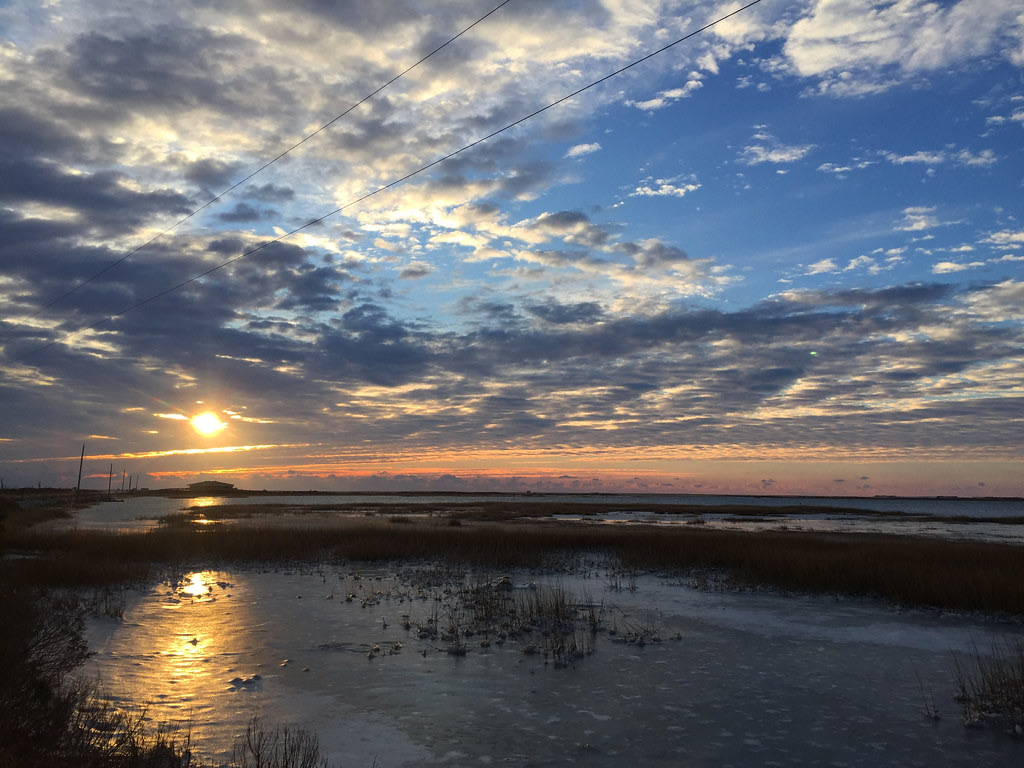
Parks are built for people. Virginia also has a different set of protected lands whose first purpose is something else: keeping a landscape wild, raising ducks and geese, saving a rare plant community or growing timber. These places go by confusing names (wilderness, refuge, preserve, state forest, wildlife management area) and are run by different agencies with different rules. Knowing which is which tells you whether you can hunt, camp, ride a bike or even walk in.
Quick answer: Virginia has 24 federally designated wilderness areas covering about 215,000 acres; 23 are in the George Washington and Jefferson National Forests and one, the Shenandoah Wilderness, is in Shenandoah National Park. The first, James River Face, was designated in 1975. National wildlife refuges, run by the U.S. Fish and Wildlife Service, are managed for wildlife first and allow “wildlife-dependent” recreation such as hunting, fishing and birdwatching. The state adds natural area preserves for rare species and habitats (under a 1989 law), state forests managed for timber and other uses, and wildlife management areas paid for by hunting and fishing licenses.[1][2][3][4]
Contents
- A quick guide to the labels
- What “wilderness” means in law
- Virginia’s 24 wilderness areas
- National scenic areas
- National wildlife refuges
- What you can do on a refuge
- Natural area preserves
- State forests
- Wildlife management areas
- Frequently asked questions
A quick guide to the labels
| Label | Who manages it | Main purpose | Typical visitor uses |
|---|---|---|---|
| Wilderness | U.S. Forest Service or National Park Service | Keep land wild and undeveloped | Hiking, backpacking, hunting and fishing (by state law), no motors or bikes |
| National scenic area | U.S. Forest Service | Protect scenery, often with more flexible rules than wilderness | Hiking, camping, scenic driving |
| National wildlife refuge | U.S. Fish and Wildlife Service | Wildlife conservation | Wildlife watching, photography, hunting, fishing, education |
| Natural area preserve | Virginia Department of Conservation and Recreation (or a private owner) | Protect rare species and natural communities | Limited trails at some preserves; others closed |
| State forest | Virginia Department of Forestry | Managed woodland: timber, water, wildlife, research, recreation | Hiking, hunting, fishing, mountain biking |
| Wildlife management area | Virginia Department of Wildlife Resources | Wildlife habitat and hunting | Hunting, fishing, trapping, wildlife viewing |
What “wilderness” means in law
“Wilderness” in the United States is a legal category created by the Wilderness Act of 1964, which set up the National Wilderness Preservation System. The law defines wilderness as an area “where the earth and its community of life are untrammeled by man, where man himself is a visitor who does not remain,” and directs that wilderness areas be managed to leave them unimpaired for future use and enjoyment. Only Congress can designate wilderness.[5] Inside a wilderness there are no new roads, no motor vehicles and no mechanized transport, which in practice also rules out mountain bikes; timber harvest is not allowed.
At first, many officials doubted that eastern forests qualified, since nearly all of them had been logged, farmed or burned at some point. Congress settled the question with the Eastern Wilderness Areas Act of January 3, 1975, which designated wilderness on acquired lands in the East. That law created Virginia’s first wilderness, James River Face, 8,800 acres along the James River gorge in the Jefferson National Forest, rising from about 650 feet near the river to 3,073 feet on Highcock Knob.[6]
Virginia’s 24 wilderness areas
Most of Virginia’s wilderness was added by the Virginia Wilderness Act of 1984 and later bills. Citizen advocacy drove the process: the Virginia Wilderness Committee, founded in 1969, has campaigned for the federal laws that created all 24 areas, which together cover 215,253 acres.[1][6]
| National forest or park | Wilderness areas |
|---|---|
| Jefferson National Forest | Barbours Creek, Beartown, Brush Mountain, Brush Mountain East, Garden Mountain, Hunting Camp Creek, James River Face, Kimberling Creek, Lewis Fork, Little Dry Run, Little Wilson Creek, Mountain Lake, Peters Mountain, Raccoon Branch, Shawvers Run, Stone Mountain, Thunder Ridge |
| George Washington National Forest | The Priest, Ramseys Draft, Rich Hole, Rough Mountain, Saint Mary’s, Three Ridges |
| Shenandoah National Park | Shenandoah Wilderness |
Two stand out. The Shenandoah Wilderness, designated in 1976, covers 79,019 acres and is the only Virginia wilderness managed by the National Park Service.[7] Lewis Fork Wilderness, designated in 1984 in Grayson and Smyth counties and enlarged in 1988 and 2009, includes Mount Rogers, at 5,729 feet the highest point in Virginia.[8] Several areas, such as Thunder Ridge and James River Face, sit side by side along the Blue Ridge, separated only by a gravel road.[6]
Hunting and fishing are generally allowed in national forest wilderness under state regulations, which surprises many visitors who assume wilderness means “no hunting.” The real difference from the surrounding forest is the absence of logging, roads and machines.
National scenic areas
The same advocacy produced three national scenic areas in Virginia’s national forests: Mount Pleasant in the George Washington National Forest, and Bear Creek and Seng Mountain in the Jefferson National Forest.[1] Scenic areas protect landscapes that may not meet wilderness standards or where Congress wanted somewhat more flexible management.
National wildlife refuges
National wildlife refuges grew out of a different goal: saving birds. The first federal refuge was created in 1903, and today there are more than 560 refuges nationwide covering about 150 million acres of land and water.[9] The Migratory Bird Treaty Act gave the federal government authority to protect ducks, geese and other migratory birds from overhunting,[10] and the Migratory Bird Hunting and Conservation Stamp Act of 1934 created the “Duck Stamp,” which hunters must buy and whose proceeds are used to acquire wetland habitat.[11] In effect, waterfowl hunters paid for many of the refuges where ducks and geese now winter.
In Virginia, refuges are concentrated along the Chesapeake Bay and the Atlantic coast, where marshes and barrier islands sit on the Atlantic Flyway. Fifteen refuges lie within the Chesapeake Bay watershed of Maryland and Virginia.[9] The best known is Chincoteague National Wildlife Refuge, on the Virginia end of Assateague Island, where the beach and visitor facilities are inside the refuge and the National Park Service provides visitor services as part of Assateague Island National Seashore.[12] The Eastern Shore of Virginia National Wildlife Refuge, at the southern tip of the Delmarva Peninsula, occupies land that was once a military fort guarding the mouth of the bay.[9] See the Delmarva Peninsula and the Eastern Shore.
What you can do on a refuge
Refuges are not parks. The National Wildlife Refuge System Administration Act, first passed in 1966 and rewritten by the Refuge System Improvement Act of 1997, says the system’s mission is conservation of fish, wildlife and plants and their habitats. It names “compatible wildlife-dependent recreation” (hunting, fishing, wildlife observation and photography, and environmental education and interpretation) as the priority public uses, and requires each refuge to decide what other uses, if any, are compatible with its purpose.[2]
That means a refuge may close a trail while eagles are nesting, ban dogs on a beach during shorebird season or limit where boats can go. Visitors who expect park-style facilities are often surprised; the wildlife comes first.
Natural area preserves
The Commonwealth has its own system for the rarest places. The Virginia Natural Area Preserves Act of 1989 defines a natural area as land or water, public or private, that has kept or regained its natural character, or that is important for preserving rare or vanishing plants, animals, ecological communities, geological features or similar features of scientific or educational value.[3] A natural area becomes a natural area preserve when its owner formally dedicates it to the Commonwealth. Dedication is voluntary: an owner can transfer full title or a lesser interest, and the dedication takes effect only when the director of the Department of Conservation and Recreation accepts it.[13]
Because the goal is protecting rare species, many preserves are closed to the public or have only small parking areas and short trails. Where visitors are allowed, recreation is secondary to protection. Some preserves are owned by private landowners or conservation groups rather than by the state, under the law’s provisions for dedication and registry agreements.[3]
State forests
State forests are working woodlands. Under the Code of Virginia the State Forester may buy land or accept gifts for state forests and is responsible for their management, development and use, including the sale of timber and other forest products, and may not commit the state to spending more than the money donated or appropriated for the purpose.[14] Much of the cost of running the forests is therefore met by revenue from the forests themselves, mainly timber sales.
State forests are managed for several purposes at once: timber, clean water, wildlife habitat, research and demonstration, and outdoor recreation such as hiking, hunting and mountain biking. A special nonreverting State Forests System Fund collects contributions, including money taxpayers choose to donate from their state income tax refunds.[15] See forestry in Virginia.
Wildlife management areas
The Department of Wildlife Resources runs wildlife management areas across the state. Many are open for some form of hunting, and the lands are bought and maintained with hunting, fishing and trapping license fees and with federal Wildlife Restoration funds raised from excise taxes on hunting equipment.[4] Hikers and birdwatchers use them too, but anyone visiting during hunting season should wear blaze orange and check the season dates.
Frequently asked questions
How many wilderness areas does Virginia have? Twenty-four, totaling 215,253 acres, in the George Washington and Jefferson National Forests and Shenandoah National Park.[1]
What was Virginia’s first wilderness area? James River Face, designated on January 3, 1975, under the Eastern Wilderness Areas Act.[6]
Can you hunt in a national wildlife refuge? Often, yes. Hunting is one of the priority wildlife-dependent uses under federal law, but each refuge decides which uses are compatible with its purposes.[2]
Can you ride a mountain bike in a wilderness area? No. The Wilderness Act bars mechanized transport in designated wilderness.[5]
Are natural area preserves open to the public? Some are, with small trails and parking; others are closed to protect rare species.[3]
See also: parks and forests of Virginia, national parks in Virginia, trails and scenic rivers in Virginia, swamps of Virginia.
References
- Virginia Wilderness Committee, “Wilderness and National Scenic Areas on the GW/Jeff NF.” https://www.vawilderness.org/va-wilderness.html
- National Wildlife Refuge System Administration Act, 16 U.S.C. § 668dd (Legal Information Institute). https://www.law.cornell.edu/uscode/text/16/668dd
- Code of Virginia § 10.1-209, Definitions (Virginia Natural Area Preserves Act). https://law.lis.virginia.gov/vacode/title10.1/chapter2/section10.1-209/
- Virginia Department of Wildlife Resources, “Wildlife Management Areas (WMAs).” https://dwr.virginia.gov/wma/
- Wilderness Act, 16 U.S.C. § 1131 (Legal Information Institute). https://www.law.cornell.edu/uscode/text/16/1131
- Wilderness Connect (University of Montana), “James River Face Wilderness.” https://wilderness.net/visit-wilderness/?ID=273
- Wilderness Connect, “Shenandoah Wilderness.” https://wilderness.net/visit-wilderness/?ID=549
- Wilderness Connect, “Lewis Fork Wilderness.” https://wilderness.net/visit-wilderness/?ID=317
- Chesapeake Bay Program, “By the Numbers: 15.” https://www.chesapeakebay.net/news/blog/by-the-numbers-15
- Migratory Bird Treaty Act, 16 U.S.C. § 703 (Legal Information Institute). https://www.law.cornell.edu/uscode/text/16/703
- Migratory Bird Hunting and Conservation Stamp Act, 16 U.S.C. § 718 (Legal Information Institute). https://www.law.cornell.edu/uscode/text/16/718
- National Park Service, Assateague Island National Seashore, “Plan Your Visit.” https://www.nps.gov/asis/planyourvisit/index.htm
- Code of Virginia § 10.1-213, Dedication of natural area preserves. https://law.lis.virginia.gov/vacode/title10.1/chapter2/section10.1-213/
- Code of Virginia § 10.1-1107, Purchase of lands and acceptance of gifts for forestry purposes by the State Forester. https://law.lis.virginia.gov/vacode/title10.1/chapter11/section10.1-1107/
- Code of Virginia § 10.1-1119.1, State Forests System Fund established. https://law.lis.virginia.gov/vacode/title10.1/chapter11/section10.1-1119.1/