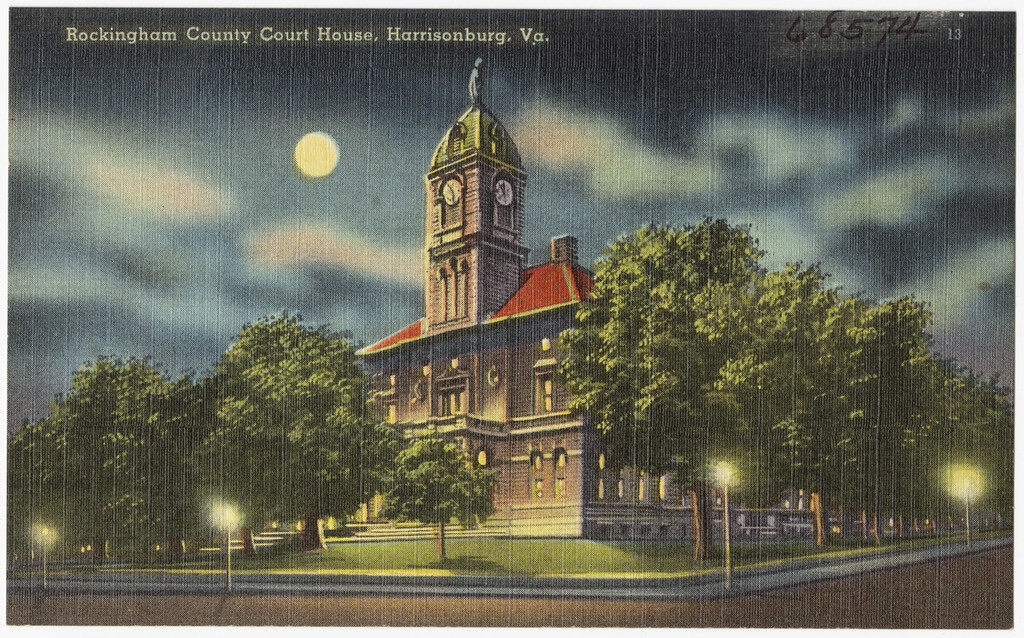
Drive through Rockingham County and you will pass Mennonite farms, horse-and-buggy signs, Church of the Brethren meeting houses and two colleges founded by these churches. They are the living legacy of German-speaking pietists who came to Virginia in the 18th century, mostly by way of Pennsylvania. Mennonites, Brethren (once called Dunkers) and, much later, the Amish shared a belief in adult baptism, simple living and refusing to bear arms. Their peace principles were tested on Virginia’s frontier, in the Revolution and above all in the Civil War.
Quick answer: War and poverty in the Rhineland sent thousands of German-speaking refugees to London in 1709, and some reached Virginia and the Carolinas. Mennonites first settled in Virginia around 1728 near Massanutten, were driven back to Pennsylvania during the French and Indian War, and returned after the Revolution, especially to Rockingham County. Dunkers (Brethren) arrived from the 1750s and had 17 church buildings in the Shenandoah Valley by 1860. In 1862 the Confederate government allowed Mennonites and Brethren to avoid military service by paying a fee or providing a substitute. Brethren founded Bridgewater College in 1880 and Mennonites founded Eastern Mennonite University in 1917. Virginia had about 2,210 Amish in 16 settlements in 2024.[1][2][3]
Contents
- Anabaptists and pietists
- The “poor Palatines” of 1709
- Swiss plans and the Tuscarora War
- Mennonites in the Valley
- The Eckerling brothers and Dunkard’s Bottom
- The Brethren in Rockingham County
- Slavery and the peace churches
- The Civil War
- Colleges and community
- The Amish in Virginia
- Timeline
- Frequently asked questions
Anabaptists and pietists
The Anabaptists (“re-baptizers”) arose during the Reformation in Switzerland and the Netherlands in the 1520s. They baptized adult believers rather than infants, refused oaths and military service, and wanted churches separate from the state. Persecuted by Catholics and Protestants alike, many moved to the Palatinate along the Rhine. The Mennonites take their name from the Dutch leader Menno Simons; the Amish split from them in the 1690s under Jakob Ammann, insisting on stricter discipline.
The Brethren began in 1708 at Schwarzenau in Germany, combining Anabaptist ideas with German Pietism. Because they baptized by dipping the believer three times forward in a stream, their neighbors called them Dunkers or Tunkers. Most of these groups emigrated to Pennsylvania, where William Penn promised religious freedom, and spread south from there.
The “poor Palatines” of 1709
The War of the Spanish Succession (1701–1714), known in America as Queen Anne’s War, brought French armies through the Rhine valley. After the bitter winter of 1708–1709, thousands of Germans from the Palatinate and neighboring lands headed down the Rhine to London, encouraged by pamphlets promising land in the Carolinas and free passage under Queen Anne. The English government, overwhelmed, sent many to Ireland, to New York’s Hudson valley and to North Carolina.
Virginia, short of workers and settlers, competed for these immigrants. In 1714 Lieutenant Governor Alexander Spotswood brought German miners to his iron lands at Germanna on the Rapidan River, and a second group of Germans followed in 1717. Their story is told in the Rappahannock frontier and Germanna.
Swiss plans and the Tuscarora War
Officials in Bern, Switzerland, eager to be rid of both poor families and Anabaptist dissenters, sent Franz Ludwig Michel to scout land in America between 1702 and 1707. Michel visited Williamsburg and the Huguenot settlement at Manakin and traveled up the Potomac into the lower Shenandoah Valley. Together with Baron Christoph von Graffenried, he instead settled Swiss and Palatine colonists at New Bern in North Carolina in 1710. The Tuscarora War of 1711–1713 destroyed that colony; the surveyor John Lawson was killed and Graffenried, after his release, tried without success to move survivors to the Potomac. For the settlement of the Valley, see Shenandoah Valley land grants.
Mennonites in the Valley
Mennonites were among the first Europeans to farm the Shenandoah Valley. According to the Mennonite Archives of Virginia, they began migrating to Virginia in 1728, settling near Massanutten in today’s Page County. Their settlements were short-lived: during the French and Indian War (1754–1763) raids forced many back to Pennsylvania (see frontier raids west of the Blue Ridge).[1]
They returned in larger numbers after the Revolution, settling especially along Linville Creek in Rockingham County. By 1860 there were seven Mennonite congregations in Virginia.[1] Mennonite farm families became known for careful agriculture; in 1885 Samuel Blosser developed an artificial incubator for chicken eggs, an early step toward the Valley’s poultry industry.[1] See turkeys and poultry in Virginia.
The Eckerling brothers and Dunkard’s Bottom
Some German pietists went much farther. The Eckerling brothers, Israel, Samuel and Gabriel, left the celibate religious community at Ephrata, Pennsylvania, and in the mid-1740s settled on the New River, at a place later called Dunkard’s Bottom, now under the waters of Claytor Lake in Pulaski County. Nearby, German settlers founded Mahanaim and other homesteads in the New River valley. The French and Indian War ended these settlements; in 1757 the Eckerlings were captured by raiders allied with the French and carried off to Canada and France.
Land speculators valued such settlers because they cleared and improved land, but their refusal to serve in the militia worried colonial officials responsible for frontier defense.
The Brethren in Rockingham County
Dunkers began arriving in the Valley in the 1750s, and more came as the Great Wagon Road improved. By 1860 the Brethren had 17 church buildings in the Shenandoah Valley.[1] Their most famous leader was Elder John Kline of Rockingham County, a farmer, healer and traveling preacher who helped found Cedar Grove Academy at Broadway in 1859, the Brethren’s first school of higher learning.[2]
Slavery and the peace churches
Mennonites and Brethren lived in a slave society but generally refused to hold slaves. The Brethren’s annual meeting forbade slaveholding among members, and both churches tended to rely on family labor. Their stand set them apart from many neighbors and made them suspect when sectional tension rose. Some, like the Quakers, quietly helped refugees from slavery (see Quakers in Virginia and slavery in Virginia).
The Civil War
When Virginia seceded in 1861, Mennonites and Brethren faced conscription into an army whose cause most of them did not support. Virginia law and, after a struggle, Confederate law made room for them. In 1862 a group of about 72 young Dunker and Mennonite men tried to escape north to avoid the draft; they were caught and jailed in Richmond.[1] Elder John Kline and other leaders worked for exemptions, and in October 1862 the Confederate government allowed members of these churches to avoid military service, generally by paying a $500 commutation fee or hiring a substitute.[2]
The war came home in 1864, when Union troops under Philip Sheridan burned barns and mills across Rockingham and Shenandoah counties in “the Burning.” Mennonite and Brethren farms suffered along with their neighbors’, and some families left for the North with the Union army. Elder Kline, suspected by some Confederates of Union sympathies, was shot and killed by Confederate irregulars a few miles from his farm in June 1864.[4] See the Civil War in Virginia.
Colleges and community
After the war the peace churches rebuilt and turned to education.
- Bridgewater College. Daniel C. Flory, trained at the Brethren school Juniata College in Pennsylvania, started the Spring Creek Normal School in Rockingham County in 1880 with Virginia Brethren leaders; it moved to Bridgewater and became Bridgewater College.[2]
- Eastern Mennonite University. Virginia Mennonites founded Eastern Mennonite School in 1917 on land north of Harrisonburg; it grew into Eastern Mennonite University, with a seminary and graduate programs.[2]
In the 20th century, Brethren, Mennonites and Quakers worked together after World War I and helped create Civilian Public Service, which let conscientious objectors do alternative work during World War II. In the 1960s, Brethren and Mennonite leaders in Rockingham County worked together on civil rights and opposed the Vietnam War.[1] Mennonite congregations, schools, retirement communities and businesses remain prominent around Harrisonburg.
The Amish in Virginia
The Amish arrived late. Virginia’s first lasting Amish communities date from the late 20th century, when families from Pennsylvania, Delaware and other states bought farmland in Southside and the Shenandoah Valley. The Young Center for Anabaptist and Pietist Studies at Elizabethtown College counted Virginia at 16 settlements, 27 church districts and about 2,210 Amish people in 2024.[3][5] That is small next to Pennsylvania or Ohio, but the number has grown quickly as families look for affordable farmland.
Timeline
| Year | Event |
|---|---|
| 1525 | Anabaptist movement begins in Switzerland |
| 1693 | Amish split from the Mennonites |
| 1708 | Brethren founded at Schwarzenau |
| 1709 | Thousands of Palatine refugees reach London |
| 1710–1713 | New Bern colony founded and destroyed in the Tuscarora War |
| 1714 | Germans settle at Germanna |
| 1728 | Mennonites begin settling in Virginia |
| 1745 | Eckerling brothers on the New River |
| 1750s | Dunkers arrive in the Valley; Mennonites pushed back by war |
| 1859 | Cedar Grove Academy founded |
| 1862 | Confederate exemption for Mennonites and Brethren |
| 1864 | “The Burning”; Elder John Kline killed |
| 1880 | Bridgewater College begins |
| 1917 | Eastern Mennonite School founded |
| 2024 | About 2,210 Amish in 16 Virginia settlements |
Frequently asked questions
Where do Mennonites live in Virginia? The largest concentration is in Rockingham County around Harrisonburg, where Mennonites have lived since the late 1700s.
Who were the Dunkers? The Brethren, a German pietist church founded in 1708, nicknamed Dunkers because they baptized by immersion. Today they are mostly the Church of the Brethren.
Did Mennonites and Brethren fight in the Civil War? Most refused. From October 1862 the Confederacy let them avoid service by paying a fee or providing a substitute, though some were jailed or fled north.
Are there Amish in Virginia? Yes. In 2024 Virginia had about 2,210 Amish in 16 settlements, mostly founded since the late 20th century.
References
- [1] Mennonite Archives of Virginia, “We Came Seeking Peace” – last checked 11/21/2026
- [2] Anabaptist Historians, “Southern Anabaptist Colleges and Civil War Memory” (Bridgewater College and Eastern Mennonite) – last checked 11/21/2026
- [3] Young Center for Anabaptist and Pietist Studies, Elizabethtown College, Amish Population, 2024 – last checked 11/21/2026
- [4] Shenandoah at War, “Religion in the Shenandoah Valley during the Civil War” – last checked 11/21/2026
- [5] Young Center for Anabaptist and Pietist Studies, Amish Population by State, 2024 (PDF) – last checked 11/21/2026