Quakers, members of the Religious Society of Friends, were among the most persecuted religious groups in colonial Virginia. They had no clergy, refused to swear oaths or bear arms, would not pay tithes to the Church of England, and treated social superiors as equals. Virginia’s leaders saw them as a threat to church and state alike. Yet Friends survived along the Dismal Swamp, on the Eastern Shore and in the northern Shenandoah Valley and Loudoun County, and in the 1770s and 1780s they became the first religious group in Virginia to require their members to free the people they enslaved.
Quick answer: Quaker missionaries reached Virginia in the 1650s, and from 1660 Governor William Berkeley’s government passed laws to fine and banish them. George Fox, the founder of the movement, visited Virginia in 1672, and Virginia Yearly Meeting was organized that year. Somerton Friends Meeting near Suffolk is the state’s oldest active Quaker meeting. From the 1730s Pennsylvania Quakers settled Hopewell (Frederick County) and Waterford (Loudoun County). In 1777 Virginia Friends decided to disown members who held slaves; after the legislature allowed private manumission in 1782, nearly all Quaker slaveholders freed the people they held within a few years.[1][2][3]
Contents
- Who the Quakers were
- Missionaries and persecution, 1655–1663
- Refuge in Maryland and the Dismal Swamp
- George Fox and the first meetings
- Toleration after 1689
- Quakers in the Valley and Loudoun
- Quakers and slavery
- Revolution, war and migration
- Quakers today
- Timeline
- Frequently asked questions
Who the Quakers were
The Society of Friends grew out of the religious turmoil of the English Civil War. Its founder, George Fox, taught that every person could experience the “inner light” of God directly, without priests, sacraments or creeds. Friends met in silence until someone felt moved to speak, refused to swear oaths because Christ forbade it, used “thee” and “thou” to everyone, would not remove their hats to magistrates, and refused to fight.[4] To the rulers of a colony built on an established church, a militia and a strict social order, almost every one of these practices looked like rebellion.
Missionaries and persecution, 1655–1663
The first Quaker missionaries arrived in the 1650s, often on ships from New England or Barbados that landed on the Eastern Shore while claiming to be bound for Maryland. A group of Friends settled near Nassawadox Creek in Northampton County, and one of the first Quaker meeting houses in America may have stood there. In 1658 the missionary William Robinson was arrested on the Eastern Shore and sent out of the colony; he was later hanged in Boston.
When Berkeley returned as governor in 1660, the General Assembly passed its first law aimed at Quakers. It described them as an unreasonable and turbulent people, fined ship captains who brought them, ordered Friends already in the colony to be jailed until they left, and banned their books. Laws of 1662 and 1663 fined anyone who refused to have children baptized by an Anglican minister, set heavy fines for attending Quaker meetings, and provided for banishment of repeat offenders. A member of the House of Burgesses, John Porter of Lower Norfolk, was expelled in 1663 for being, in the House’s words, “loving to the Quakers.”
Refuge in Maryland and the Dismal Swamp
Catholic Maryland, eager for settlers loyal to its government, offered land and freedom of worship. In the early 1660s many Eastern Shore Friends crossed the Pocomoke River into Maryland’s Annemessex and Manokin settlements. Virginia’s Col. Edmund Scarborough led an armed party across the boundary in 1663 to harass them, a raid that helped bring about a survey of the Virginia–Maryland line on the Eastern Shore (see the Virginia–Maryland border).
Other Friends settled on the edge of the Great Dismal Swamp, in Nansemond (now Suffolk) and Isle of Wight counties, where officials seldom bothered them. Trade linked these counties to New England, Barbados and Maryland, and they had more Puritans and Quakers than the tobacco counties along the James.
George Fox and the first meetings
George Fox traveled through the colonies in 1672–1673, preaching in Nansemond and on the Eastern Shore and meeting Friends in Maryland. Virginia Yearly Meeting, the body that linked the colony’s local meetings, dates its founding to 1672.[2]
Somerton Friends Meeting, near the North Carolina line in Suffolk, traces its origins to Fox’s visit and is the oldest active Quaker meeting in Virginia. Its meetinghouse and a school it ran for freed African Americans were burned in 1866; the present building dates from about 1869, and the Virginia Department of Historic Resources approved a state marker for it in 2015.[5] On the Eastern Shore, Friends bought land for the Muddy Creek meeting house near Bloxom in 1679.
Toleration after 1689
The Toleration Act of 1689 allowed Quakers, who could make an affirmation instead of an oath, to register meeting houses and worship openly. Virginia still taxed them for the Anglican parish, refused for decades to recognize their marriages, which took place without a minister, and fined them for refusing militia service. Quaker records are full of “sufferings”: livestock, grain and tools seized to pay tithes and militia fines.
Quakers in the Valley and Loudoun
A second wave of Friends arrived from Pennsylvania in the 1730s. Governor Gooch’s policy of settling the backcountry as a buffer welcomed them.
- Hopewell. Hopewell Meeting in Frederick County was established in 1734. In 1759 it replaced its log meetinghouse with a limestone building, enlarged in 1788–1794; one of the oldest houses of worship west of the Blue Ridge, it is still in use.[3] A split in 1827 between Orthodox and Hicksite Friends led to a partition inside the building, removed when the two groups reunited in 1910.[3]
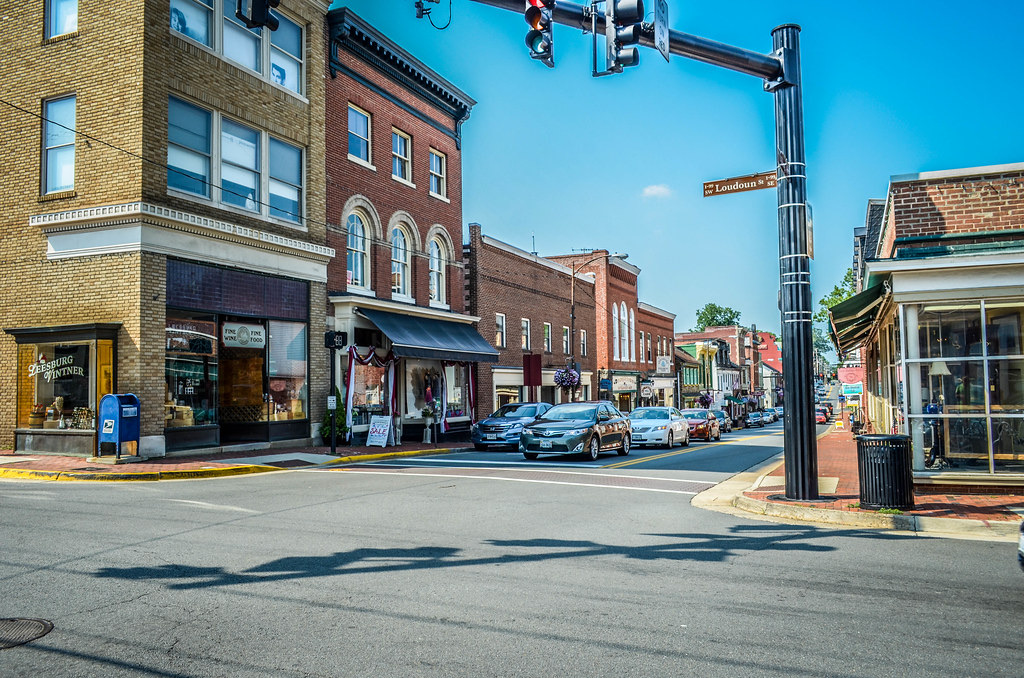
- Waterford. Amos and Mary Janney, Quakers from Bucks County, Pennsylvania, settled on Catoctin Creek in Loudoun County about 1733; mills grew into the village of Waterford, the second-largest town in Loudoun before the Civil War.[6]
- Goose Creek. Friends also settled around Goose Creek, at today’s Lincoln in Loudoun County, and at Fairfax Meeting near Waterford.
These Quaker farming communities grew wheat and corn with family labor rather than tobacco with enslaved labor, which set them apart from their neighbors in eastern Virginia.
Quakers and slavery
Friends did not reject slavery at first; some early Virginia Quakers held enslaved people. Over the 18th century, Quaker leaders such as John Woolman of New Jersey, who traveled through Virginia in the 1740s and 1750s, urged Friends to give it up. In 1777 Virginia Friends decided to disown members who held people in slavery.[2]
Freeing slaves was then illegal in Virginia except by special act. Quakers petitioned the General Assembly, and in 1782 Virginia allowed owners to free slaves by deed or will. The Haverford and Swarthmore finding aid for Virginia Yearly Meeting records that within about six years nearly all Quaker slaveholders had freed the people they held.[2] Quakers also supported the education of free Black Virginians and later helped refugees from slavery. For the wider history, see slavery in Virginia.
Revolution, war and migration
Because of their peace testimony, Quakers refused to fight in the Revolution, pay war taxes or take loyalty oaths, and some were jailed or had property seized. In 1777 several Philadelphia Quakers suspected of loyalism were exiled to Winchester, where they were held for months.
Living in a slave state became harder for Friends who opposed slavery. From the 1790s many Virginia Quakers moved to Ohio, Indiana and other free states, and Virginia Yearly Meeting shrank until it was laid down in 1843 and placed under Baltimore Yearly Meeting.[2]
During the Civil War, Loudoun Quakers in Waterford largely remained loyal to the Union, and the area suffered raids from both armies. Confederate laws allowed Quakers, Mennonites and Brethren to avoid conscription by paying a fee or providing a substitute, but many Friends refused even that (see Amish, Mennonites and Brethren in Virginia).
Quakers today
Virginia has small Quaker meetings in cities such as Richmond, Charlottesville, Alexandria, Williamsburg and Roanoke, as well as historic rural meetings like Hopewell Centre, Goose Creek and Somerton. Friends remain active in peace and social justice causes, continuing a tradition that runs from the anti-slavery decision of 1777 to the alternative service programs for conscientious objectors in the 20th century.
Timeline
| Year | Event |
|---|---|
| 1650s | First Quaker missionaries on the Eastern Shore |
| 1658 | William Robinson arrested in Virginia |
| 1660 | First anti-Quaker law |
| 1662–1663 | Further laws; John Porter expelled from the House of Burgesses |
| 1672 | George Fox visits; Virginia Yearly Meeting organized |
| 1689 | Toleration Act |
| c. 1733 | Amos Janney settles at Waterford |
| 1734 | Hopewell Meeting established |
| 1759 | Hopewell’s stone meetinghouse built |
| 1777 | Virginia Friends decide to disown slaveholders |
| 1782 | Virginia allows private manumission |
| 1843 | Virginia Yearly Meeting laid down |
| 1866 | Somerton meetinghouse and school burned |
Frequently asked questions
Why were Quakers persecuted in colonial Virginia? They refused oaths, tithes and militia service and rejected the authority of the established church, so Virginia’s government treated them as a danger to public order and passed laws to fine and banish them from 1660.
What is the oldest Quaker meeting in Virginia? Somerton Friends Meeting near Suffolk, which traces its origins to George Fox’s visit in 1672, is the oldest active Quaker meeting in the state.
Did Virginia Quakers own slaves? Some did in the colonial period, but in 1777 Virginia Friends decided to disown members who held slaves, and after manumission became legal in 1782 nearly all Quaker slaveholders freed the people they held.
Where did Quakers settle in Virginia? On the Eastern Shore and in the Nansemond–Isle of Wight area in the 1600s, and in Frederick and Loudoun counties, at Hopewell, Waterford and Goose Creek, from the 1730s.
References
- [1] Free Speech Center at MTSU, First Amendment Encyclopedia: Established Churches in Early America – last checked 11/21/2026
- [2] University of Pennsylvania Libraries finding aid, Virginia Yearly Meeting records (Haverford and Swarthmore Quaker collections) – last checked 11/21/2026
- [3] Virginia Department of Historic Resources, Hopewell Friends Meeting House – last checked 11/21/2026
- [4] Free Speech Center at MTSU, First Amendment Encyclopedia: Quakers – last checked 11/21/2026
- [5] Suffolk News-Herald, “Somerton church to get marker” (January 7, 2016) – last checked 11/21/2026
- [6] Waterford Foundation, History of Waterford – last checked 11/21/2026