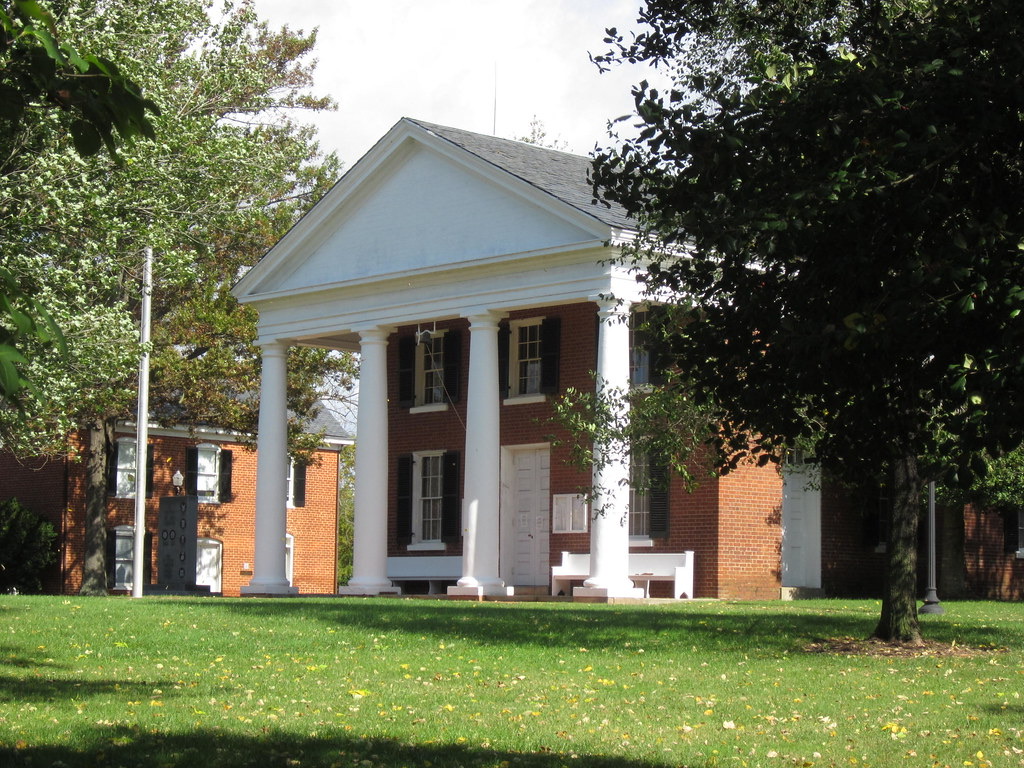
In the summer of 1700 several hundred French refugees landed at Hampton and made their way up the James River past the falls, to the site of an abandoned Monacan town. They were Huguenots, French Protestants who had fled their homeland after Louis XIV outlawed their faith. Virginia gave them land, a parish of their own and, in time, citizenship. Within a few generations their descendants were indistinguishable from their English neighbors except for names such as Flournoy, Dupuy, Michaux, Chastain and Sallé, but the community at Manakin Town is one of the most distinctive chapters in Virginia’s colonial history.
Quick answer: After Louis XIV revoked the Edict of Nantes in 1685, hundreds of thousands of Huguenots left France. In 1700 four ships brought several hundred of them to Virginia, the first, the Mary and Ann, arriving at Hampton on July 23, 1700. Led by the marquis de la Muce and Charles de Sailly, they settled on the south side of the James above the falls, at Manakin Town in today’s Powhatan County, where the colony created King William Parish for them in December 1700. The General Assembly naturalized them in 1705. Quarrels between the minister and the vestry split the community, and many moved on, but the settlement survived as a scattered farming district. Church records were kept in French until about 1750.[1][2]
Contents
- Who the Huguenots were
- Virginia’s recruiters
- A Huguenot visitor’s verdict, 1686
- The voyage of 1700
- Manakin Town
- King William Parish
- The quarrel of 1707
- Assimilation
- Legacy
- Timeline
- Frequently asked questions
Who the Huguenots were
The Huguenots were French Calvinists. After decades of religious war, King Henry IV’s Edict of Nantes of 1598 gave them limited legal protection in a Catholic kingdom. Louis XIV gradually stripped those rights away and in 1685 revoked the edict entirely, ordering Protestants to convert. Despite a ban on emigration, hundreds of thousands left for the Netherlands, Switzerland, the German states, England and Ireland.[2] Many were skilled artisans, merchants and professionals rather than farmers, and England welcomed them as fellow Protestants and useful workers.
Virginia’s recruiters
Virginia was always short of settlers, and its leaders saw the refugees as an opportunity. In the late 1680s Governor Francis Howard, Lord Howard of Effingham, and the planter William Fitzhugh tried to persuade Huguenot leaders to bring their people, promising land and even French-speaking ministers, provided those ministers also preached in English from time to time and served English settlers nearby.
Land speculators had similar hopes. In 1686–1687 a group of London investors, Nicholas Hayward and his partners, together with the Catholic Virginian George Brent, obtained a large tract in the Northern Neck, later called Brent Town, which they hoped to fill with Huguenot families; the plan never brought many settlers. For the Brent family, see religious toleration in colonial Virginia.
A Huguenot visitor’s verdict, 1686
One refugee who came to look was Durand of Dauphiné, a Protestant from southeastern France. After a voyage of 19 weeks he reached Virginia in 1686, visited Fitzhugh at his plantation on the Potomac and published an account of his travels in 1687.
Durand admired the rich soil and thought French farmers, used to plowing, could outwork Virginians who planted with hoes and enslaved labor. But he declined the offers. The land on offer lay far up the rivers, where only small boats could go and getting tobacco to market would be costly. His book nonetheless spread information about Virginia among Huguenots in Europe.
The voyage of 1700
The settlement finally came about through King William III, who wanted to help Huguenot refugees in England, and through the colony’s desire for settlers on the frontier. In 1700 four ships carried several hundred refugees to Virginia. The first, the Mary and Ann, reached Hampton on July 23, 1700.[1]
Their leaders chose land on the James River above the falls, where the Monacan people had once lived. The colony granted them about 10,000 acres on the south side of the river, west of the later city of Richmond.[3]
Manakin Town
The settlement was briefly called King William’s Town and then Manakin Town, after the Monacan town that had stood there.[1] It lay in what was then Henrico County and is now Powhatan County, west of today’s Richmond.[2]
The first winters were hard. Many settlers were artisans unused to clearing forest, supplies ran short, and colonists downriver had to send food. Some refugees left for the older settlements or for the Carolinas. Those who stayed laid out long, narrow farms running back from the river, a pattern familiar from France, and gradually turned to growing wheat, corn and tobacco like their neighbors. For the frontier beyond the falls at the time, see exploring west to the Blue Ridge.
King William Parish
Rather than make the refugees support an English parish, the General Assembly created King William Parish in 1700 for the French settlers. It was a parish of the established Church of England, but its services were held in French. The first minister was Benjamin de Joux, an ordained clergyman; after his death in 1703 he was succeeded by Claude Philippe de Richebourg, who had arrived on the Mary and Ann.[1]
In 1705 the General Assembly passed an act naturalizing de Richebourg and the other Huguenot immigrants, giving them the rights of English subjects, including the right to own and inherit land.[1]
The quarrel of 1707
The French Protestants were used to church government in which elders served limited terms. Virginia’s vestries were self-perpetuating bodies of leading men. De Richebourg objected that the vestrymen held their seats illegally and quarreled with them over money he had raised without their approval.
On March 30, 1707, at the end of the Sunday service, vestryman Jacob Ammonet rose to announce the vestry’s disapproval. The minister interrupted and demanded the vestry book. When the magistrate Abraham Sallé tried to calm things, the minister’s supporters shoved and threatened him, and Sallé withdrew, calling the minister a seditious person.[2] Both sides appealed to the governor’s council, which backed Sallé and the vestry. Governor Alexander Spotswood came to Manakin Town in person in 1710 and brokered an agreement to forget past differences.[2]
De Richebourg and some of his followers left in 1711 or 1712 for the Trent River in North Carolina and then for the Santee River in South Carolina, where he died in 1719.[1]
Assimilation
The community endured as a dispersed farming settlement rather than a town. Parish records were kept in French until 1750 or later, but by the end of the 1700s the descendants had married into English families, worshipped in English and were indistinguishable from other Virginians except for their surnames.[2] Many moved west and south with the frontier into the Piedmont, Southside and Kentucky.
The Huguenots were one of several groups of non-English Protestants that Virginia recruited around 1700, together with the Germans at Germanna in 1714 (see the Rappahannock frontier and Germanna) and the Scots-Irish and Germans of the Shenandoah Valley. Their story shows that the colony, while strict about the established church, would bend the rules for Protestant settlers who helped fill the frontier.
Legacy
Manakin Episcopal Church, the successor of King William Parish, still stands near the old settlement in Powhatan County, and a descendants’ society of Manakin settlers, organized on April 17, 1922, maintains a memorial and historical programs there.[2][3] The Huguenot name also appears on roads, a high school and the Huguenot Memorial Bridge across the James in Richmond. For other faiths in the state, see religion in Virginia.
Timeline
| Year | Event |
|---|---|
| 1598 | Edict of Nantes protects French Protestants |
| 1685 | Louis XIV revokes the Edict of Nantes |
| 1686 | Durand of Dauphiné visits Virginia |
| 1686–1687 | Brent Town grant intended for Huguenot settlers |
| 1700 | Mary and Ann arrives at Hampton (July 23); Manakin Town settled; King William Parish created |
| 1703 | Death of Benjamin de Joux; de Richebourg becomes minister |
| 1705 | Huguenot settlers naturalized |
| 1707 | Quarrel in church (March 30) |
| 1710 | Governor Spotswood settles the dispute |
| 1711–1712 | De Richebourg and followers leave for the Carolinas |
| c. 1750 | Parish records stop being kept in French |
| 1922 | Manakin descendants’ society organized |
Frequently asked questions
Where did the Huguenots settle in Virginia? At Manakin Town on the south side of the James River above the falls, in what is now Powhatan County, beginning in 1700.
Why did Huguenots come to Virginia? They were French Protestants who fled after Louis XIV revoked the Edict of Nantes in 1685; Virginia offered them land, a French-speaking parish and later naturalization.
What was King William Parish? A Church of England parish created in 1700 for the Huguenot settlers, with services in French. Its successor is Manakin Episcopal Church.
What happened to the Huguenot settlers? Some moved to the Carolinas; those who stayed intermarried with English Virginians and by the late 1700s had fully blended into the colony’s population.
References
- [1] Library of Virginia, Dictionary of Virginia Biography: Claude Philippe De Richebourg – last checked 11/21/2026
- [2] Library of Virginia, The UncommonWealth blog: Manakin Town quarrel of 1707 – last checked 11/21/2026
- [3] Manakin Huguenot descendants’ society, History, Aims and Accomplishments – last checked 11/21/2026