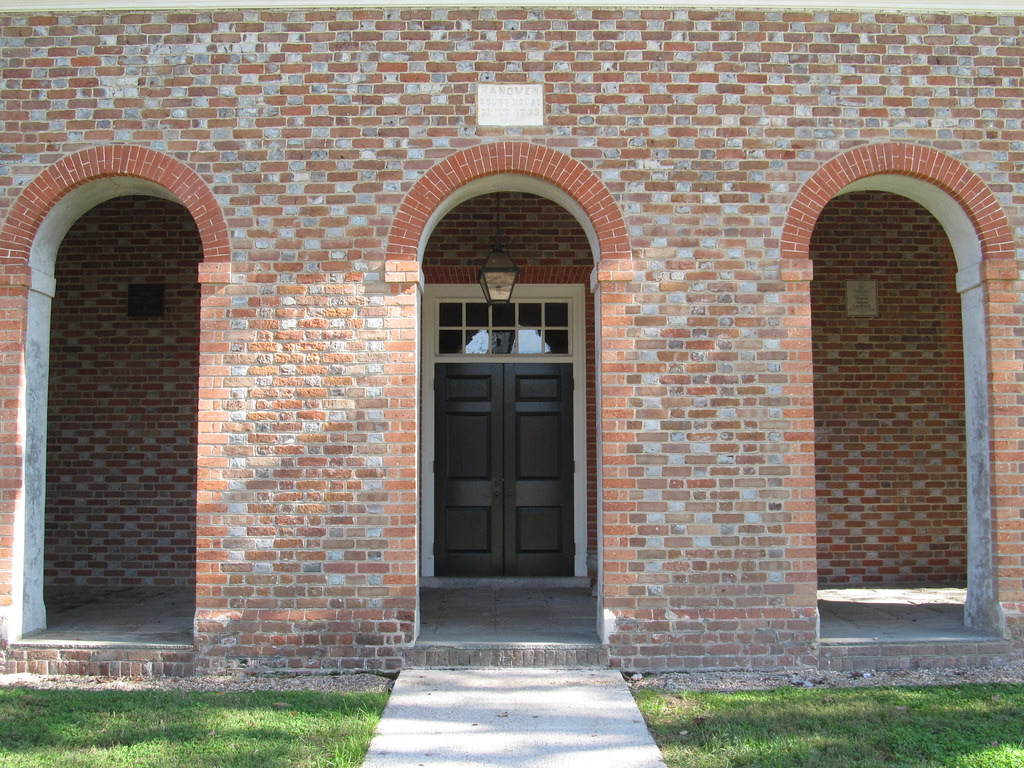
In 1700 almost every church in Virginia belonged to the Church of England. By the Revolution, Presbyterians and Baptists had congregations across the Piedmont and the Shenandoah Valley, and within a generation of independence Baptists and Methodists outnumbered Episcopalians. These “dissenters” arrived by two routes: Scots-Irish Presbyterian families walking south from Pennsylvania, and revival preachers who converted Virginians already living in the east. Together they forced the colony to tolerate them, and then helped force the state to give up its official church.
Quick answer: Presbyterians came mainly as Scots-Irish settlers via Pennsylvania and the Shenandoah Valley from the 1730s; in the east, the Great Awakening produced New Side Presbyterian congregations in Hanover County, led from 1748 by Samuel Davies at Polegreen. Hanover Presbytery first met in December 1755. Baptists grew after the 1750s, and Separate Baptists spread across the Piedmont in the 1760s; because they refused to seek licenses, dozens of their preachers were jailed between 1768 and 1775. Presbyterians founded Hampden-Sydney College (classes from November 10, 1775) and Liberty Hall, the forerunner of Washington and Lee. Both groups backed the Virginia Statute for Religious Freedom of 1786.[1][2][3][4]
Contents
- Dissenters in an Anglican colony
- Presbyterians arrive from the north
- Samuel Davies and the Great Awakening
- Regular and Separate Baptists
- Jailed for preaching, 1768–1775
- Why the gentry felt threatened
- Schools and colleges
- From dissenters to the majority
- Timeline
- Frequently asked questions
Dissenters in an Anglican colony
Under colonial law every Virginian paid taxes to the parish of the Church of England, and worship outside it was allowed only under England’s Toleration Act of 1689, with licensed preachers in licensed buildings. The background is in religious toleration in colonial Virginia and the Anglican Church in Virginia. The first Presbyterian minister licensed in Virginia was Francis Makemie, an Irish-born preacher who settled on the Eastern Shore and was licensed in Accomack County in 1699; he is often called the father of American Presbyterianism.
Presbyterians arrive from the north
Most Presbyterians came as families from Ulster, the “Scots-Irish,” who landed at Philadelphia and moved south along the Great Wagon Road. From the 1730s, Virginia’s governors welcomed them to the land west of the Blue Ridge and along the Roanoke River, places that were hard to reach from the Tidewater ports and had not attracted English settlers. The large grants made to William Beverley, Benjamin Borden and James Patton filled with Presbyterian farmers (see Shenandoah Valley land grants). Some went straight down the east side of the Blue Ridge, such as the Caldwell settlement in today’s Charlotte County.
Many kept moving. A family might farm in Augusta County, move to Lunenburg in Southside a few years later and then cross into North Carolina or Tennessee as the frontier advanced. West of the Blue Ridge, Presbyterians were so numerous that they sometimes dominated the vestries of the Anglican parishes they were legally required to support.
Samuel Davies and the Great Awakening
In the east, Presbyterianism grew from revival rather than migration. In the 1740s a group of Hanover County planters began meeting in “reading houses” to read sermons, and the Great Awakening preachers who visited them from Pennsylvania drew large crowds away from the parish churches.
In 1748 the young Presbyterian minister Samuel Davies, born in Delaware in 1723, came to serve them. For more than ten years he preached at the Hanover Meeting House, known as Polegreen Church, near today’s Mechanicsville.[1][5] He obtained licenses for several meeting houses, argued that the Toleration Act applied in Virginia, and became the leading voice of the colony’s dissenters. Davies also taught enslaved people to read and baptized many of them, although he was himself a slaveholder.[1]
His sermons left a mark on a young listener from Hanover, Patrick Henry, whose oratorical style the Virginia Department of Historic Resources links to Davies.[5] Hanover Presbytery, the first in Virginia, held its first meeting in December 1755. In 1759 Davies left to become president of the College of New Jersey, now Princeton University, where he died in 1761.[1] Polegreen Church was destroyed on June 1, 1864, during the fighting before the battle of Cold Harbor; its outline is preserved at the site.[5]
Regular and Separate Baptists
Baptists, who baptize believers rather than infants, arrived later. Small Regular Baptist churches, linked to the Philadelphia Baptist Association, formed in northern Virginia in the 1740s and 1750s. The faster-growing branch was the Separate Baptists, products of the New England revivals, who moved south through Virginia and North Carolina in the 1750s and 1760s.
Separate Baptist preachers were often farmers with no formal training. Their meetings were emotional, they called one another “brother” and “sister,” and they welcomed enslaved and free Black worshippers into their congregations. Baptists also insisted that civil rulers had no authority at all over religious belief: faith was a matter between each person and God.[2] For that reason many Separate Baptist preachers refused, on principle, to ask a county court for a license to preach.
Jailed for preaching, 1768–1775
County courts treated unlicensed preaching as a breach of the peace. In June 1768 the sheriff of Spotsylvania County arrested John Waller, Lewis Craig and other Baptist preachers. According to a 19th-century account, Patrick Henry rode about 50 miles to defend them, waving the indictment and asking the court whether these men were really charged with “preaching the gospel of the Son of God”; historians treat the details of the story with caution.[3]
Similar arrests followed in Culpeper, Caroline, Chesterfield, Middlesex, Orange and other counties until 1775. Some preachers kept preaching through the jail windows to crowds outside. Historians count roughly 40 to 50 Baptist preachers jailed in this period. Gentry mobs also broke up meetings, and some preachers were beaten or nearly drowned in mock baptisms. The persecution turned Baptists into the most determined opponents of the established church.
Why the gentry felt threatened
The arrests were not only about doctrine. The Anglican gentry ran the parish vestries and county courts, and their authority rested on ceremony, deference and display: fine clothes, horse races, card games and dancing. Baptists condemned all of these, refused to defer to their “betters,” and admitted enslaved people as brothers and sisters in faith. To planters who feared slave unrest, interracial night meetings looked dangerous. Many Anglican ministers, paid in tobacco by the vestries, also saw the dissenters as rivals for their congregations and incomes, a tension that also shows in the Parsons’ Cause of 1763.
Schools and colleges
Presbyterians placed great weight on an educated ministry, and they built schools wherever they settled. Washington and Lee University traces its roots to the classical schools run by Scots-Irish Presbyterians in what became Rockbridge County; one of them was chartered by the Commonwealth as Liberty Hall Academy in 1782. A university study notes that its claim to a 1749 founding rests mainly on later tradition.[6]
In the east, Presbyterians of Prince Edward County founded Hampden-Sydney College, modeled on the College of New Jersey, which advertised that classes would begin on November 10, 1775, and has met continuously since. It calls itself the last college founded in colonial America; Patrick Henry and James Madison were among its first trustees.[4] For other church-related colleges, see religion in Virginia.
From dissenters to the majority
In 1776 Baptists and Presbyterians flooded the new General Assembly with petitions against the establishment. Baptists in particular refused any compromise, including Patrick Henry’s 1784 plan to tax all citizens for the support of Christian churches. The Baptist preacher John Leland, then living in Orange County, worked with Madison, and Baptist support helped pass the Virginia Statute for Religious Freedom in 1786 and later the First Amendment.[7]
After independence the dissenters became the mainstream. Baptists and Methodists, who broke away from the Episcopal Church in 1784, grew fastest in the revivals of the early 1800s, and Black Baptist churches became central institutions for African Virginians. Baptists remain the largest Protestant family in Virginia today.
Timeline
| Year | Event |
|---|---|
| 1699 | Francis Makemie licensed in Accomack County |
| 1730s | Scots-Irish Presbyterians settle the Shenandoah Valley |
| 1740s | Hanover County reading houses; Polegreen meeting house |
| 1748 | Samuel Davies begins his ministry in Hanover County |
| 1755 | Hanover Presbytery first meets (December) |
| 1759 | Davies leaves for the College of New Jersey |
| 1760s | Separate Baptists spread through the Piedmont |
| 1768 | Baptist preachers jailed in Spotsylvania County (June) |
| 1775 | Hampden-Sydney classes begin (November 10) |
| 1776 | Dissenter petitions to the General Assembly |
| 1782 | Liberty Hall Academy chartered |
| 1786 | Statute for Religious Freedom |
Frequently asked questions
Why were Baptists jailed in colonial Virginia? Many Separate Baptist preachers refused to apply for the licenses required by law, so county courts jailed them for unlicensed preaching or disturbing the peace, mainly from 1768 to 1775.
Who was Samuel Davies? A Presbyterian minister who led the Great Awakening in Virginia from his church at Polegreen in Hanover County (1748–1759), defended the rights of dissenters and later became president of the College of New Jersey.
Did Patrick Henry defend Baptist preachers? A popular 19th-century account says he defended jailed Baptists in Spotsylvania County in 1768. The story is widely repeated but its details are not confirmed by court records.
Which Virginia colleges were founded by Presbyterians? Hampden-Sydney College (1775) and Liberty Hall Academy, which became Washington and Lee University.
References
- [1] Virginia Department of Historic Resources, “State Historical Marker Dedicated for Polegreen Church ‘Dissenters’ Glebe’ in Hanover County” – last checked 11/21/2026
- [2] Free Speech Center at MTSU, First Amendment Encyclopedia: Baptists – last checked 11/21/2026
- [3] Red Hill – Patrick Henry National Memorial, “Defense of Baptist Ministers” – last checked 11/21/2026
- [4] Hampden-Sydney College, History – last checked 11/21/2026
- [5] Virginia Department of Historic Resources, Polegreen Church Site (Hanover Meeting House) – last checked 11/21/2026
- [6] Washington and Lee University, “Permanence and Impermanence of an Academy in Augusta during the American Revolution” – last checked 11/21/2026
- [7] Free Speech Center at MTSU, First Amendment Encyclopedia: John Leland – last checked 11/21/2026