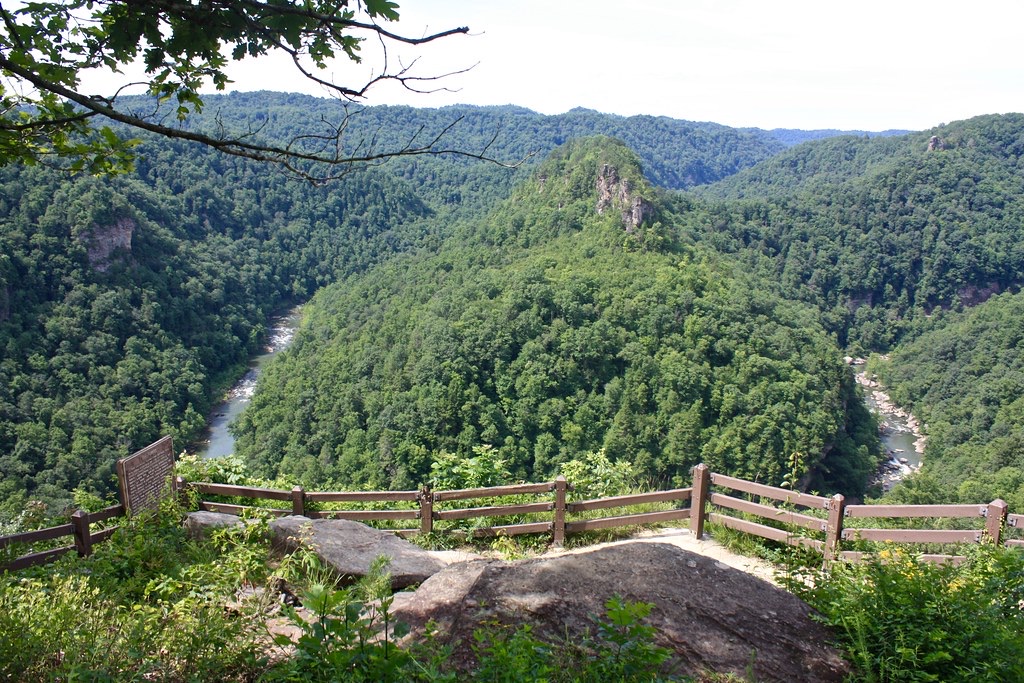
The bugle of a bull elk, a high, eerie whistle that carries across a mountain valley, disappeared from Virginia before the Civil War. It took two tries and more than a century to bring it back. Today a herd of more than 250 elk roams the reclaimed coal lands of Buchanan County and its neighbors in far Southwest Virginia, drawing wildlife watchers and, since 2022, a handful of lucky hunters.
Quick answer: Elk once lived across Virginia, mainly west of the Blue Ridge. Overhunting and habitat change wiped them out, and the last known native elk was killed in Clarke County in 1855. The state released 140 to 150 elk in 1917 and more in 1922, but those herds dwindled and the last regulated elk season was held in 1960. After Kentucky restored elk in the late 1990s, Virginia moved 71 adult elk from Kentucky to Buchanan County between 2012 and 2014. The herd has grown to more than 250 animals. Buchanan, Dickenson and Wise counties form the Elk Management Zone, where elk are hunted by lottery.[1][2]
Contents
- Elk in early Virginia
- Extinction in 1855
- The first restoration, 1917–1960
- Kentucky leads the way
- Bringing elk to Buchanan County
- Why reclaimed mines suit elk
- Elk and farmers
- Elk hunting returns
- Corridor Q and the spreading herd
- Seeing elk in Virginia
- Timeline
- Frequently asked questions
Elk in early Virginia
Elk, also called wapiti, are the second-largest members of the deer family in North America after moose. A mature bull can weigh well over 700 pounds and carries a huge rack of antlers that it sheds and regrows every year. In the fall, bulls bugle and gather harems of cows.
Before European settlement, elk lived throughout eastern North America, including Virginia, mostly west of the Blue Ridge.[1][2] Place names such as Elk Garden, Elk Creek and Elk Island hint at how widespread they once were. Elk graze more than deer do, favoring grassy openings, meadows and valley bottoms, and in the mountains they could summer on the ridges and winter in the valleys.
Extinction in 1855
As Virginia’s human population grew in the 1700s and 1800s, elk were hunted faster than they could reproduce, and the valley bottoms they needed in winter became farms. DWR records that a Colonel G. Tuley killed the last known elk in Virginia in 1855, in Clarke County, and that by the late 1800s elk were almost completely gone from the eastern United States.[2] The eastern subspecies is now extinct.[1]
The first restoration, 1917–1960
With no elk left in neighboring states to wander back, any return had to be deliberate. In 1917 the Virginia Game Commission released 140 to 150 elk shipped from the West in nine counties west of the Blue Ridge and two east of it. Another 43 were released in Giles and Botetourt counties in 1922, and a season for bulls opened the same year.[2]
The effort mostly failed. Poor habitat, poorly chosen release sites and overharvest left only two herds by 1926, one in Giles and Bland counties and one in Botetourt County.[2] They hung on for decades, and elk hunting peaked in 1958 with about 1,500 hunters. The last regulated elk season was held in 1960 in Giles, Bland, Botetourt and Bedford counties, and wild elk faded from Virginia once again.[2] Biologists later concluded that a parasite carried harmlessly by white-tailed deer, the meningeal worm or “brainworm,” which can be fatal to elk, was one of the problems facing elk in the East.
Kentucky leads the way
The modern comeback started next door. Beginning in 1997, Kentucky released more than 1,500 elk into its eastern counties over five years, much of it on reclaimed surface mines.[2] The herd thrived, and some elk soon crossed the state line. DWR has verified reports since 1998 of elk not released by Virginia being seen or killed in Wise, Buchanan, Dickenson, Russell, Lee, Tazewell, Bland, Scott and Washington counties, and its 2014 aerial surveys found two herds of these Kentucky wanderers in Wise County, one of twelve animals and one of four.[3]
At first Virginia discouraged them. In 2000 the state allowed hunters to take elk on a deer license to keep a herd from becoming established, and an elk was killed in Buchanan County that year. At the same time, DWR (then the Department of Game and Inland Fisheries) worked with Virginia Tech on a feasibility study of elk restoration.[2]
Bringing elk to Buchanan County
The study found that much of Virginia had habitat elk could use, but that most of it was farm country where elk would collide with agriculture. The coalfield counties of the Appalachian Plateau, with large blocks of reclaimed mine land and relatively few farms, were the best fit.
In 2010 the department’s board directed staff to restore 75 elk in Buchanan County and banned elk hunting within an Elk Restoration Zone covering Buchanan, Dickenson and Wise counties.[2] Between 2012 and 2014, 71 adult elk were captured in Kentucky and released in Buchanan County, 16 in 2012, 10 in 2013 and 45 in 2014, along with four calves born while the animals were held before release.[2] Each imported elk wore colored ear tags and a radio collar so biologists could follow its movements, survival and spread; calves born since then are unmarked.[3]
The herd grew quickly. By September 2020 DWR estimated it at more than 250 animals, most of them close to the original release site.[1]
Why reclaimed mines suit elk
Elk need open grazing land, and Southwest Virginia’s natural landscape is steep, unbroken forest. Surface coal mining changed that. Reclaimed mine sites, replanted with grasses and scattered shrubs, created large open areas surrounded by woods, a landscape more like western elk range than the original forest. DWR’s elk habitat work focuses on improving these open lands on former strip mines, work that also benefits other wildlife.[1]
Elk change the land in return. Their grazing keeps openings open, and as a large keystone species they help maintain grassland habitat for birds and other animals that depend on it.
Elk and farmers
Not everyone welcomed the elk. A grown elk is as big as a cow, can push through fences, eats hay and grass meant for livestock, and could in theory carry livestock diseases. Farm groups and several Southwest Virginia counties opposed the original, larger restoration plans, which is why the program was limited to a smaller herd in Buchanan County and why elk outside the management zone are treated very differently from those inside it.
Outside Buchanan, Dickenson and Wise counties, any elk, bull, cow or calf, may be taken on any day of an open deer season, with the same weapons and reporting rules as deer, and each elk counts against the hunter’s deer bag limit.[4]
Elk hunting returns
In 2019 the state adopted a 10-year Virginia Elk Management Plan, and the General Assembly authorized an elk tag and a harvest strategy for the Elk Management Zone.[2] The first modern elk hunt followed in 2022.
Inside the zone, elk hunting is by lottery. Hunters apply each February and March for a small fee ($15 for residents and $20 for nonresidents in recent years), and the lucky few may hunt during a single week in October. Virginia’s fifth elk hunt in the zone was scheduled for October 10–16, 2026.[4] Successful hunters must report their elk and arrange for biologists to collect tissue samples for disease monitoring.[4]
Because the elk are used to people, early hunts were short; many hunters found their bulls within hours. Some wildlife professionals have questioned whether hunting such tame animals meets the standard of fair chase, a debate likely to continue as the herd grows.
Corridor Q and the spreading herd
An unexpected ally for the elk has been a highway. Corridor Q, part of the Appalachian Development Highway System, is being built along Route 460 and Route 121 between Kentucky and Grundy. Grasses and forbs planted along it to control erosion became prime elk food, and the gentle corridor let elk move easily through steep terrain.[5]
DWR’s collar data show the effect: cow elk living near the original release site have annual home ranges of about 2 to 4 square miles, while those using the Corridor Q area range over about 28 square miles. More than 200 elk now live in Buchanan County, covering at least 30 square miles, and herds of 50 to 75 animals are not unusual in winter.[5] That success creates a traffic hazard, and in 2024 the Virginia Department of Transportation put up message boards and permanent elk crossing signs along Route 460.[5]
Seeing elk in Virginia
Elk watching has become a draw for the coalfields. In Buchanan County an elk viewing area on the Cumberland Plateau offers three viewing stations overlooking nearly 400 yards of restored grassland edged by woods, and DWR runs a live “Elk Cam” for those who cannot make the trip.[1] Guided elk tours also operate from Breaks Interstate Park on the Virginia–Kentucky line. Fall, when bulls are bugling, is the best season; dawn and dusk are the best times.
Timeline
- Before 1600s: Elk live across Virginia, mainly west of the Blue Ridge.[2]
- 1855: The last known native elk is killed in Clarke County.[2]
- 1917: 140–150 elk are released in eleven counties.[2]
- 1922: 43 more elk are released; a bull season opens.[2]
- 1926: Only two herds survive.[2]
- 1960: Last regulated elk season of the first restoration era.[2]
- 1997: Kentucky begins restoring elk.[2]
- 1998: Kentucky elk begin wandering into Virginia.[3]
- 2010: Board approves restoring elk in Buchanan County.[2]
- 2012–2014: 71 adult elk are released in Buchanan County.[2]
- 2019: Elk Management Plan adopted; elk tag authorized.[2]
- 2020: Herd estimated at more than 250.[1]
- 2022: First modern elk hunt in the Elk Management Zone.
Frequently asked questions
Where can I see elk in Virginia? In Buchanan County, especially at DWR’s elk viewing area, and around Breaks Interstate Park.[1]
How many elk are in Virginia? DWR estimated more than 250 in 2020, mostly in Buchanan County.[1]
When did elk disappear from Virginia? The last known native elk was killed in Clarke County in 1855.[2]
Can you hunt elk in Virginia? Yes. In Buchanan, Dickenson and Wise counties, by lottery; elsewhere, any elk may be taken during deer seasons and counts toward the deer bag limit.[4]
References
- Virginia Department of Wildlife Resources, “Elk in Virginia: Return of a Native Species.” https://dwr.virginia.gov/wildlife/elk/
- Virginia Department of Wildlife Resources, “The History of Elk in Virginia.” https://dwr.virginia.gov/wildlife/elk/history/
- Virginia Department of Wildlife Resources, “Elk Population Monitoring and Research.” https://dwr.virginia.gov/wildlife/elk/population/
- Virginia Department of Wildlife Resources, “Elk Hunting.” https://dwr.virginia.gov/wildlife/elk/hunting/
- Virginia Department of Wildlife Resources, “Corridor Q and Virginia’s Elk.” https://dwr.virginia.gov/wildlife/elk/corridor-q-and-virginias-elk/