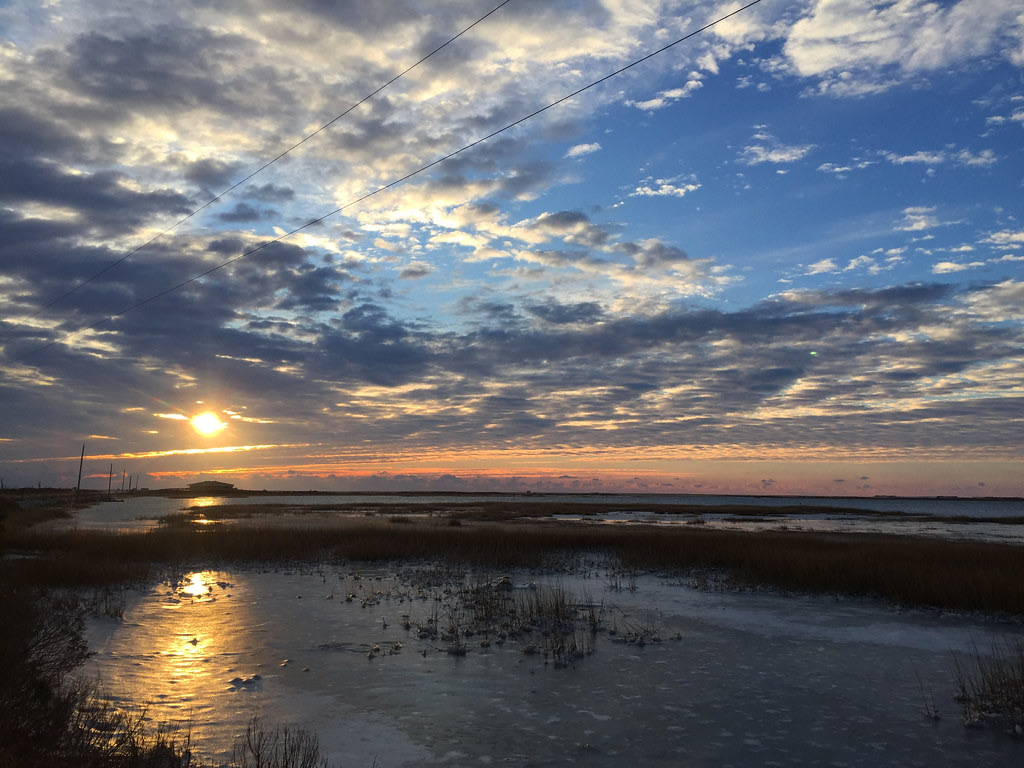
Virginia packs an extraordinary range of living things into a mid-sized state. In a single day you could watch dolphins in the Chesapeake Bay, walk through a cypress swamp, see elk grazing on a reclaimed coal mine and hear a spruce-forest songbird on a mountaintop more than 5,000 feet high. This guide gives a short overview of Virginia’s habitats and wildlife and links to every page in this section, from blue crabs and oysters to bats, bears and salamanders.
Quick answer: Virginia’s wildlife reflects its geography: barrier islands, salt marsh and the Chesapeake Bay in the east; Coastal Plain swamps and pine forests; the rolling Piedmont; and the Blue Ridge, Valley and Ridge and Appalachian Plateau in the west. Many large animals, including deer, wild turkeys, beavers, black bears and elk, were wiped out or nearly so by 1900 and have since returned through protection, restocking and regrowing forests. Others, such as the gray wolf, cougar and passenger pigeon, are gone. Today the biggest pressures are habitat loss, invasive species, too many deer in some places and a changing climate.[1][2][3]
Contents
- Where many habitats meet
- Land habitats
- Water habitats
- Lost and found: wildlife since 1607
- Today’s challenges
- Who manages Virginia’s wildlife
- State wildlife emblems
- A–Z of habitat and species pages
- Frequently asked questions
Where many habitats meet
Virginia lies where northern and southern plants and animals overlap. Its land climbs from sea level on the Atlantic to the 5,700-foot summit of Mount Rogers, so species typical of New England survive on the high peaks while southern species reach their northern limits in the swamps of the southeast. The result is one of the highest levels of biodiversity in the eastern United States; DWR notes that Virginia’s bird diversity alone is among the highest of any eastern state, thanks to its geographic position, topography and climate.[1] The mountains of western Virginia are also part of the world’s richest region for salamanders (see Snakes, Salamanders and Alligators in Virginia).
Land habitats
Most of Virginia is, or would naturally become, forest: oak and hickory on the uplands, pines on sandy and disturbed ground, cove hardwoods and hemlocks in sheltered mountain valleys, and spruce and fir on the highest summits. Old fields left alone turn into forest within a few decades. Fire, set by lightning and by Native Americans, once kept some areas open as grasslands, savannas and pine barrens, and land managers now use prescribed burns to restore them. (See Virginia Ecosystems and Plant Communities and Vegetation and Wildlife of Virginia at European Contact.)
Caves and karst in the Valley, shale barrens in the western mountains, high-elevation balds in the southwest and serpentine barrens in the Piedmont add small but unusual habitats with their own rare species.
Water habitats
The Chesapeake Bay, the largest estuary in the United States, is the heart of Virginia’s aquatic life. Its salt marshes, seagrass beds and oyster reefs support blue crabs, oysters, striped bass, menhaden and the ospreys and dolphins that feed on them. Off the coast, the Atlantic brings sharks, sea turtles and whales. Inland, rivers and streams hold migratory fish such as shad and herring, mountain brook trout and an exceptional diversity of freshwater mussels, especially in the Clinch and Powell rivers of Southwest Virginia. (See Wetlands and Underwater Grasses in Virginia and Fish and Freshwater Mussels in Virginia.)
Lost and found: wildlife since 1607
The English colonists found abundant game. Over the next three centuries, market hunting, the hide and fur trades and the clearing of forests for farms took a heavy toll. By about 1900, white-tailed deer were nearly extirpated in Virginia, wild turkeys had vanished from two-thirds of the state, and elk, bison, wolves and cougars were gone entirely.[2][3][4]
The 20th century brought a remarkable recovery. Game laws ended market hunting, state biologists restocked deer, turkeys and beavers, and young forests regrew on abandoned farmland. Today Virginia has an estimated 850,000 to 1,000,000 deer and about 180,000 wild turkeys, black bears have returned to much of the state, and elk again roam Buchanan County after a herd was brought from Kentucky in 2012–2014.[2][3][5] Not every story ended well: the American chestnut, once a dominant tree, was nearly wiped out by an imported blight, and several freshwater mussels are extinct.
Today’s challenges
- Habitat loss and fragmentation. Suburban growth, roads and development split forests and wetlands into smaller pieces, hurting species that need large unbroken areas.
- Invasive species. Feral hogs, nutria, spongy moths, spotted lanternflies, hemlock woolly adelgids, blue catfish and invasive plants all threaten native species (see Invasive Species in Virginia).
- Too many deer. In suburbs and some parks, deer strip the forest understory, preventing young trees from growing and removing cover for ground-nesting birds (see White-tailed Deer and Hunting in Virginia).
- Food webs under strain. Chesapeake Bay ospreys have suffered severe nest failures linked to a shortage of menhaden (see Birds and Wild Turkeys in Virginia).
- Disease. White-nose syndrome has devastated cave-hibernating bats, and chronic wasting disease has appeared in deer.
- A changing climate. Rising seas are drowning marshes and islands, warmer temperatures are pushing species northward and upslope, and southern animals such as armadillos are moving in.
Who manages Virginia’s wildlife
Several agencies share the job. The Virginia Department of Wildlife Resources (DWR) manages fish and wildlife, sets hunting and fishing rules and runs restoration programs such as elk and turkey restocking. The Department of Conservation and Recreation runs the Natural Heritage Program, which tracks rare species and natural communities, and the state parks. The Virginia Marine Resources Commission manages saltwater fisheries, including crabs and oysters, and the Department of Agriculture and Consumer Services handles plant pests and endangered plants and insects. Federal agencies such as the U.S. Fish and Wildlife Service and the National Park Service manage refuges, parks and federally listed species. (See Endangered Species in Virginia.)
State wildlife emblems
The Code of Virginia names a long list of official state emblems, including the northern cardinal (bird), the Virginia big-eared bat (bat), the American foxhound (dog), the brook trout (freshwater fish), the striped bass (saltwater fish), the tiger swallowtail (insect), the honey bee (pollinator), the eastern garter snake (snake), the red salamander (salamander), the oyster shell (shell), the Chincoteague pony (pony) and the American dogwood (tree and flower).[6]
A–Z of habitat and species pages
Every page in the habitats and species section, in alphabetical order:
- The American Chestnut in Virginia – the dominant mountain tree lost to blight, and efforts to restore it.
- Bats in Virginia – 17 species, caves and white-nose syndrome.
- Bears, Cougars, Coyotes and Wolves in Virginia – large predators lost and found.
- Birds and Wild Turkeys in Virginia – bird diversity, the cardinal, ospreys and the turkey’s comeback.
- Blue Crabs in Virginia – the Chesapeake’s signature crustacean.
- Cicadas and Monarch Butterflies in Virginia – periodical cicada broods and monarch migration.
- Elk in Virginia – extinction in 1855 and restoration in Buchanan County.
- Endangered Species in Virginia – rare species, listing, wildlife rehabilitation and zoos.
- Fish and Freshwater Mussels in Virginia – migratory fish, dams and mussels.
- Invasive Species in Virginia – feral hogs, nutria, spongy moths, lanternflies and invasive plants.
- Oysters in Virginia – reefs, oyster wars, disease and restoration.
- Sharks and Dolphins of Virginia – sandbar shark nursery and Bay dolphins.
- Snakes, Salamanders and Alligators in Virginia – venomous snakes, salamander diversity and alligators at the border.
- Squirrels, Beavers and Armadillos in Virginia – common and returning mammals.
- Vegetation and Wildlife of Virginia at European Contact – what the land looked like in 1607.
- Virginia Ecosystems and Plant Communities – ecoregions, succession, grasslands, fire and fungi.
- Wetlands and Underwater Grasses in Virginia – marshes, swamps and seagrass.
- White-tailed Deer and Hunting in Virginia – the deer comeback, suburban deer and hunting.
Frequently asked questions
What is Virginia’s most common large wild animal? The white-tailed deer, with an estimated 850,000 to 1,000,000 animals.[2]
Are there elk in Virginia? Yes. A restored herd of more than 250 elk lives in and around Buchanan County.[5]
What is Virginia’s state bird? The northern cardinal.[6]
Why does Virginia have so many kinds of animals and plants? Its position between north and south and its range of landscapes, from ocean to high mountains, bring many habitats together in one state.[1]
References
- Virginia Department of Wildlife Resources, “The 2nd Virginia Breeding Bird Atlas.” https://dwr.virginia.gov/wildlife/virginia-breeding-bird-atlas/
- Virginia Department of Wildlife Resources, “Virginia Deer Management Program.” https://dwr.virginia.gov/wildlife/deer/deer-management-program/
- Gary Norman, “History of Wild Turkey in Virginia,” Virginia Department of Wildlife Resources. https://dwr.virginia.gov/wildlife/turkey/history/
- Virginia Department of Wildlife Resources, “The History of Elk in Virginia.” https://dwr.virginia.gov/wildlife/elk/history/
- Virginia Department of Wildlife Resources, “Elk in Virginia: Return of a Native Species.” https://dwr.virginia.gov/wildlife/elk/
- Code of Virginia § 1-510, “Official emblems and designations.” https://law.lis.virginia.gov/vacode/title1/chapter5/section1-510/