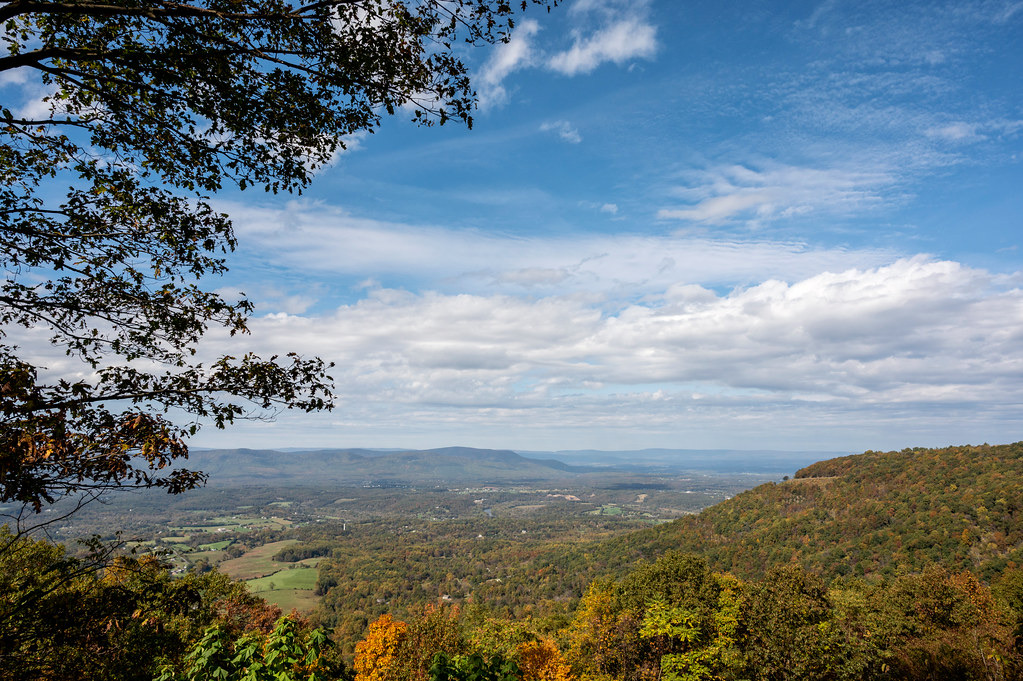
Four large meat-eaters have shaped Virginia’s woods. Two of them, the gray wolf and the cougar, were wiped out in the 1800s and have never come back as breeding animals. The black bear came close to the same fate, then recovered so well that state biologists now work to keep its numbers in check. The fourth, the coyote, was never native here at all: it walked in from the west and north during the 20th century and now lives in every county.
Quick answer: Virginia’s only bear is the American black bear, and its population has grown from roughly 1,000 animals around 1900 to an estimated 18,000–20,000 today, managed mainly through regulated hunting. Coyotes arrived from the north and west and now occur statewide; they are classed as a nuisance species and may be killed year-round. The eastern cougar was declared extinct and removed from the federal endangered list in 2018; sightings in Virginia have never been confirmed. Gray and red wolves have both disappeared from the state.[1][2][3][4]
Contents
- Black bears: Virginia’s only bear
- What bears eat
- From near-loss to “robust”
- Bears in the suburbs
- Living with bears
- Mange
- Cougars: the ghost cat
- Could cougars return?
- Coyotes: the newcomers
- Coyotes, deer and livestock
- Wolves
- Timeline
- Frequently asked questions
Black bears: Virginia’s only bear
Of the three bears found in North America (black, brown and polar), only the black bear (Ursus americanus) lives in Virginia. There are no grizzlies in the state and no realistic chance that any will arrive. Virginia’s black bears are usually truly black, with a brown muzzle and sometimes a white blaze on the chest, unlike western black bears that can be cinnamon, brown or blond. Adult females commonly weigh 90 to 250 pounds and males 130 to 500 pounds. A wild female in Virginia has been documented living to 30 years.[1]
Bears occupy a wider range of habitats than any other bear species. In Virginia they live along the whole Appalachian chain, across much of the Piedmont and in scattered places on the Coastal Plain, favoring mature oak forest in the mountains and swampy woods near the coast.[1] Bear range maps in the state’s management plan still show the Eastern Shore without a resident population.[5]
Bears reached North America long before people did. They spend late fall putting on fat and then den for the winter, often in a hollow tree, a rock crevice or a brush pile. Bears in Virginia do wake and move about on mild winter days. Females breed every other year, and after their second winter with the cubs they drive the young bears away to find their own home ranges.[1]
What bears eat
Black bears are omnivores, but mostly vegetarian. A study of bears and white-tailed deer in the mountains of western Virginia, reported by the Department of Wildlife Resources (DWR) in 2025, found that fruit and seeds made up about two-thirds of what bears ate over a year; counting nuts, fungi and green plants, plant matter came to about 90 percent of the diet. Spring was the exception. Bears that had just come out of their dens fed heavily on newborn fawns, and deer made up more than 12 percent of the spring diet. The researchers saw bears scavenge adult deer carcasses but did not document bears killing adult deer.[6]
Acorns drive the bear year. In a fall with a big acorn crop, bears find enough food close to home, move less and are harder for hunters to find, so the harvest drops. In a poor mast year bears range widely, raid cornfields and turn up in towns. Farmers can lose a large share of a field to bears, and the state issues kill permits to landowners suffering serious crop or livestock damage.[2]
From near-loss to “robust”
Virginia’s bears declined through the 1800s as farms replaced forest and as hunting went unregulated. By the early 1900s perhaps 1,000 to 1,500 bears were left. Once the state began setting seasons and limits, and as worn-out mountain farms were abandoned and grew back into forest during the 20th century, bear habitat expanded. Before hunting rules took hold, the largest surviving bear population east of the Blue Ridge was in the Great Dismal Swamp.[2]
The Department of Game and Inland Fisheries (renamed the Department of Wildlife Resources in 2020) adopted bear management plans in 2001 and 2012 that set goals, area by area, to increase, hold steady or reduce bear numbers. The program worked so well that by 2017 the agency was deliberately trying to slow population growth, and it expanded firearms seasons in 2017 and 2019. The current plan, covering 2023 to 2032, divides the state into eight “viability regions” so that a healthy population survives in each physiographic province, separate from the bear zones used in the hunting regulations. It puts more emphasis than earlier plans on helping people and bears coexist, while treating long-term population health as the higher priority.[2]
Hunters in Virginia must send a premolar tooth from each bear they kill to state biologists, who count growth rings to learn the bear’s age. Those ages let the agency reconstruct how the population is changing year to year. The statewide estimate grew to roughly 18,000–20,000 bears by 2021, and the 2019–20 and 2020–21 seasons produced the two largest harvests on record (the second of them 3,464 bears). The kill then fell, to 2,232 bears in 2022–23, as expected after the expanded seasons, a good acorn crop and a mange outbreak in the northwestern counties.[2][3]
Bears in the suburbs
Young bears pushed out by their mothers must find unclaimed territory, and much of the good habitat is already taken. Some wander into suburbs. One bear specialist told the Washington Post in 2023 that if a place is not bear country now, it probably will be soon. In June 2024 a bear was struck and killed on Interstate 395 in Arlington County, near the Pentagon City and Reagan National Airport exit, after several sightings in the area.[7]
The best-known suburban bear was “Elden.” In 2025 Maryland wildlife officials relocated a young bear that had shown up in a Prince George’s County backyard, fitting it with a GPS collar. It then crossed into Virginia and climbed a tree on Elden Street in the Town of Herndon, where it became a local celebrity. Judging that it was unlikely to leave the Washington suburbs on its own, DWR sedated it and moved it to an undisclosed spot in the Shenandoah Valley.[8]
Such moves are unusual. Virginia does not routinely trap and relocate bears, because the suitable remote habitat is already occupied by other bears and a newcomer has little chance there. Elsewhere, the National Park Service has begun tracking with GPS collars the bears it removes from busy campgrounds in Great Smoky Mountains National Park, because most relocated bears are never seen again and biologists want to know whether they survive.[3]
Living with bears
Most Virginians tolerate bears passing through. When a bear starts getting into trouble, it is nearly always because people have left food out. Bears raid bird feeders, garbage cans, pet food bowls and grills, and some learn to open cars and break into homes that smell of food. DWR answers calls about problem wildlife on a free helpline (855-571-9003) and tries to change human behavior rather than remove the bear; a bear that is left alone usually wanders off.[3]
The standard “BearWise” advice is simple: never feed or approach a bear, lock up food, garbage and recycling, take down bird feeders when bears are active, keep pet food indoors, clean grills, and tell neighbors when a bear is around.[3] People who try to chase a bear with shouting and sticks risk provoking it. Unprovoked attacks are rare, but they happen: hikers who come between a sow and her cubs, or whose dog charges a bear, can be bitten or clawed. Agency staff euthanize only a handful of dangerously habituated bears in a typical year; far more bears are taken under kill permits issued to farmers.[9]
By 2021 conflicts with deer had begun to outnumber conflicts with bears in the calls handled by the helpline, which had peaked in 2020 when many people were home during the COVID-19 pandemic.[10]
Mange
Sarcoptic mange is a skin disease caused by mites (Sarcoptes scabiei) that burrow into the skin and make the hair fall out. Mangy bears look alarming, and infected bears tend to be hungrier and bolder around feeders and trash. Many bears recover on their own. Because treating a wild population is not practical, Virginia lets outbreaks run their course, and they fade over time. Mange can spread to pets, so dogs should be kept away from affected bears.[11]
Cougars: the ghost cat
The cougar (Puma concolor) goes by many names: mountain lion, puma, panther, catamount and, in old Appalachian speech, “painter.” The scientific name concolor means “of one color,” because adults are a plain tawny brown; only kittens are spotted. Cougars have the largest range of any land mammal native to the Western Hemisphere. Older works split them into more than 30 subspecies based on skull and body measurements, but DNA studies have led many scientists to recognize far fewer.[12]
Cougars once lived throughout Virginia. They disappeared in the 1800s, killed by bounties, poison, traps and guns, and starved of their main prey when white-tailed deer were nearly wiped out. The eastern cougar went on the federal endangered list on June 4, 1973. Its 1982 recovery plan described the subspecies’ historic range as stretching from Maine to Michigan, Illinois, Kentucky and South Carolina. In January 2018 the Service removed the eastern cougar from the endangered list, concluding that it had been extinct for decades and that no breeding population could have gone unnoticed since the last confirmed record, in Maine in 1938. Virginia’s wildlife agency supported the decision. The Florida panther, a separate population, remains protected.[4]
People in Virginia still report cougars. DWR counts well over a hundred possible sightings since 1970, clustered in Shenandoah National Park and the Bedford, Amherst and Nelson area, but none has been confirmed.[12] Many turn out to be bobcats, house cats, dogs or deer seen at a distance.
Could cougars return?
The habitat and prey that disappeared in the 1800s have largely returned. Deer are abundant again, and forest covers most of western Virginia. Cougar populations in the West have spread east into the Dakotas, Nebraska, Colorado and Texas, and the Fish and Wildlife Service counted 271 confirmed cougar records east of known breeding areas, most of them young males on the move. One cougar killed by a car in Connecticut was traced by DNA to the Black Hills of South Dakota.[4] Females travel much shorter distances than males, so a breeding population would probably expand east only slowly, in steps.
Some advocates argue for reintroducing cougars to the Appalachians. Florida offers a precedent of a different kind: in 1995 eight female cougars from Texas were released in South Florida to improve the inbred panther population’s genetics, and they produced offspring that strengthened the gene pool. The Florida case also showed how cougar habitat needs can be misjudged: an influential claim that panthers needed unbroken forest rested on radio-collar locations taken only in daytime, while the cats hunt and travel mostly at night.[13] Cougars do occasionally kill people in the West, but such deaths are rare; collisions between cars and deer kill far more Americans every year.
Coyotes: the newcomers
The coyote (Canis latrans) evolved in the open country of western North America. As eastern forests were cleared for farms and as wolves were exterminated, coyotes spread east. The Mid-Atlantic was one of the last regions they reached. DWR records a coyote shot in Floyd County in 1983, one trapped in Tazewell County, and early complaints from Bland, Rockingham and Washington counties.[14] Over the following decades coyotes spread across the state all the way to the barrier islands of the Eastern Shore, and they now live in every county and probably every city.[15]
Genetic work on coyote scat from Northern Virginia showed that those animals came by a northern route, around the Great Lakes and down through New York and Pennsylvania, rather than straight east from Texas. The founders arrived more than once, from several maternal lines, and some carried genes from Great Lakes wolves picked up along the way.[16]
Coyotes eat almost anything: mice, rabbits, frogs, insects, fruit, carrion and garbage. A male weighs up to about 45 pounds. Pairs den on brushy slopes or in thickets and hunt mainly in fields and meadows; a patchwork of woods and openings, including the strips cleared for power lines, pipelines and roads, suits them better than unbroken forest. Litters of five to seven pups are typical, born in April or May, with larger litters when food is plentiful.[14] Near people, coyotes become mostly nocturnal. Pet food and bird seed can attract them, and loose cats and small dogs are at risk at night.[15]
DWR classifies the coyote as a nuisance species. No license is needed to kill one on private land with permission, and there is no closed season, though local ordinances may limit shooting. Trappers take thousands of coyotes a year for fur, and hunters kill many more without any reporting requirement.[17]
Coyotes, deer and livestock
Hunters often blame coyotes for smaller deer herds. Coyote scat frequently contains deer hair, but that does not tell biologists whether the coyote killed the deer or scavenged a carcass. DWR’s research summaries conclude that coyotes do take fawns, along with bears and bobcats, but that their effect on deer numbers varies a great deal from place to place, and that weather, habitat and other predators also matter.[18]
Coyotes also kill calves, sheep and goats. In 1990 Virginia’s state agriculture department (VDACS) and the Wildlife Services branch of the U.S. Department of Agriculture launched a cooperative coyote control program to teach livestock producers how to protect their animals and to remove problem coyotes; in 1997 it added M-44 cyanide devices and toxic livestock protection collars to trapping and shooting.[19]
Some counties offer bounties. In Bedford County a lottery funded by private donors and the local Farm Bureau offered a $1,000 grand prize and six $500 prizes, and 143 entries were submitted in the 2024 round. A former DWR furbearer biologist noted that modeling shows a coyote population falls only if about 50 to 60 percent of the animals are killed every year for several years, so bounties do little to reduce numbers. His verdict: coyotes are in Virginia to stay.[20] Virginia Cooperative Extension recommends guard animals, fencing and good husbandry as the most dependable ways to protect livestock.[21]
Wolves
Gray wolves (Canis lupus) once lived throughout Virginia and are now extirpated; the nearest wild gray wolves are around the western Great Lakes and in the Rockies.[22]
The red wolf (Canis rufus), a smaller wolf of the Southeast, also disappeared from Virginia. In 1987 the U.S. Fish and Wildlife Service began releasing captive-bred red wolves in northeastern North Carolina, around Alligator River National Wildlife Refuge, and a small wild population survives there.[23] Some opponents of the program argued that red wolves had interbred with coyotes so much that they were no longer a real species. In 2019 a National Academies committee, reviewing the genetic evidence at the request of the Fish and Wildlife Service, concluded that the evidence supports treating the red wolf as a distinct species.[24] Coyotes, which now fill the niche wolves left empty, remain the chief threat to the red wolf’s genetic identity.[25]
Timeline
| Year | Event |
|---|---|
| 1800s | Forest clearing and unregulated hunting shrink bear numbers; cougars and wolves are wiped out |
| Early 1900s | Perhaps 1,000–1,500 bears remain in Virginia |
| 1938 | Last confirmed eastern cougar record (Maine) |
| June 4, 1973 | Eastern cougar listed as endangered |
| 1983 | Coyote shot in Floyd County, among the first records in Virginia |
| 1987 | Red wolves released in northeastern North Carolina |
| 1990 | Virginia’s cooperative coyote control program begins |
| 2001, 2012 | State bear management plans |
| 2017, 2019 | Bear firearms seasons expanded to slow growth |
| 2018 | Eastern cougar removed from the endangered list as extinct |
| 2019 | National Academies report supports red wolf species status |
| 2021 | Bear population estimated at 18,000–20,000 |
| 2023 | Bear management plan for 2023–2032 adopted |
| 2024 | Bear killed on I-395 in Arlington; Bedford County coyote lottery |
| 2025 | “Elden” the bear relocated from Herndon |
Frequently asked questions
How many black bears live in Virginia? State biologists estimated roughly 18,000 to 20,000 in 2021, up from about 1,000 around 1900.[2]
Are there grizzly bears in Virginia? No. The black bear is the only bear in the state.[1]
Are there mountain lions in Virginia? No confirmed ones. The eastern cougar was declared extinct in 2018, and every Virginia sighting since 1970 has gone unconfirmed.[4][12]
Can you hunt coyotes in Virginia? Yes. Coyotes are a nuisance species with no closed season, subject to local firearm rules.[17]
What should I do if a bear is in my yard? Leave it alone, bring pets in and remove whatever attracted it, such as bird seed, trash or pet food. Call the DWR helpline if it becomes a danger.[3]
See also: white-tailed deer and hunting in Virginia, elk in Virginia, endangered species in Virginia, animals of Virginia at European contact, habitats and species of Virginia, the Blue Ridge.
References
- Virginia Department of Wildlife Resources, “Black Bear” (species profile). https://dwr.virginia.gov/wildlife/information/black-bear/
- Virginia Department of Wildlife Resources, “Virginia Black Bear Management Plan (2023–2032).” https://dwr.virginia.gov/wildlife/bear/bear-management-plan/
- Virginia Department of Wildlife Resources, “Black Bear” (bear information, harvest and conflict pages). https://dwr.virginia.gov/wildlife/information/black-bear/ ; “Bear with a taste for the burbs is relocated – again,” WTOP, June 11, 2025. https://wtop.com/local/2025/06/a-bear-with-a-taste-for-the-burbs-is-relocated-again/
- U.S. Fish and Wildlife Service, “Removing the Eastern Puma (=Cougar) From the Federal List of Endangered and Threatened Wildlife,” Federal Register, January 23, 2018. https://www.federalregister.gov/documents/2018/01/23/2018-01127/endangered-and-threatened-wildlife-and-plants-removing-the-eastern-puma-cougar-from-the-federal-list
- Virginia Department of Wildlife Resources, “Virginia Black Bear Management Plan (2023–2032),” range figures. https://dwr.virginia.gov/wildlife/bear/bear-management-plan/
- Virginia Department of Wildlife Resources, “The Virginia Appalachian Carnivore Study: Black Bears & White-tailed Deer in the Appalachian Mountains of Virginia,” June 3, 2025. https://dwr.virginia.gov/blog/the-virginia-appalachian-carnivore-study-black-bears-white-tailed-deer-in-the-appalachian-mountains-of-virginia/
- “The day a bear tried to break into my house,” Cardinal News, August 4, 2023. https://cardinalnews.org/2023/08/04/the-day-a-bear-tried-to-break-into-my-house/
- “Bear with a taste for the burbs is relocated – again,” WTOP, June 11, 2025. https://wtop.com/local/2025/06/a-bear-with-a-taste-for-the-burbs-is-relocated-again/
- Virginia Department of Wildlife Resources, “Virginia Black Bear Management Plan (2023–2032),” human–bear conflict chapter. https://dwr.virginia.gov/wildlife/bear/bear-management-plan/
- “The continuing saga of a property dispute, or the bear is back,” Cardinal News, June 26, 2026. https://cardinalnews.org/2026/06/26/the-continuing-saga-of-a-property-dispute-or-the-bear-is-back/
- “Mange-infected black bears spotted across Southwest Virginia,” WSLS, July 13, 2026. https://www.wsls.com/news/local/2026/07/13/mange-infected-black-bears-spotted-across-southwest-virginia/
- Virginia Department of Wildlife Resources, “Eastern Cougar” (species profile). https://dwr.virginia.gov/wildlife/information/eastern-cougar/
- Liza Gross, “Why Not the Best? How Science Failed the Florida Panther,” PLOS Biology 3(9), 2005. https://doi.org/10.1371/journal.pbio.0030333
- Virginia Department of Wildlife Resources, “Coyote” (species profile). https://dwr.virginia.gov/wildlife/information/coyote/
- Virginia Department of Wildlife Resources, “Living with Coyotes Near Your Home in Virginia.” https://dwr.virginia.gov/wp-content/uploads/Living-with-Coyotes-Near-Your-Home-in-Virginia.pdf ; Cornell Wildlife Health Lab, “Weird & Wonderful Wildlife: The Coyote.” https://cwhl.vet.cornell.edu/article/weird-wonderful-wildlife-coyote
- Christine A. Bozarth et al., “Coyote colonization of northern Virginia and admixture with Great Lakes wolves,” Journal of Mammalogy 92(5), 2011, as summarized in Cornell Wildlife Health Lab, “Weird & Wonderful Wildlife: The Coyote.” https://cwhl.vet.cornell.edu/article/weird-wonderful-wildlife-coyote
- Virginia Department of Wildlife Resources, “Coyotes” (nuisance wildlife). https://dwr.virginia.gov/wildlife/nuisance/coyotes/
- Bruce Ingram, “What Impact Do Coyotes Have on Virginia’s Deer?,” Virginia Department of Wildlife Resources. https://dwr.virginia.gov/blog/what-impact-do-coyotes-have-on-virginias-deer/ ; “Coyote Research Study Update,” Virginia Department of Wildlife Resources, June 2, 2016. https://dwr.virginia.gov/blog/coyote-research-study-update/
- Martin Lowney, John Houben and Phil Eggborn, “Development of the Virginia Cooperative Coyote Control Program to Protect Livestock,” Eighth Eastern Wildlife Damage Management Conference, 1997. https://digitalcommons.unl.edu/ewdcc8/22/
- “To keep its coyote population in check, this county offers hunters cash prizes for kills,” Cardinal News, May 1, 2024. https://cardinalnews.org/2024/05/01/to-keep-its-coyote-population-in-check-some-counties-offer-hunters-cash-prizes-for-kills/
- Virginia Cooperative Extension, “Managing Human-Wildlife Interactions: Coyote (Canis latrans),” CNRE-172, 2023. https://www.pubs.ext.vt.edu/CNRE/cnre-172/cnre-172.html
- Virginia Department of Wildlife Resources, “Gray Wolf” (species profile). https://dwr.virginia.gov/wildlife/information/gray-wolf/
- North Carolina Wildlife Resources Commission, “Red Wolf.” https://www.ncwildlife.gov/species/red-wolf
- National Academies of Sciences, Engineering, and Medicine, Evaluating the Taxonomic Status of the Mexican Gray Wolf and the Red Wolf (2019), NCBI Bookshelf. https://www.ncbi.nlm.nih.gov/books/NBK542544/ ; “New study settles controversy around red wolves, Mexican gray wolves,” ASU News, April 3, 2019. https://news.asu.edu/20190403-discoveries-asu-study-red-wolves-mexican-gray-wolves-clarification
- Center for Biological Diversity, “Red Wolf.” https://www.biologicaldiversity.org/species/mammals/red_wolf/