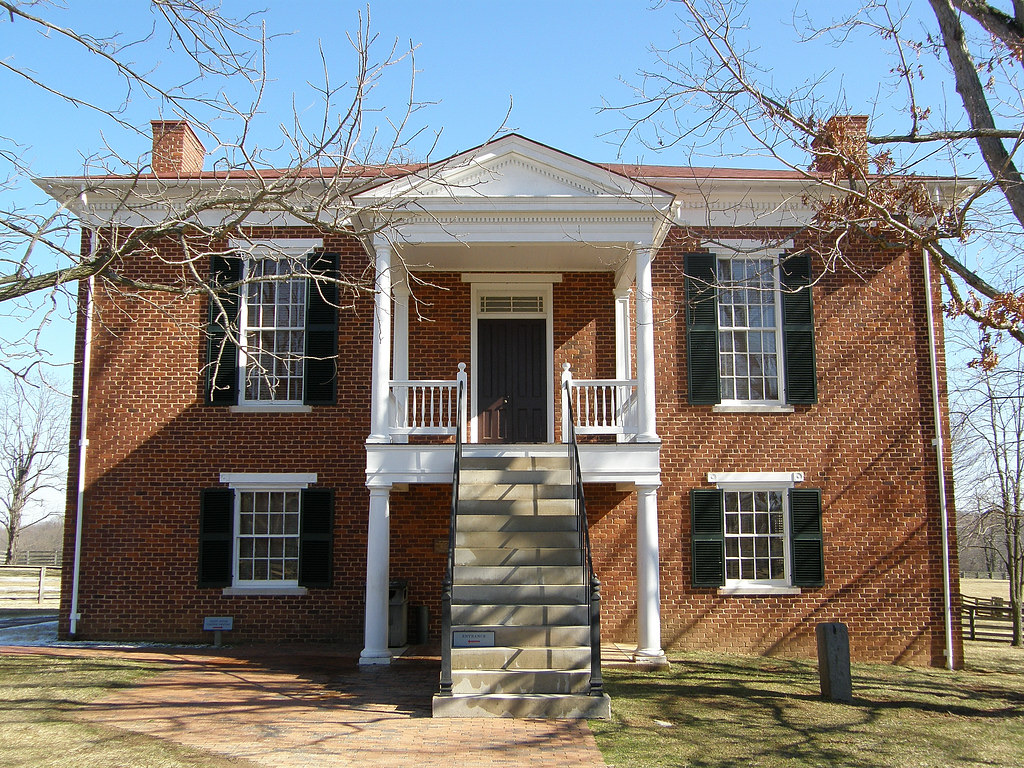
Few states can match Virginia’s historic resources: the first permanent English settlement, the homes of eight presidents, the decisive battle of the Revolution, more Civil War battlefields than any other state, and four centuries of African American history. Almost every Virginia town promotes some connection to the past, from nationally important landmarks to local legends. Over the last generation the way these places tell their stories has changed, as museums and historic houses have begun to give the enslaved people who built and ran them a central place in the narrative.
Quick answer: Virginia’s historic sites are recorded on the Virginia Landmarks Register and the National Register of Historic Places, both begun in 1966, and range from Jamestown, Williamsburg and Yorktown to presidential homes such as Mount Vernon, Monticello and Montpelier and battlefields from Manassas to Appomattox. Interpretation of slavery, long ignored, is now central at sites such as Montpelier, Gunston Hall, Historic Smithfield and Fort Monroe, where the first enslaved Africans in English North America landed in 1619. In Richmond, the city’s Shockoe Project, with $58 million in funding, is developing a memorial campus at the site of Lumpkin’s Jail, a center of the domestic slave trade. Major museums include the Virginia Museum of Fine Arts, the Science Museum of Virginia, the Chrysler Museum, the Mariners’ Museum and the National Museum of the Marine Corps.[1][2][3]
Contents
- A landscape of history
- What gets preserved
- Presidential homes
- Every town has a story
- Battlefields
- Telling the story of slavery
- Richmond, the slave trade and the Shockoe Project
- Major museums
- Timeline
- Frequently asked questions
A landscape of history
History is the heart of Virginia’s tourism brand. The “Historic Triangle” of Jamestown, Williamsburg and Yorktown draws visitors from around the world, and Civil War sites, Revolutionary War sites and the homes of the founders anchor tourism across the state. Anniversaries drive visits and investment: the 1907 and 1957 Jamestown celebrations, the 2007 commemoration of 400 years, the Civil War sesquicentennial of 2011–2015 and the VA250 commemoration of the Revolution in 2025–2026. For the business side, see tourism in Virginia.
What gets preserved
The houses that survive are mostly the substantial brick and frame homes of the wealthy. The log cabins of small farmers and the quarters of enslaved people were cheaper to build and seldom maintained, so they have largely vanished, giving visitors a distorted picture of how most early Virginians lived. Archaeology at places like Monticello, Montpelier and Jamestown has helped recover the missing stories.
Since 1966 the Virginia Department of Historic Resources has kept the Virginia Landmarks Register, and the same properties usually appear on the federal National Register as well. Listing honors a property and can bring tax credits for rehabilitation, but in most cases it does not stop private owners from altering or demolishing it.[4] Many listed properties are private homes that can be seen only from the road. Many locally significant sites have been lost to development.
Presidential homes
Eight presidents were born in Virginia, and their homes are among the state’s leading attractions: George Washington’s Mount Vernon, Thomas Jefferson’s Monticello and Poplar Forest, James Madison’s Montpelier, James Monroe’s Highland, John Tyler’s Sherwood Forest and Woodrow Wilson’s birthplace in Staunton, among others. Most are open to the public through foundations or universities. James Monroe’s Oak Hill in Loudoun County, a privately owned National Historic Landmark, has long been an exception.
At Montpelier, visitors now explore not only the Madisons’ home but also the history of the enslaved community; an “Enslaved Community Tour” examines the paradox of a nation founded on equality and built by people denied freedom.[5] See the Virginia Statute for Religious Freedom for Madison’s role in religious liberty.
Every town has a story
Local historians across Virginia proudly claim small roles in big events. In Louisa County, people remember Jack Jouett, who rode through the night in June 1781 to warn Jefferson and the legislators at Charlottesville that British cavalry under Banastre Tarleton was coming. Shenandoah County recalls that George Washington considered Fort Valley as a refuge if the Revolution went badly. Great Bridge in Chesapeake marks a 1775 battle that drove Lord Dunmore from the mainland, and its story is tied to Dunmore’s offer of freedom to enslaved people who joined the British. Such claims bring visitors and pride, but some rest more on tradition than evidence, and a few have been inflated over time.
Battlefields
Virginia was the main battleground of the Civil War, and national battlefield parks at Manassas, Fredericksburg and Spotsylvania, Richmond, Petersburg, Cedar Creek and Appomattox Court House preserve key sites, along with state parks, private foundations and the American Battlefield Trust, which has bought thousands of acres of threatened land. Revolutionary sites include Yorktown, where the British surrendered in 1781. Battlefield preservation often collides with suburban growth, as in the fights over Disney’s America near Manassas in 1994 and later over data centers near the Manassas and Wilderness battlefields. See the Civil War in Virginia.
Telling the story of slavery
For most of the 20th century, Virginia’s historic houses and living-history museums said little about slavery. Interpreters in colonial costume portrayed the gentry; enslaved people, who often made up most of a plantation’s population, were barely mentioned. That began to change in the late 20th century, and especially after 2000, as costumed interpreters began portraying enslaved people and sites hired African American historians and descendants as partners.
The approaches differ. Some sites use paired interpreters, one in period clothing portraying an enslaved person and one in modern dress who can step outside the role to answer questions. At Historic Smithfield in Blacksburg, founded in the 1770s by Col. William Preston, the foundation states that enslaved African Americans and their achievements belong at the center of the Smithfield story, alongside the Preston family.[6] George Mason’s Gunston Hall, owned by the Commonwealth, presents the author of the Virginia Declaration of Rights together with the enslaved people who lived and worked there.[7]
Fort Monroe National Monument in Hampton marks both the beginning and the end of slavery in Virginia: the first enslaved Africans in English North America landed at Point Comfort in 1619, and in 1861 the fort became “Freedom’s Fortress,” where the Union Army’s “contraband” decision gave refuge to people escaping slavery.[2][8] See slavery in Virginia.
Richmond, the slave trade and the Shockoe Project
Before the Civil War, Richmond was one of the largest markets in the domestic slave trade, shipping enslaved people south and west. In 1844 the trader Robert Lumpkin bought a site in Shockoe Bottom where he ran a jail for enslaved people, a hotel, a residence and an auction house. Known as the “Devil’s Half-Acre,” it was among the largest slave jails in the city. After the war the site housed a school for freedmen, one of the roots of Virginia Union University. Archaeologists excavated part of the jail site in 2006–2008, beside a parking lot and Interstate 95, and then reburied it for protection.[9]
Plans for a museum of slavery have a long and troubled history. Former Governor L. Douglas Wilder promoted a United States National Slavery Museum in Fredericksburg in the 2000s, but the project never got beyond the planning stage and went into bankruptcy. Richmond later took up the idea. The city’s Shockoe Project, formerly the Enslaved African Heritage Campus, plans an interpretive center in Main Street Station, a pavilion at the Lumpkin’s Jail site, memorials and site recommendations for a national slavery museum experience. Funding allocated for the project totals $58 million, including state money and an $11 million grant from the Mellon Foundation.[3] In July 2026 the city unveiled designs for the Lumpkin’s Slave Jail Pavilion, the project’s second phase.[10] The Richmond Slave Trail traces the route by which enslaved people were brought to and through the city.
Major museums
Virginia’s museums range from world-class art collections to specialized military and transportation museums:
- Virginia Museum of Fine Arts, Richmond: one of the largest art museums in the country, with free general admission.[11]
- Science Museum of Virginia, Richmond: housed in the grand former Broad Street Station, a railroad terminal designed by John Russell Pope.[12]
- Chrysler Museum of Art, Norfolk: major glass and painting collections.[13]
- The Mariners’ Museum, Newport News: maritime history, including the USS Monitor Center with the turret of the Civil War ironclad.[14]
- National Museum of the Marine Corps, near Quantico: a 240,000-square-foot building on a 135-acre site beside Marine Corps Base Quantico.[15]
- Steven F. Udvar-Hazy Center, Chantilly: the Smithsonian’s companion to the National Air and Space Museum, with the Space Shuttle Discovery.[16]
- Virginia Museum of History & Culture, Richmond, the American Revolution Museum at Yorktown and Jamestown Settlement, run by the state’s Jamestown-Yorktown Foundation, and the Virginia Museum of Transportation in Roanoke.
For war memorials and military museums, see war memorials in Virginia; for the many parks that protect historic sites, see national parks in Virginia.
Timeline
| Year | Event |
|---|---|
| 1619 | First enslaved Africans in English North America land at Point Comfort |
| 1844 | Robert Lumpkin acquires the Shockoe Bottom site |
| 1861 | Fort Monroe “contraband” decision |
| 1907 | Jamestown Exposition |
| 1966 | Virginia Landmarks Register and National Register of Historic Places created |
| 1994 | Disney’s America abandoned |
| 2006 | National Museum of the Marine Corps opens |
| 2006–2008 | Archaeological excavation at the Lumpkin’s Jail site |
| 2011 | Fort Monroe becomes a national monument |
| 2026 | Designs for the Lumpkin’s Slave Jail Pavilion unveiled |
Frequently asked questions
What are the most visited historic sites in Virginia? The Historic Triangle of Jamestown, Williamsburg and Yorktown, presidential homes such as Mount Vernon and Monticello, and Civil War battlefields are among the most visited.
Where can I learn about slavery in Virginia? At Fort Monroe, Montpelier, Monticello, Mount Vernon, Gunston Hall, Historic Smithfield, Colonial Williamsburg, and in Richmond along the Slave Trail and at the Lumpkin’s Jail site.
What was Lumpkin’s Jail? A slave jail, auction house and hotel run by trader Robert Lumpkin in Richmond’s Shockoe Bottom from 1844, known as the “Devil’s Half-Acre.”
Is there a slavery museum in Virginia? A national slavery museum planned in Fredericksburg was never built. Richmond’s Shockoe Project is developing an interpretive center and memorial campus and has studied sites for a national slavery museum experience.
References
- [1] Virginia Department of Historic Resources, Fort Monroe – last checked 11/21/2026
- [2] National Park Service, Fort Monroe National Monument – last checked 11/21/2026
- [3] City of Richmond, The Shockoe Project: Project Summary and Scope – last checked 11/21/2026
- [4] Virginia Department of Historic Resources, Historic Registers – last checked 11/21/2026
- [5] James Madison’s Montpelier – last checked 11/21/2026
- [6] Historic Smithfield, Blacksburg – last checked 11/21/2026
- [7] George Mason’s Gunston Hall – last checked 11/21/2026
- [8] National Park Service, Fort Monroe: History and Culture – last checked 11/21/2026
- [9] The Cultural Landscape Foundation, Lumpkin’s Slave Jail – last checked 11/21/2026
- [10] Richmond BizSense, “City unveils plans for Lumpkin’s Slave Jail Pavilion, second phase of Shockoe Project” (July 16, 2026) – last checked 11/21/2026
- [11] Virginia Museum of Fine Arts – last checked 11/21/2026
- [12] Science Museum of Virginia – last checked 11/21/2026
- [13] Chrysler Museum of Art – last checked 11/21/2026
- [14] The Mariners’ Museum and Park – last checked 11/21/2026
- [15] National Museum of the Marine Corps – last checked 11/21/2026
- [16] Smithsonian National Air and Space Museum, Steven F. Udvar-Hazy Center – last checked 11/21/2026