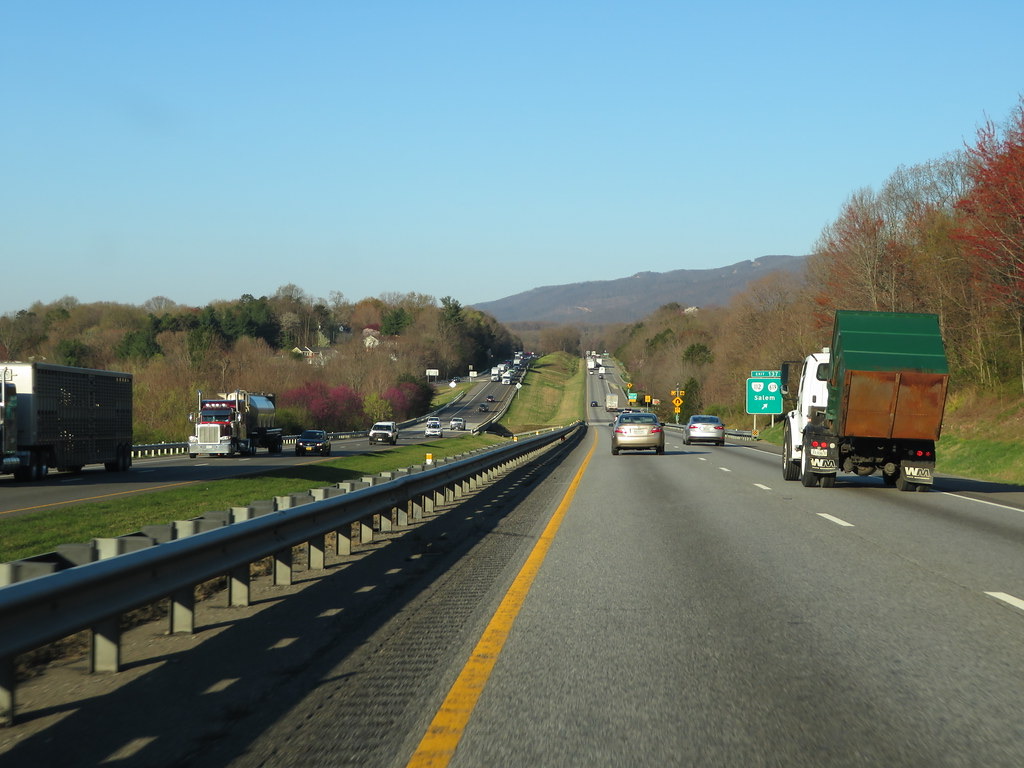
Virginia runs on petroleum. Gasoline and diesel move almost every car, truck, locomotive and ship in the state, jet fuel powers its busy airports, and propane and heating oil still warm many rural homes. Yet Virginia produces only a trickle of crude oil and, since its last refinery shut down in 2010, makes none of its own fuel. Everything it burns arrives finished, by pipeline, tanker, barge, rail car or truck.
Quick answer: Virginia has no operating oil refinery. The last one, built at Yorktown by Standard Oil of Indiana and opened in 1956, stopped refining in fall 2010 and was sold in 2011 to Plains All American, which turned the site into a storage and distribution terminal. Today refined products reach Virginia mainly through the Colonial and Plantation (PPL) pipelines from the Gulf Coast and by ship. About 88% of the petroleum used in Virginia goes to transportation, nearly two-thirds of it as gasoline.[1][2][3]
Contents
- How refining works
- Virginia’s small refineries
- The Yorktown refinery, 1956–2010
- Why East Coast refineries closed
- From refinery to terminal
- Cleaning up the site
- How fuel reaches Virginia today
- Who uses the petroleum
- Natural gas: the other fossil fuel
- Frequently asked questions
How refining works
A refinery separates and reshapes crude oil, a mixture of thousands of hydrocarbon molecules. The first step is distillation, a bit like a whiskey still on an enormous scale: crude is heated until most of it vaporizes, and the vapors rise through a tall column where different fractions condense at different temperatures. Light gases come off the top; gasoline, jet fuel, kerosene and diesel come off in the middle; heavy residues used for asphalt and ship fuel settle at the bottom. Further units then “crack” heavy molecules into lighter, more valuable ones using heat, pressure and catalysts, and remove sulfur.
On average, a U.S. refinery turns a 42-gallon barrel of crude into about 19 to 20 gallons of gasoline, 11 to 13 gallons of diesel and heating oil, and 3 to 5 gallons of jet fuel, plus other products. Refineries run around the clock and can cover as much land as several hundred football fields.[4]
Virginia’s small refineries
Virginia was never a major refining state. The U.S. Energy Information Administration’s records show up to three operable refineries in the state in the mid-1980s, falling to one by the 1990s and to zero from 2012 onward.[5] One was a tiny plant in Richmond; the only sizable one was at Yorktown.
The state’s own oil production is equally small. Crude was first produced in Lee County in 1942. Output peaked in 1983 at about 65,400 barrels and has fallen to a few thousand barrels a year, all from wells in Lee and Wise counties; total production since 1951 is only about a million barrels.[6] A single large refinery processes that much in a couple of weeks.
The Yorktown refinery, 1956–2010
Standard Oil of Indiana, later known as Amoco, built the refinery in the mid-1950s on about 600 acres of the Goodwin Neck peninsula in York County, along the York River just east of the Dominion power station. Its first process unit came on line in November 1956.[3] Locally it was always “the Amoco refinery,” even after BP absorbed Amoco, Giant Industries bought the plant in 2002, and Western Refining bought Giant in 2007.
The refinery could process about 70,000 barrels of crude a day.[7] Crude arrived by tanker from overseas sources, and products went out by barge and truck to central Virginia, Hampton Roads (including the Navy), Washington and Baltimore. The plant was for years the largest property taxpayer in York County, and it was the first site in Virginia to use treated wastewater from a regional sewage plant for industrial cooling, buying it at lower cost than drinking water and reducing the nutrients discharged toward the Chesapeake Bay.
In August 2010, Western Refining announced it would suspend refining at Yorktown because of poor profit margins, and production stopped that fall, though the company kept the storage and shipping terminal running.[3][8]
Why East Coast refineries closed
Yorktown was one of many East Coast refineries squeezed in the years around 2010. Demand for gasoline had been falling since 2007, as cars became more efficient, ethanol blending grew and the recession kept drivers off the road. East Coast plants relied on imported light, low-sulfur crude delivered by tanker, which was expensive, while refiners in the Gulf Coast and Midwest had cheaper North American crude delivered by pipeline. Shipping domestic crude to the East Coast by water required U.S.-flagged vessels under the Jones Act, which cost much more than foreign tankers. Several Philadelphia-area and Caribbean refineries closed or nearly closed in the same period.
Some survived by finding cheaper crude: one Delaware refinery began receiving oil from North Dakota by rail, and a Pennsylvania plant was converted to handle liquids from Marcellus Shale gas wells. Yorktown, with no crude pipeline and no such options, did not reopen. The East Coast now has only a handful of refineries, and most of its fuel comes from the Gulf Coast by pipeline.
From refinery to terminal
In December 2011 Western Refining agreed to sell the idle refinery and its working terminal to units of Plains All American Pipeline, as part of a $220 million deal that included a New Mexico pipeline; ownership transferred on December 29, 2011.[7][3] Plains dismantled and sold the refinery equipment and turned the site into a hub for storing and distributing crude oil, refined products, liquefied petroleum gas and biofuels, with connections by ship, barge, rail and truck. A short pipeline link to the Colonial system was built around the same time. For a while, trains of tank cars brought crude from North Dakota’s Bakken field over CSX lines to Yorktown, where it was loaded onto barges for East Coast refineries.
Next door, Dominion retired the coal units at its Yorktown Power Station in the 2010s, part of the wider shift away from coal (see electricity in Virginia).
Cleaning up the site
Decades of refining left contamination. Under federal hazardous-waste rules, the U.S. Environmental Protection Agency oversees corrective action at the former refinery. Contaminants found in soil, surface water and groundwater include benzene, xylene, toluene and other petroleum compounds, PAHs, phenols, and metals including arsenic, chromium and cadmium. Controls at the site prohibit residential use and the use of groundwater for drinking, and caps cover old waste units. A permitted industrial landfill remains on the property. Homes stand within a quarter mile of the site on three sides, and Back Creek Park lies just to the southeast.[3]
How fuel reaches Virginia today
No major crude oil pipeline crosses Virginia. Instead, two large refined-products pipelines carry gasoline, diesel and jet fuel from the Gulf Coast. The Colonial Pipeline starts in Texas, makes several deliveries in Virginia and continues to New Jersey; the Plantation (PPL) Pipeline runs from Louisiana and Mississippi to its end point in Northern Virginia near Washington.[1] Fuel is stored at terminals around Northern Virginia, Richmond, Roanoke and Hampton Roads, blended with ethanol and additives, and trucked to roughly 3,000-plus gas stations. Ships and barges also bring products into Hampton Roads. Our page on oil pipelines in Virginia describes the pipelines and their history, including the 2021 Colonial shutdown.
Who uses the petroleum
| Sector | Share of Virginia petroleum use |
|---|---|
| Transportation | about 88% |
| Industrial | about 6% |
| Commercial | nearly 4% |
| Residential | about 3% |
| Electric power | very little |
Source: U.S. Energy Information Administration.[1]
Virginia uses more petroleum than about three-quarters of the states, though less per person than more than half of them. Federal clean-air rules require reformulated gasoline, blended with ethanol, in Northern Virginia and in parts of the Richmond and Hampton Roads metro areas to reduce smog. About 1 in 14 households heats with propane, heating oil or other petroleum products, mostly in rural areas without gas lines.[1]
Petroleum’s grip on transportation is beginning to loosen. More efficient cars have flattened gasoline demand, which in turn has shrunk gas-tax revenue for roads, and electric vehicles are slowly gaining ground (see electric vehicles in Virginia).
Natural gas: the other fossil fuel
Natural gas is Virginia’s biggest fuel for electricity and an important heating fuel. The state produces some of its own: all of it comes from seven counties in the southwest, mostly as coalbed methane, gas released from coal seams. Production peaked at more than 151 billion cubic feet in 2011 and was about 81 billion in 2024, while Virginia uses more than eight times as much as it produces.[1] Most gas now arrives by interstate pipeline from the Marcellus Shale region to the north, a reversal from earlier decades, when most came up from the Gulf Coast through North Carolina. About one in three Virginia households heats with gas, and the electric power sector uses about 64% of the gas delivered in the state.[1]
Making gas from coal is an old Virginia business: before pipelines, city gas works in Richmond, Petersburg and elsewhere heated coal to make gas for street lamps (see early energy in Virginia). For the modern pipeline network and the fights over new lines, see natural gas pipelines in Virginia and oil and natural gas in Virginia.
Frequently asked questions
Does Virginia have an oil refinery? No. The last one, at Yorktown, stopped refining in 2010 and is now a fuel terminal.[3][5]
Where does Virginia’s gasoline come from? Mostly from Gulf Coast refineries via the Colonial and Plantation pipelines, plus deliveries by ship.[1]
Does Virginia produce oil? Only a little, from a few dozen wells in Lee and Wise counties; production peaked in 1983.[6]
Why did the Yorktown refinery close? Weak profit margins: falling fuel demand, expensive imported crude and no pipeline access to cheaper domestic oil.[8]
What is used most: gasoline or diesel? Gasoline. Nearly two-thirds of the petroleum used for transportation in Virginia is motor gasoline.[1]
See also: energy in Virginia, oil pipelines in Virginia, biofuels in Virginia.
References
- U.S. Energy Information Administration, “Virginia: State Profile and Energy Estimates – Analysis.” https://www.eia.gov/state/analysis.php?sid=VA
- U.S. Energy Information Administration, “Number and Capacity of Petroleum Refineries.” https://www.eia.gov/petroleum/refinerycapacity/
- U.S. Environmental Protection Agency, “Hazardous Waste Cleanup: Western Refining Yorktown Incorporated” (EPA RCRA ID VAD050990357, archived page). https://19january2025snapshot.epa.gov/hwcorrectiveactioncleanups/epa-rcra-id-vad050990357/index.html
- U.S. Energy Information Administration, “Refining crude oil.” https://www.eia.gov/energyexplained/oil-and-petroleum-products/refining-crude-oil.php
- U.S. Energy Information Administration, “Virginia Number of Operable Refineries as of January 1.” https://www.eia.gov/dnav/pet/hist/LeafHandler.ashx?n=PET&s=8_NA_8O0_SVA_C&f=A
- Virginia Energy, Geology and Mineral Resources, “Oil.” https://energy.virginia.gov/geology/Oil.shtml
- Bob Tippee, “Plains to buy, scrap idle Virginia refinery,” Oil & Gas Journal, December 5, 2011. https://ogj.com/refining-processing/refining/article/17265857/plains-to-buy-scrap-idle-virginia-refinery
- Oil & Gas Journal, “Western Refining completes Yorktown closure.” https://www.ogj.com/refining-processing/refining/article/17283686/western-refining-completes-yorktown-closure