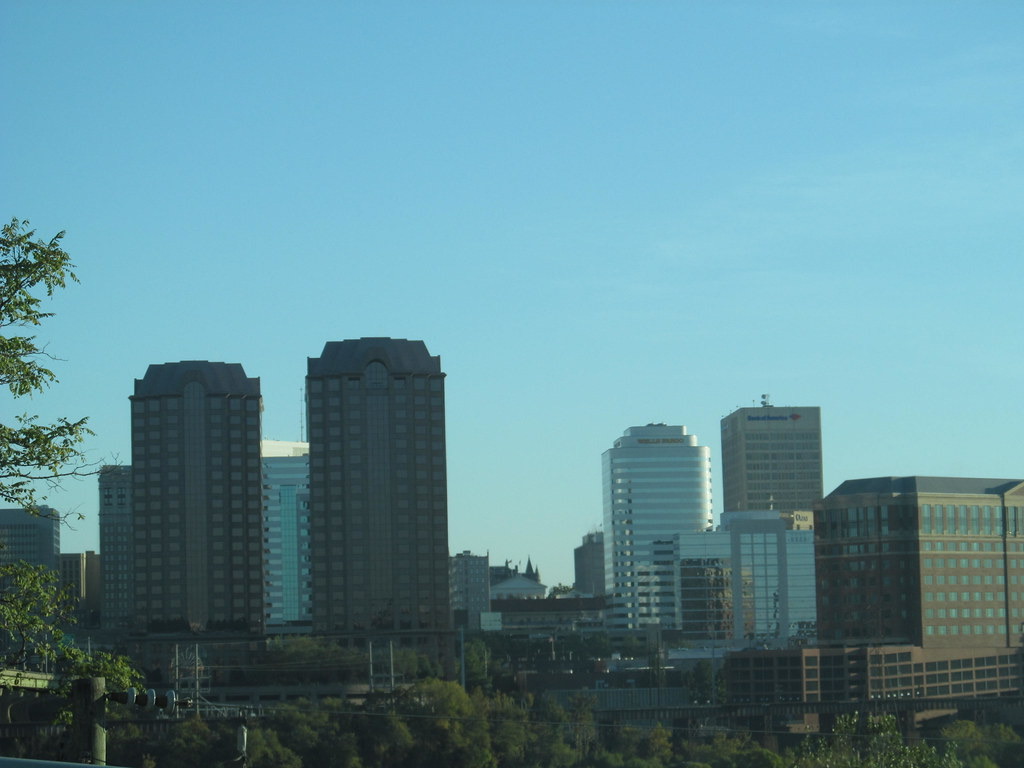
Jews were present at the very beginning of English Virginia, when the word still meant the whole coast England claimed, but organized Jewish life began only after the Revolution. Virginia had no large port city to attract Jewish merchants and required everyone to support the Church of England. Once the Statute for Religious Freedom of 1786 removed that burden, a congregation formed in Richmond within three years. Since then, Jewish Virginians have built synagogues in towns from Norfolk to Harrisonburg, founded businesses that became household names, and risen to the top of state politics.
Quick answer: The first known Jew in English America was Joachim Gans of Prague, a metallurgist at the Roanoke Island colony in 1585–1586. Richmond’s first Jewish resident on record, Isaiah Isaacs, appears in 1769. Richmond Jews founded Kahal Kadosh Beth Shalome in August 1789, then the sixth Jewish congregation in the United States; German immigrants later formed Beth Ahabah, which absorbed Beth Shalome in 1898. Moses and Eliza Myers, Norfolk’s first Jewish residents, arrived in 1787. Between 1934 and 1943, 328 Jewish refugees from Nazi Europe settled in Richmond. In 2020 Eileen Filler-Corn became the first Jewish (and first woman) Speaker of the House of Delegates.[1][2][3][4]
Contents
- Joachim Gans at Roanoke, 1585
- Colonial Virginia
- Richmond’s first Jewish community
- Norfolk and the port cities
- Growth and division in the 1800s
- Slavery and the Civil War
- Immigrants from Eastern Europe
- Refugees and the Second World War
- Jewish Virginians in public life
- Jewish Virginia today
- Timeline
- Frequently asked questions
Joachim Gans at Roanoke, 1585
Joachim Gans was born in Prague, then in the Kingdom of Bohemia, and came to England to work in copper mining. Sir Walter Raleigh recruited him for the 1585 colony on Roanoke Island, in what is now North Carolina but was then part of “Virginia.” Working with the scientist Thomas Hariot, Gans tested copper and other ores obtained from Native people, hoping to find valuable metals. He left with most of the colonists on Sir Francis Drake’s fleet in 1586.[2]
Archaeologists excavating the colonists’ workshop found crucibles, smelting equipment and traces of copper, and the site has been called the “Birthplace of American Science.” North Carolina has erected a highway marker describing Gans as a Jewish native of Prague who led metallurgy experiments there.[5] Back in England, his religion eventually brought him persecution, since Judaism was outlawed in England at the time.[2] The colony is described in Virginia as an international frontier.
Colonial Virginia
Jews who reached colonial Virginia came as individuals. A few Jewish names appear in 17th- and 18th-century records, but there was no synagogue and no organized community. The reasons were practical: Virginia’s tobacco economy ran through scattered plantation wharves rather than a central port where merchants gathered, and the established Anglican church taxed all residents.[1] Most colonial Jews in North America lived instead in New York, Newport, Philadelphia, Charleston and Savannah.
Richmond, founded in 1737, became the capital in 1780. Its first known Jewish resident, Isaiah Isaacs, appears in the record in 1769. He and his partner Jacob Cohen ran a store that advertised itself in 1785 as “the Jews store,” and they owned one of the town’s early taverns, the Bird in Hand.[1]
Richmond’s first Jewish community
The Virginia Statute for Religious Freedom of 1786 guaranteed Jews equal rights, and more Jewish families soon arrived, many of them from the German states. The 1790 census counted about 100 Jews in Richmond, over 4 percent of the white population.[1]
In August 1789 they founded Kahal Kadosh Beth Shalome, the “Holy Congregation House of Peace.” It was then the sixth Jewish congregation in the United States and served the fourth-largest Jewish community. Although most members were Ashkenazi, from central Europe, the congregation followed the Sephardic (Spanish and Portuguese) rite, as was usual in early America. Isaiah Isaacs gave land for a cemetery in 1791.[1] Jacob Cohen was elected to Richmond’s city council in 1793, and later Gustavus Myers served on the council for decades.
Norfolk and the port cities
Norfolk’s first Jewish residents were Moses and Eliza Myers, who arrived in 1787. Moses Myers built an import-export business that traded with ports on both sides of the Atlantic and became one of the town’s leading citizens.[3] Their house, built in the 1790s, is now a museum operated by the Chrysler Museum of Art.
A lasting congregation came only with German immigration. In 1848 Norfolk Jews formed the House of Jacob, which later became Ohef Sholom. In 1870, when Ohef Sholom moved toward Reform Judaism, traditionalists left and founded Beth El; the two congregations fought for years over the Jewish cemetery until they set up a joint cemetery company.[3] Congregations followed in Petersburg (1858), Alexandria (1859), Harrisonburg (1870), Lynchburg, Staunton, Roanoke and other towns.
Growth and division in the 1800s
In Richmond, German Jewish immigrants who preferred their own customs founded Beth Ahabah in 1841. By 1845 a quarter of the city’s retail merchants were Jewish; William Thalhimer opened a small dry goods store in 1842 that grew into a regional department store chain. When Richmond passed a Sunday closing law in 1845, Jewish merchants who already closed on Saturday petitioned against it as unfair.[1]
Beth Ahabah gradually adopted Reform practices: mixed seating and a choir in 1867, membership in the Union of American Hebrew Congregations in 1875, and classical Reform under Rabbi Edward Calisch from 1891. In 1898 the remaining members of Beth Shalome merged into Beth Ahabah.[1] Its Beth Ahabah Museum and Archives preserves the history of Richmond’s Jewish community.
Slavery and the Civil War
Jewish Virginians took part in the slave society around them. The Institute of Southern Jewish Life notes that most Richmond Jewish households owned enslaved people before the war, at about the same rate as other white households, mostly as house servants, and that five Jewish slave traders lived in Richmond in 1860.[1] See slavery in Virginia.
More than 100 Richmond Jews fought for the Confederacy. Moses Jacob Ezekiel, the first Jewish cadet at the Virginia Military Institute, fought at New Market and later became a celebrated sculptor in Rome. Richmond’s Hebrew Cemetery includes a special section for Jewish Confederate soldiers, described by the Institute as the only Jewish military cemetery in the United States.[1] Judah P. Benjamin, a Louisiana senator, served in Richmond as the Confederacy’s attorney general, secretary of war and secretary of state.
Immigrants from Eastern Europe
From the 1880s, Jews fleeing poverty and persecution in the Russian Empire arrived in large numbers. In Richmond they founded traditional congregations such as Sir Moses Montefiore (1880), and Richmond’s Jewish population reached about 5,300 by 1930.[1] Established German Jewish families helped newcomers through organizations such as the National Council of Jewish Women, whose Richmond chapter opened Neighborhood House in 1912 as a settlement house. In 1903, after the Kishinev pogrom in Russia, more than 1,000 people, including the governor and mayor, attended a protest meeting in Richmond.[1]
Refugees and the Second World War
As Nazi persecution grew, William Thalhimer, of the department store family, organized efforts to bring Jewish refugees to Virginia, finding sponsors, jobs and homes. Between 1934 and 1943, 328 Jewish refugees settled in Richmond. Thalhimer also arranged for a group of German Jewish teenagers to train at Hyde Farmlands, a farm about an hour from Richmond, as a way to obtain visas; by 1940, 34 young people lived there.[1]
Thousands of Jewish servicemen trained at Virginia’s bases during the war, and after it Northern Virginia and Hampton Roads grew rapidly with federal and military jobs, bringing new Jewish communities to Fairfax, Arlington, Virginia Beach and other suburbs. The Virginia Holocaust Museum in Richmond, founded in 1997, teaches the history of the Holocaust.
Jewish Virginians in public life
Jewish Virginians have served in local government since the 1790s. Benjamin Banks, elected in 1912, is often cited as the first Jewish member of the General Assembly. In January 2020, Eileen Filler-Corn of Fairfax County became the first woman and the first Jewish person to serve as Speaker of the House of Delegates in its 400-year history.[4][6] That same year Senator Dick Saslaw, also Jewish, was the Senate’s majority leader.
Jewish Virginia today
Today Virginia’s largest Jewish communities are in Northern Virginia, Richmond and Hampton Roads, with smaller congregations in Charlottesville, Roanoke, Harrisonburg, Williamsburg, Fredericksburg, Lynchburg and other towns. Congregations span Orthodox, Conservative, Reform and Reconstructionist movements, and Jewish community centers, day schools and Hillel groups at universities serve many families. For other faiths, see religion in Virginia.
Timeline
| Year | Event |
|---|---|
| 1585–1586 | Joachim Gans at the Roanoke Island colony |
| 1769 | Isaiah Isaacs recorded in Richmond |
| 1786 | Statute for Religious Freedom |
| 1787 | Moses and Eliza Myers settle in Norfolk |
| 1789 | Kahal Kadosh Beth Shalome founded (August) |
| 1791 | Jewish cemetery land given in Richmond |
| 1841 | Beth Ahabah founded |
| 1848 | House of Jacob (later Ohef Sholom) founded in Norfolk |
| 1870 | Beth El founded in Norfolk |
| 1898 | Beth Shalome merges into Beth Ahabah |
| 1903 | Kishinev protest meeting in Richmond |
| 1934–1943 | 328 Jewish refugees settle in Richmond |
| 2020 | Eileen Filler-Corn becomes Speaker of the House of Delegates |
Frequently asked questions
When did Jews first come to Virginia? Joachim Gans worked at the Roanoke Island colony in 1585–1586; within today’s state, Jewish residents are recorded in Richmond by 1769 and in Norfolk by 1787.
What is the oldest synagogue congregation in Virginia? Kahal Kadosh Beth Shalome in Richmond, founded in August 1789. Its members merged into Congregation Beth Ahabah in 1898.
Why did few Jews live in colonial Virginia? The colony had no major port city and required everyone to support the Church of England; religious freedom came only in 1786.
Who was the first Jewish Speaker of the Virginia House of Delegates? Eileen Filler-Corn, elected in January 2020, who was also the first woman in the post.
References
- [1] Institute of Southern Jewish Life, Encyclopedia of Southern Jewish Communities: Richmond, Virginia – last checked 11/21/2026
- [2] National Park Service, Fort Raleigh National Historic Site: Joachim Gans – last checked 11/21/2026
- [3] Institute of Southern Jewish Life, Encyclopedia of Southern Jewish Communities: Norfolk, Virginia – last checked 11/21/2026
- [4] Ballotpedia News, “Filler-Corn is Virginia’s first woman and first Jewish speaker of the House” (January 15, 2020) – last checked 11/21/2026
- [5] North Carolina Department of Natural and Cultural Resources, Joachim Gans historical marker (B-75) – last checked 11/21/2026
- [6] Jewish Telegraphic Agency, “Virginia House will have its first female and first Jewish speaker” – last checked 11/21/2026