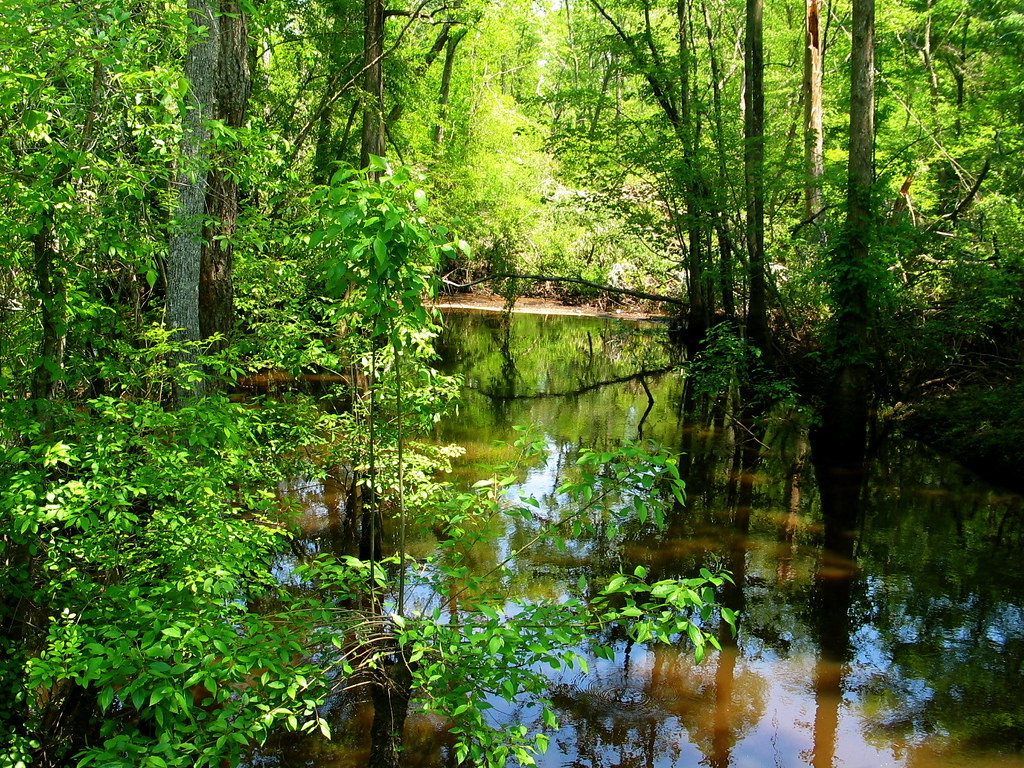
Virginia shelters plants and animals that live nowhere else on Earth, along with others that are common across North America but barely hang on inside the state’s borders. Some have already vanished. This page looks at how scientists decide what counts as rare, follows a few of Virginia’s best-known conservation cases, explains how the state’s environment keeps changing, and ends with the people who rescue injured animals and the zoos and museums that keep species in human care.
Quick answer: Virginia protects species at two levels. The federal Endangered Species Act lists species as “endangered” or “threatened,” while Virginia’s natural heritage ranks (S1 to S5 for the state, G1 to G5 worldwide) flag plants and animals that are rare here even if they are secure elsewhere. Famous Virginia cases include the Peters Mountain mallow, which survives on one ridge in Giles County and depends on fire; the Virginia round-leaf birch, found wild only along Cressy Creek in Smyth County; and the green blossom pearly mussel of the Clinch River, declared extinct in 2023. Wild animals belong to the public, so injured or orphaned wildlife must go to a licensed rehabilitator.[6][7][12][19]
Contents
- Life’s deep roots off the Virginia coast
- Native, endemic and rare
- Peters Mountain mallow: a plant that needs fire
- The round-leaf birch of Cressy Creek
- Federal listing and state rarity ranks
- Extinct, recovered and debated
- A changing environment
- Wildlife rehabilitation
- Zoos, aquariums and breeding centers
- Timeline
- Frequently asked questions
Life’s deep roots off the Virginia coast
Rarity only makes sense against the long history of life. Genetic studies that compare how fast DNA changes over time point to a last universal common ancestor of all living things roughly 4.2 billion years ago, a microbe that already carried a fairly complex set of genes.[2] The earliest life most likely depended on chemical energy rather than sunlight.
Organisms that still live that way exist off Virginia today. Along the continental margin, methane seeps on the seafloor feed communities built on chemosynthesis: bacteria and archaea turn chemical compounds into food, form mats on the bottom, and live inside tube worms and mussels as partners. NOAA describes these food webs, first recognized at deep-sea vents in 1977, as the one major ecosystem on Earth that does not rely on photosynthesis.[1] Over the ages, most species that ever evolved have disappeared, either dying out or changing into new forms. Extinction is part of how life works; what worries biologists now is its pace.
Native, endemic and rare
A “native” species is usually defined as one that lived in Virginia before European colonists arrived. An “endemic” species goes further: it lives naturally within a small area and nowhere else, which suggests it evolved right here.
Salamanders are Virginia’s showcase endemics. The southern Appalachians escaped the ice sheets, giving woodland salamanders of the genus Plethodon an enormous span of time to split into local forms tied to single mountains. Three are found only in Virginia:
| Salamander | Where it lives |
|---|---|
| Shenandoah salamander (Plethodon shenandoah) | A few talus slopes on high peaks in Shenandoah National Park[3] |
| Peaks of Otter salamander (Plethodon hubrichti) | A small stretch of the Blue Ridge around the Peaks of Otter[4] |
| Big Levels salamander (Plethodon sherando) | The Big Levels area of Augusta County[5] |
Specialists like these are finely tuned to one setting, which makes them vulnerable when that setting changes. Generalists cope better. For more on these animals, see alligators, snakes and salamanders in Virginia.
Peters Mountain mallow: a plant that needs fire
Virginia’s rarest plant, the Peters Mountain mallow (Iliamna corei), grows on a single mountainside in Giles County along the West Virginia line. It was first collected almost a century ago, and no one has ever found it anywhere else. The plant can reach several feet tall and bears pale pink flowers that resemble a hibiscus.[6]
Its seeds need heat to sprout. Ridge fires once did that job, but decades of fire suppression let trees shade the site. After the mallow was listed as federally endangered in the 1980s, the population fell to only three plants. Prescribed burns brought it back each time they were used, but the last burn at the site took place in 2017. Plans for new burns were set aside, and in 2026 a long drought made burning impossible.[6]
Biologists from the Virginia Division of Natural Heritage and Virginia Tech now visit the ridge, tag each plant, fence it against browsing and pull invasive weeds such as garlic mustard. They counted five plants in 2025 and six in 2026. Seeds still lie in the soil, waiting for the next fire, and researchers hope to germinate collected seed in Blacksburg.[6]
The round-leaf birch of Cressy Creek
The Virginia round-leaf birch (Betula uber) is a variety of sweet birch with unusual rounded leaves. It was described from Smyth County early in the 20th century, then not seen for decades and assumed extinct, until botanists rediscovered it in 1975 along Cressy Creek.[7]
That one wild stand held 41 trees when it was found. By 1977 only 26 remained, and by the early 1990s just 11. Fences went up in 1976, but vandalism and digging of trees for private yards still took a heavy toll. Recovery work focused on growing seedlings in nurseries, planting new populations and giving seedlings to gardens and institutions so collectors would leave the wild trees alone. By 1994 there were 20 planted populations with more than 1,400 young trees, and the U.S. Fish and Wildlife Service moved the birch from “endangered” to “threatened.” The recovery target was 500 to 1,000 trees in each of ten self-sustaining populations.[7]
The birch shows a hard truth about tiny ranges: one flood, fire or bulldozer could erase the natural stand. Virginia wildlife officials still list it as a species of greatest conservation need, and the Center for Plant Conservation keeps seed and plant collections as insurance.[8][9] Gardens have saved species before. The Franklin tree (Franklinia alatamaha), collected in Georgia by John and William Bartram, has not been seen in the wild since the early 1800s and survives only because the Bartrams grew it in Philadelphia.[10]
Federal listing and state rarity ranks
The Endangered Species Act protects listed species and their habitat nationwide. It is popular in principle but often fought over in practice, because protecting habitat can raise the cost of roads, houses, power plants and docks.
Virginia adds its own layer. The state’s natural heritage program uses the standard conservation ranks: S1 marks a species critically rare in the state and S5 a common one, while G1 to G5 rank the same thing worldwide. A species can therefore be rare in Virginia yet secure globally. The common gallinule, a marsh bird once called the common moorhen, is ranked G5 (secure worldwide) by NatureServe even though it is scarce as a breeder in Virginia.[11] That raises a policy question with no easy answer: how much should a state spend to protect species that sit at the edge of their range?
Extinct, recovered and debated
Declared extinct. In September 2021 the Fish and Wildlife Service proposed removing 23 species from the endangered list because they had disappeared.[13] A final rule published October 17, 2023, delisted 21 of them. One was the green blossom pearly mussel. The last known live specimen was collected in 1982 in the Clinch River at Pendleton Island, Virginia, and decades of annual surveys since then have found no living animals. The rule blamed dams, silt and pollution for the loss.[12] See fish and freshwater mussels in Virginia.
A comeback. The Roanoke logperch, a darter of the Roanoke and Chowan river systems, was listed as endangered in 1989 when it was known from 14 streams. By 2019 it had been found in 31. In April 2024 the Fish and Wildlife Service proposed taking it off the federal list.[16][17] Virginia then proposed listing it as endangered under state law so a state recovery plan could continue.[28]
Box turtles off-limits as pets. Since July 1, 2021, Virginia has not allowed people to keep wild-caught eastern box turtles as pets. Virginia wildlife officials estimate that box turtles have declined by about a third over the past century, with illegal collection for the pet trade and fragmented habitat among the main threats.[14][15]
A narrower meaning of “harm.” In July 2026 the Interior Department finalized a rule that limits “harm” under the Endangered Species Act to directly killing or injuring listed animals, rather than also covering the destruction of habitat they depend on. Supporters said it would ease drilling, mining and logging on federal land; critics said it removed a protection the Supreme Court had upheld.[18]
A changing environment
Virginia’s landscape has never stood still. Sea level has been rising since the end of the last ice age, drowning river valleys to form the Chesapeake Bay. People have changed the land for thousands of years, and the pace accelerated after 1607. Among the biggest human-caused shifts:
- Native American burning kept woodlands open and maintained grassy clearings.
- Colonists cleared forests for tobacco and food crops; suburbs and sprawl followed in the 20th century.
- Patchy landscapes of woods and fields created ideal habitat for deer while hurting deep-forest birds such as the wood thrush (see white-tailed deer and hunting in Virginia).
- Passenger pigeons and Carolina parakeets went extinct; bison and elk were hunted out (see bison in Virginia and elk in Virginia).
- Wolves and cougars were eliminated as threats to livestock (see bears, cougars, coyotes and wolves in Virginia).
- Starlings, house sparrows, kudzu, phragmites and many other newcomers took hold (see invasive species in Virginia).
- Dams cut off mussel habitat and turned warm-water rivers below them into cold-water trout streams.
- Chestnut blight wiped out the forest’s dominant tree between about 1920 and 1940 (see the American chestnut in Virginia).
Pollution crises such as the kepone contamination of the James River in the 1970s pushed the state to regulate factory smokestacks and discharge pipes. Today the harder problem is runoff from farms, lawns and streets, which has no single source (see impaired waters in Virginia). Looking ahead, more roads and rural houses will keep chopping forests into smaller pieces, favoring adaptable species like deer and coyotes, while elk have already returned to grasslands left by coal mining.
Wildlife rehabilitation
In Virginia, wild animals are a public resource managed by the state, not the property of the landowner whose woods they cross. Keeping a wild animal without a permit is illegal, even a baby squirrel that fell from a nest.
The Department of Wildlife Resources warns that more than three out of four young animals “rescued” each spring did not need help. Parents leave their young alone for long stretches while feeding. A doe, for example, parks her fawn in the grass and returns to nurse it. If an animal is truly hurt, the agency advises handling it with heavy gloves, placing it in a ventilated box in a dark, warm, quiet spot, giving it no food, and calling a licensed wildlife rehabilitator.[19]
Rehabilitators have three outcomes: treat and release, treat and keep an animal that could not survive in the wild (often as an educational “ambassador”), or euthanize an animal that cannot recover. Some examples from around the state:
- Wildlife Center of Virginia (Waynesboro). Songbirds make up about a fifth of its patients, and nearly 1,000 came through in 2024, many hurt by collisions with cars and windows. Baby birds there may need feeding every 15 to 30 minutes. About a third of all patients are released.[21]
- Blue Ridge Wildlife Center (Clarke County). Many of the eagles it treats were hit by vehicles. Others are poisoned by lead after eating gut piles or carcasses of animals shot with lead ammunition; small fragments dissolve in the bird’s stomach and attack the nervous system. Waterfowl hunters must already use non-toxic shot, but most deer, bear and small-game hunters still use lead.[20]
- Evylyn’s Wildlife Refuge (Suffolk). Volunteers there cared for about 2,500 animals in 2024, including hundreds of raccoons a year. Feeding six orphaned otters cost about $3,000 a month in fish.[22]
Zoos, aquariums and breeding centers
Zoos and museums let Virginians see wildlife up close and support breeding programs for endangered species:
- Virginia Zoo in Norfolk.[23]
- Mill Mountain Zoo on Mill Mountain in Roanoke.[24]
- Virginia Living Museum in Newport News, which combines native wildlife exhibits with a planetarium.[25]
- Virginia Aquarium & Marine Science Center in Virginia Beach.[26]
- Smithsonian’s National Zoo and Conservation Biology Institute, whose campus at Front Royal breeds rare animals such as black-footed ferrets and supports conservation science.[27]
Timeline
| Year | Event |
|---|---|
| 1975 | Round-leaf birch rediscovered on Cressy Creek (41 trees) |
| 1982 | Last live green blossom pearly mussel collected in the Clinch River |
| 1989 | Roanoke logperch listed as endangered |
| 1994 | Round-leaf birch downlisted to threatened |
| 2017 | Last prescribed burn at the Peters Mountain mallow site |
| July 1, 2021 | Virginia ban on keeping wild box turtles as pets takes effect |
| October 17, 2023 | Green blossom pearly mussel among 21 species delisted as extinct |
| April 2024 | Delisting of the Roanoke logperch proposed |
| 2026 | Only six Peters Mountain mallow plants found; “harm” rule narrowed |
Frequently asked questions
What is the rarest plant in Virginia? The Peters Mountain mallow, which grows on one mountainside in Giles County. Only six plants were found in 2026.[6]
Which salamanders live only in Virginia? The Shenandoah, Peaks of Otter and Big Levels salamanders.[3][4][5]
What does an S1 or G5 rank mean? S ranks describe rarity within the state and G ranks rarity worldwide, from 1 (critically rare) to 5 (secure).
Can I keep a baby squirrel or a box turtle I found? No. Wild animals need a permit, and orphaned or hurt animals should go to a licensed rehabilitator. Since 2021 wild box turtles cannot be kept as pets.[14][19]
Has any Virginia species gone extinct recently? Yes. The green blossom pearly mussel, last found alive in the Clinch River in 1982, was declared extinct in 2023.[12]
See also: habitats and species of Virginia, Virginia ecosystems and plant communities, bats in Virginia, parks and forests of Virginia.
References
- National Oceanic and Atmospheric Administration, Ocean Exploration, “Chemosynthesis” (fact sheet). https://oceanexplorer.noaa.gov/edu/materials/chemosynthesis-fact-sheet.pdf
- Edmund R. R. Moody and others, “The nature of the last universal common ancestor and its impact on the early Earth system,” Nature Ecology & Evolution (2024). https://www.nature.com/articles/s41559-024-02461-1
- Virginia Department of Wildlife Resources, “Shenandoah Salamander” (species profile). https://dwr.virginia.gov/wildlife/information/shenandoah-salamander/
- Virginia Department of Wildlife Resources, “Peaks of Otter Salamander” (species profile). https://dwr.virginia.gov/wildlife/information/peaks-of-otter-salamander/
- Virginia Department of Wildlife Resources, “Big Levels Salamander” (species profile). https://dwr.virginia.gov/wildlife/information/big-levels-salamander/
- WVTF Radio IQ, “Fighting to save Virginia’s rarest plant, the Peters Mountain Mallow,” July 22, 2026. https://www.wvtf.org/news/2026-07-22/fighting-to-save-virginias-rarest-plant-the-peters-mountain-mallow
- U.S. Fish and Wildlife Service, “Reclassification of Betula uber (Virginia Round-leaf Birch) From Endangered to Threatened,” Federal Register 59, no. 220 (November 16, 1994). https://www.govinfo.gov/content/pkg/FR-1994-11-16/html/94-28326.htm
- Virginia Department of Wildlife Resources, Species of Greatest Conservation Need summary, Betula lenta var. uber. https://dwr.virginia.gov/wp-content/uploads/media/SGCN-Summary-Betula-lenta-var-uber.pdf
- Center for Plant Conservation, “Virginia Roundleaf Birch” (plant profile). https://saveplants.org/plant-profile/?CPCNum=558
- Bartram’s Garden, “Franklinia.” https://www.bartramsgarden.org/franklinia/
- NatureServe Explorer, “Gallinula galeata, Common Gallinule.” https://explorer.natureserve.org/Taxon/ELEMENT_GLOBAL.2.872346/Gallinula_galeata
- U.S. Fish and Wildlife Service, “Removal of 21 Species From the List of Endangered and Threatened Wildlife,” Federal Register 88, no. 199 (October 17, 2023). https://www.govinfo.gov/content/pkg/FR-2023-10-17/html/2023-22377.htm
- U.S. Department of the Interior, “U.S. Fish and Wildlife Service Proposes Delisting 23 Species from Endangered Species Act Due to Extinction,” September 29, 2021. https://www.doi.gov/pressreleases/us-fish-and-wildlife-service-proposes-delisting-23-species-endangered-species-act-due
- Virginia Department of Wildlife Resources, “Eastern Box Turtle” (species profile). https://dwr.virginia.gov/wildlife/information/eastern-box-turtle/
- National Wildlife Federation, “Eastern Box Turtle.” https://www.nwf.org/Educational-Resources/Wildlife-Guide/Reptiles/Eastern-Box-Turtle
- U.S. Fish and Wildlife Service, “Removal of the Roanoke Logperch From the List of Endangered and Threatened Wildlife” (proposed rule), Federal Register, April 2, 2024. https://www.govinfo.gov/content/pkg/FR-2024-04-02/pdf/2024-06795.pdf
- E&E News, “Feds tout revival of fish that vexed Mountain Valley pipeline.” https://www.eenews.net/articles/feds-tout-revival-of-fish-that-vexed-mountain-valley-pipeline
- NPR, “Trump administration rolls back a key protection for imperiled wildlife,” July 11, 2026. https://www.npr.org/2026/07/11/nx-s1-5890025/trump-administration-imperiled-wildlife
- Virginia Department of Wildlife Resources, “Injured & Orphaned Wildlife.” https://dwr.virginia.gov/wildlife/injured/
- Clarke Monthly, “A Small Piece Of Lead,” January 31, 2024. https://clarkeva.com/2024/01/31/a-small-piece-of-lead/
- Virginia Bluebird Society, Bird Box newsletter, Summer 2025, “Helping Songbirds in Need: Inside the Work of the Wildlife Center of Virginia.” https://static1.squarespace.com/static/60048f2f4616fd2204d63be8/t/68682e06e32f4a470ab297da/1751657991436/Bird+Box+newsletter+Summer+2025.pdf
- Suffolk News-Herald, “Local wildlife refuge rehabs thousands of animals,” July 9, 2025. https://www.suffolknewsherald.com/2025/07/09/local-wildlife-refuge-rehabs-thousands-of-animals/
- Virginia Zoo, official website. https://www.virginiazoo.org/
- Mill Mountain Zoo, official website. https://www.mmzoo.org/
- Virginia Living Museum, official website. https://thevlm.org/
- Virginia Aquarium & Marine Science Center, official website. https://www.virginiaaquarium.com/
- Smithsonian’s National Zoo and Conservation Biology Institute, “Conservation.” https://nationalzoo.si.edu/conservation
- Virginia Department of Wildlife Resources, proposed regulation amendment 4VAC15-20-130 (state endangered and threatened species). https://dwr.virginia.gov/regulations/proposed-regulation-amendment/?vac=15-20-130